
In today’s digital landscape, organizations of all sizes face an increasing risk of sensitive information being leaked, stolen, or misused. From confidential financial reports and intellectual property to educational materials and legal documents, files are constantly being shared between employees, departments, partners, and external collaborators. Without proper protection, unauthorized access, duplication, or redistribution can occur quickly and silently.
Digital Rights Management (DRM) offers a robust solution to these risks by embedding security directly into digital files, ensuring persistent control over who can access them and how they are used, no matter where the files travel.
You can explore DRM protection for your files here: https://drm.verypdf.com/
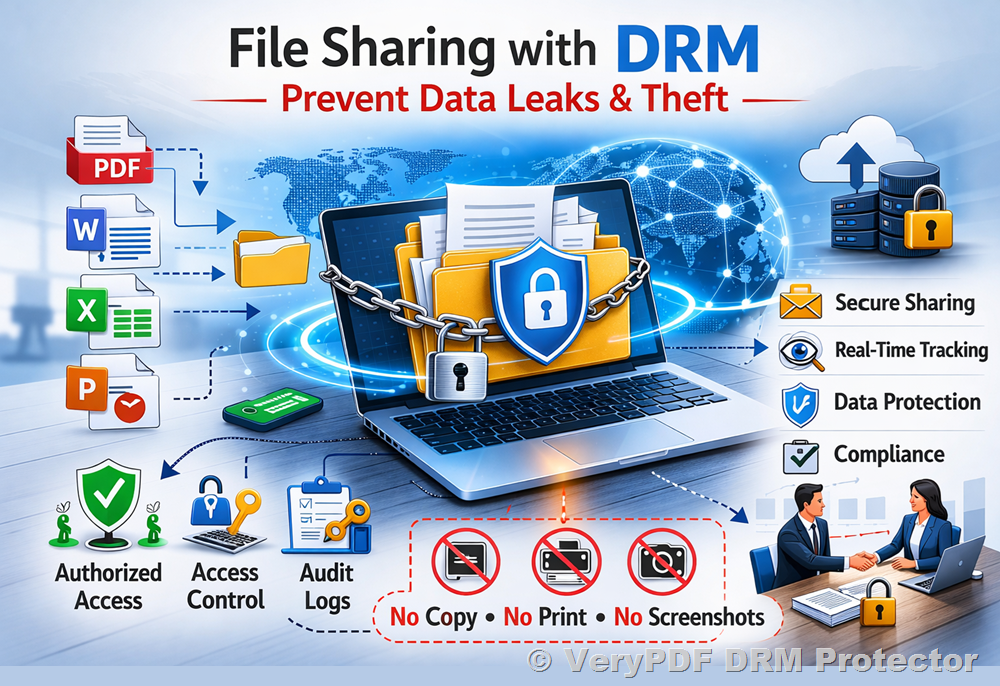
Understanding File Sharing with DRM
File sharing with DRM is much more than simple encryption or password protection. While traditional methods such as passwords or ZIP file encryption protect files at the point of access, they offer no control once a user has opened the file. DRM, on the other hand, allows organizations to enforce usage policies at all times, giving them control over:
- Who can open the file
- What actions are allowed (viewing, printing, editing, copying)
- How long access is granted
- Whether the file can be shared with others
This ensures that files remain secure, even outside the corporate network or after being forwarded to external users.
The Risks of File Sharing Without DRM
Organizations that rely solely on standard file-sharing methods face numerous risks:
1. Unauthorized Access
Files shared via email, cloud storage, or USB drives can be accessed by anyone who obtains the file or the password. This creates the risk of sensitive information falling into the wrong hands.
2. Uncontrolled Duplication
Once a file is downloaded, it can be copied and redistributed indefinitely. Even if the original sender intended limited sharing, there is no way to enforce those limits with traditional protection methods.
3. Screenshots and Screen Recording
Standard protection measures cannot prevent users from capturing the content on their screens, which can then be shared or uploaded publicly.
4. Intellectual Property Theft
Without proper protection, proprietary designs, marketing plans, teaching materials, or legal documents can be leaked, sold, or distributed without permission, causing financial loss and reputational damage.
5. Regulatory and Compliance Risks
Industries such as healthcare, finance, and education must comply with strict data protection regulations like GDPR, HIPAA, and PCI DSS. Inadequate protection of sensitive documents can result in severe penalties and legal consequences.
Why DRM Provides Superior Protection
Digital Rights Management is designed to address the gaps left by traditional security measures. It provides continuous, enforceable control over a file, regardless of its location or the device on which it is opened.
Persistent Protection
Unlike simple encryption, DRM embeds the security policies directly into the file, ensuring that permissions and restrictions are enforced wherever the file goes.
Detailed Access Controls
Organizations can define granular permissions, including:
- Allowing only authorized users to open the file
- Restricting copying, printing, or modifying the file
- Controlling access based on time, device, or location
- Automatically revoking access when required
Continuous Monitoring and Audit
DRM systems track file usage in real-time. Organizations can see:
- Who accessed a file and when
- Which actions were performed (viewing, printing, copying)
- From which devices or locations the file was accessed
This level of monitoring ensures accountability, simplifies audits, and provides evidence for regulatory compliance.
Applications of DRM in Real-World Scenarios
Education
Professors and educational content creators often face challenges with students sharing course materials. DRM ensures that lecture notes, exam papers, and textbooks are used only by authorized students, preventing unauthorized redistribution or conversion into editable formats like Word.
Corporate Teams
Businesses frequently share sensitive reports, product plans, HR documents, or confidential contracts. DRM protects these files even when shared with remote employees, partners, or external consultants.
Healthcare and Finance
Sensitive personal information in healthcare records, financial statements, or legal documents requires strict protection to comply with data privacy regulations. DRM allows these organizations to securely share files without compromising compliance or privacy.
Global Collaboration
Organizations with distributed teams or international partners need secure ways to share files without risking exposure. DRM provides control and tracking regardless of geography, making it suitable for multinational collaborations.
VeryPDF DRM — Key Features for Secure File Sharing
VeryPDF’s DRM solution is designed to protect files against leaks, piracy, and unauthorized access, with features tailored to enterprise needs:
- Zero Trust Architecture
Each access request is verified in real-time, ensuring security regardless of location or device. - Persistent File Protection
Security policies are embedded into the file itself, ensuring they remain enforced even after sharing. - Usage Controls
Administrators can restrict viewing, printing, copying, and screen capturing according to corporate policies. - Audit-Ready Logs
Every action taken on a protected file is logged, creating a complete audit trail for compliance and legal requirements. - Policy-Based Access
File permissions can be assigned based on user, group, device, location, or time, providing granular control over sensitive data.
You can learn more and try the solution here: https://drm.verypdf.com/
Types of Files Supported
VeryPDF DRM supports a wide range of file types, including:
- PDF documents
- Microsoft Office files (Word, Excel, PowerPoint)
- Image files
- CAD and design files
- Proprietary corporate documents
This ensures that all critical files in your organization can be securely shared and monitored.
Benefits of Using DRM for File Sharing
- Prevents Unauthorized Access: Only approved users can open files.
- Controls Usage: Restrictions prevent editing, copying, or printing as needed.
- Blocks Screenshots: Reduces risk of data capture through screen recording.
- Ensures Compliance: Audit logs and monitoring support regulatory requirements.
- Maintains File Control: Permissions remain active even after files are shared externally.
Conclusion
In a world where digital collaboration is essential but data breaches are costly, DRM offers the most effective way to protect sensitive files. By embedding persistent security into each file, organizations can confidently share information with employees, partners, and clients while maintaining control, compliance, and accountability.
Protect your documents and prevent leaks today with VeryPDF DRM: https://drm.verypdf.com/