
If you’ve invested time, energy, and resources into developing an online course, you know that protecting your intellectual property (IP) is crucial. Your IP is what makes your course unique and ensures that your hard work translates into long-term value.
What is Intellectual Property and Why It Matters for Course Creators
Intellectual property includes any original work you create, whether it’s a course, video, article, artwork, or digital product. Just like physical property, IP can be bought, sold, licensed, or shared, but unfortunately, it can also be stolen or misused if not properly protected.
For online courses, intellectual property may include:
- Your course materials and lesson plans
- Training videos, audio recordings, and supplementary resources
- Product or course names and branding
- Design elements, website layouts, and visual identities
Unlike tangible assets such as cars or computers, IP is intangible but often more valuable than physical property. A single online course can generate recurring revenue for years, making proper protection essential.
Why Protecting IP Online is Critical
For digital course creators, nearly all of your business value lies in your IP. Without proper safeguards, your content, videos, and course materials could be copied, shared without permission, or redistributed illegally, putting both your revenue and your reputation at risk. Securing your IP from the start is a must to ensure your investment pays off.
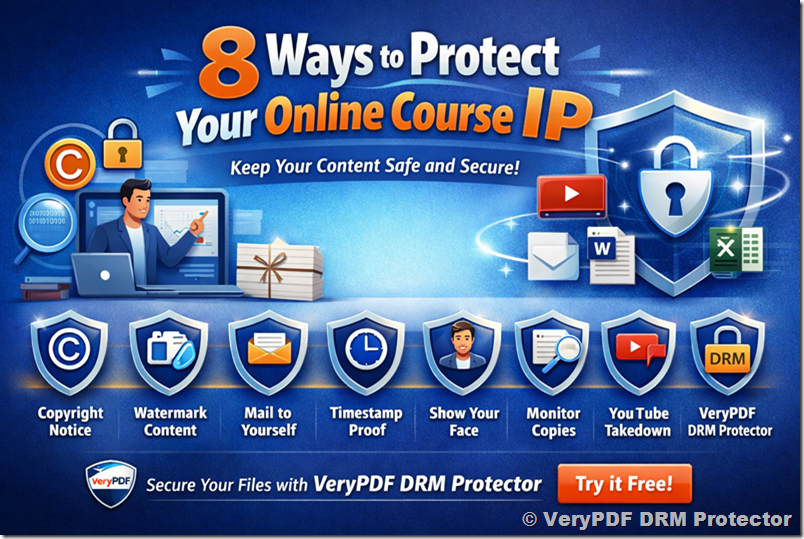 Below are eight practical ways to protect your online course content and intellectual property.
1. Clearly Mark Your Copyright
Include a copyright notice (©) or disclaimer on your content. While this alone does not legally prevent theft, it signals to others that your work is protected and discourages unauthorized use. Clear copyright marking is a simple step that can deter potential infringers.
2. Watermark Your Content
Adding a visible watermark with your name, logo, or website to videos and documents makes it difficult for others to claim your material as their own. Even if your content is shared, the watermark ensures that credit and traffic remain linked to you.
3. Mail a Physical Copy to Yourself
For an extra layer of evidence, print your course materials, including curriculum and lesson plans, and mail them to yourself using tracked delivery. Keep the package unopened. This creates a timestamped, verifiable record of your original content in case of any legal dispute.
4. Timestamp Your Online Content
Publishing your content online creates a natural timestamp. Blogs, videos, and social media posts all log dates automatically, proving when you released your material. Posting your content early can protect you if someone tries to replicate your work later.
5. Show Your Face in Videos
“Talking head” videos, where you appear on screen delivering lessons, establish clear ownership of your content. Combined with timestamps, this makes it difficult for others to claim authorship of your material.
6. Monitor for Duplicate Content
Use tools like Google Alerts or plagiarism detectors such as Copyscape to track mentions of your content or duplicate material online. Regular monitoring allows you to quickly identify unauthorized use and take action.
7. Use YouTube’s Copyright Tools
If someone posts your content on YouTube without permission, file a copyright takedown request via YouTube Studio. A successful claim can remove infringing videos and even redirect ad revenue to you, giving both protection and potential financial benefit.
8. Protect Files with VeryPDF DRM Protector
The most comprehensive way to safeguard your online course materials is by using VeryPDF DRM Protector. This software provides advanced protection for your PDFs, Word, Excel, HTML, images, and more. Key features include:
- Prevent copying, printing, and screen capturing
- Dynamic watermarking to trace unauthorized sharing
- User and password access controls
- Persistent protection even after files are downloaded
With VeryPDF DRM Protector, your intellectual property stays secure while still providing legitimate access to your learners. It’s an essential tool for any educator serious about protecting their hard work. You can try it for free online at https://drm.verypdf.com.
By combining these strategies, clear copyright notices, watermarks, timestamps, monitoring, and robust DRM protection, you can significantly reduce the risk of content theft and ensure that your online course remains your valuable intellectual property.