
In today’s digital learning environment, educators face an unprecedented challenge: protecting their intellectual property while still providing students with accessible and engaging learning materials. PDFs, PowerPoint presentations, Word documents, and other educational resources are increasingly shared online, and once distributed, they can quickly find their way onto public platforms such as Telegram, Reddit, and other file-sharing channels. For teachers, this represents not only a loss of control over their content but also potential damage to their reputation, professional integrity, and the educational process itself.
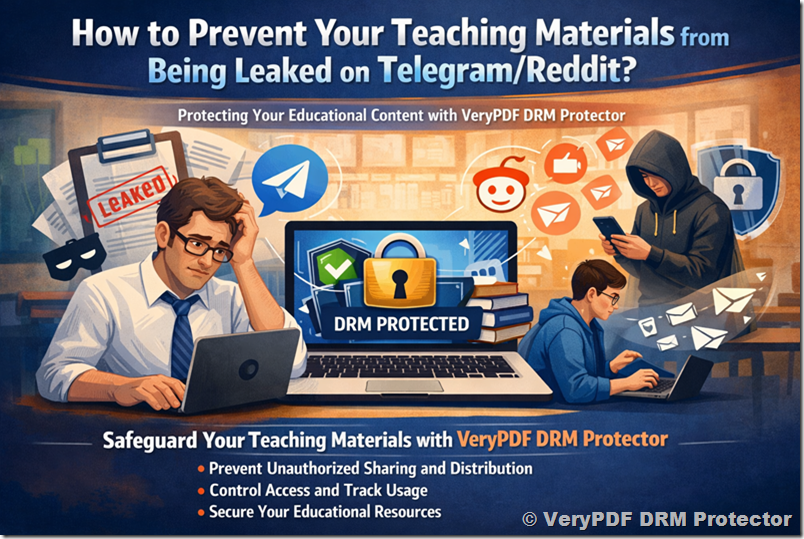 The Rising Challenge of Digital Content Leakage
The transition to digital classrooms has brought immense benefits: students can access learning materials anytime, anywhere, and teachers can deliver content more effectively. However, this convenience comes with a significant risk. Once a file is distributed electronically, it can be copied, forwarded, and uploaded with minimal effort. Even a single student sharing a lecture PDF on Telegram or Reddit can lead to widespread dissemination in just hours.
Many teachers report discovering their course materials being shared on public forums without their consent. These leaks can occur for various reasons:
- Unauthorized sharing by students: Some students may intentionally share files to help peers who are not enrolled in the course.
- Accidental forwarding: Students may unknowingly send a copy of the material to the wrong group or person.
- Lack of access control: Traditional PDF files or PowerPoint presentations often rely on simple passwords or unsecured email attachments, which are easily bypassed.
The consequences of such leaks are serious:
- Loss of Intellectual Property: Teachers invest hours of research and preparation into their materials. Once leaked, this work can be freely copied and reused without credit or compensation.
- Academic Integrity Issues: Leaked materials give some students unfair advantages, potentially compromising exams, assignments, and classroom evaluations.
- Professional Reputation: Publicly available course content might reflect outdated information or errors that the teacher intended to revise, potentially affecting their professional image.
- Financial Impact: For teachers who sell or license educational content, leaks can directly reduce revenue.
Understanding Teacher Pain Points
To fully appreciate the need for protection, it’s important to understand the specific pain points educators face:
1. Fear of Unauthorized Distribution
Teachers often worry that sharing materials digitally could lead to their work being posted online. Unlike a physical textbook that is harder to duplicate without cost, digital materials are easily copied. Platforms like Telegram and Reddit enable anonymous sharing, making it nearly impossible to track the source once content is leaked.
2. Difficulty Controlling Student Access
Even with classroom management software or LMS systems, controlling who can access files outside the school environment is challenging. Students can download PDFs, screenshots, or convert materials into other formats, bypassing simple restrictions.
3. Loss of Student Engagement and Value of Learning
When course materials are widely available online, students may skip attending classes or completing assignments, assuming they can access all necessary resources elsewhere. This not only reduces engagement but also undermines the teacher’s role in guiding learning.
4. Time and Effort Wasted on Repeated Work
Teachers often need to revise materials each semester to prevent unauthorized reuse. Leaked files make it necessary to recreate or heavily modify content frequently, consuming valuable time that could be spent on instruction or research.
5. Risk of Misuse and Misrepresentation
Leaked content may be edited or misinterpreted, potentially misrepresenting the teacher’s ideas or course objectives. Once material circulates publicly, it is nearly impossible to remove it entirely from the internet.
Traditional Methods and Their Limitations
Many teachers attempt to protect their materials using standard methods:
- Password-protected PDFs: While adding a password may prevent casual access, passwords can be shared easily among students.
- Email attachments: Sending files via email provides no control once the student downloads the document.
- LMS restrictions: Some learning management systems allow limited access to files, but students can still take screenshots or use other devices to copy content.
These methods provide minimal protection and cannot prevent determined students from distributing materials online. This is where Digital Rights Management (DRM) solutions become critical.
How VeryPDF DRM Protector Solves the Problem
VeryPDF DRM Protector is designed specifically to address the challenges faced by educators in the digital age. This powerful tool allows teachers to protect PDF documents and other course materials with advanced security features that go far beyond simple passwords.
Key Features for Educators
- Access Control
With VeryPDF DRM Protector, teachers can define exactly who can open a document. Each file can be assigned to individual students or groups, ensuring that unauthorized users cannot access the content.
- Copy and Print Restrictions
The software can prevent students from copying text, taking screenshots, or printing materials. Even if a file is shared with others, its content remains protected, limiting the possibility of redistribution.
- Dynamic Watermarking
One of the most effective deterrents against leaks is dynamic watermarking. Each document can be stamped with the student’s name, email, or other identifying information. If a file is leaked online, it is possible to trace it back to the source.
- Expiration and Revocation
Teachers can set expiration dates for documents or revoke access at any time. This ensures that materials are only available for the duration of the course and cannot be reused indefinitely.
- Cross-Platform Protection
VeryPDF DRM Protector works across multiple devices and platforms. Whether students use Windows, Mac, or mobile devices, the protection remains intact, preventing unauthorized access regardless of the device used.
How It Works
Using VeryPDF DRM Protector is simple:
- Upload your course materials (PDFs, presentations, or other files) to the platform.
- Configure the security settings according to your needs—decide who can view the document, apply watermarks, and set expiration dates.
- Distribute the secured files to students.
Once the files are protected, they cannot be forwarded, copied, or printed without your authorization. Even if a student attempts to share the document on Telegram, Reddit, or other platforms, the content remains secure.
Real-Life Scenario
Imagine a professor preparing a set of lecture notes for a graduate course. Without DRM protection, a student could easily upload the notes to a Telegram group, where hundreds of others could access them instantly. This could lead to a loss of control over the course, complaints from the administration, and even reputational damage if the materials are misused.
With VeryPDF DRM Protector, the same notes can be distributed securely. Each student receives a copy with a personalized watermark and restrictions that prevent printing or sharing. If the notes appear online, the professor can identify the source and take action immediately.
Benefits Beyond Security
While preventing leaks is the primary goal, using VeryPDF DRM Protector also offers additional advantages:
- Peace of Mind: Teachers can focus on teaching instead of worrying about unauthorized distribution.
- Maintaining Academic Integrity: Ensures that all students access materials fairly, reducing cheating and plagiarism.
- Efficiency: No need to constantly revise materials to prevent leaks; secure files can be reused semester after semester.
- Professional Credibility: Demonstrates that the teacher takes intellectual property seriously, enhancing reputation and authority.
Implementation Tips for Teachers
To maximize the effectiveness of DRM protection, teachers should consider the following:
- Personalize Watermarks: Include student-specific information to discourage sharing.
- Set Expiration Dates: Ensure materials are only available during the active period of the course.
- Monitor Access: Keep track of who opens documents to identify unusual activity.
- Combine with LMS: Use DRM protection alongside your Learning Management System for an added layer of security.
- Educate Students: Inform students about the importance of respecting digital materials and the consequences of unauthorized sharing.
Conclusion
Digital course materials are invaluable, but without proper protection, they are vulnerable to unauthorized distribution. Teachers face significant challenges when their hard work is leaked online, from loss of intellectual property to compromised academic integrity. Traditional methods like passwords and LMS restrictions provide limited security and are easily bypassed.
VeryPDF DRM Protector offers a robust solution. With features such as access control, copy and print restrictions, dynamic watermarking, and expiration management, educators can distribute materials safely, knowing that their content remains protected. By using DRM protection, teachers regain control over their work, maintain fairness in the classroom, and ensure their efforts are respected.
If you want to try VeryPDF DRM Protector for free and see how it can safeguard your teaching materials, visit https://drm.verypdf.com/. Protect your intellectual property, preserve academic integrity, and take control of your course materials today.