
Creating an online course takes time, effort, and expertise. Naturally, you want to protect your intellectual property from theft. Unfortunately, content theft is real. A few years ago, platforms like Udemy faced scrutiny when it was discovered that stolen courses were being sold on their platform, generating revenue for the site. While platforms typically remove pirated content once reported, they rely on users to alert them, rather than actively policing theft.
For educators, this raises an important question: how do you prevent someone from stealing your hard work and profiting from it?
Why Content Theft Matters
Content theft isn’t just a moral violation, it can impact your revenue, reputation, and future opportunities. However, not all content sharing is harmful. Some sharing, when credited properly, can even increase your visibility and attract learners. On the other hand, uncredited theft, account sharing, or full course scraping can be a real problem.
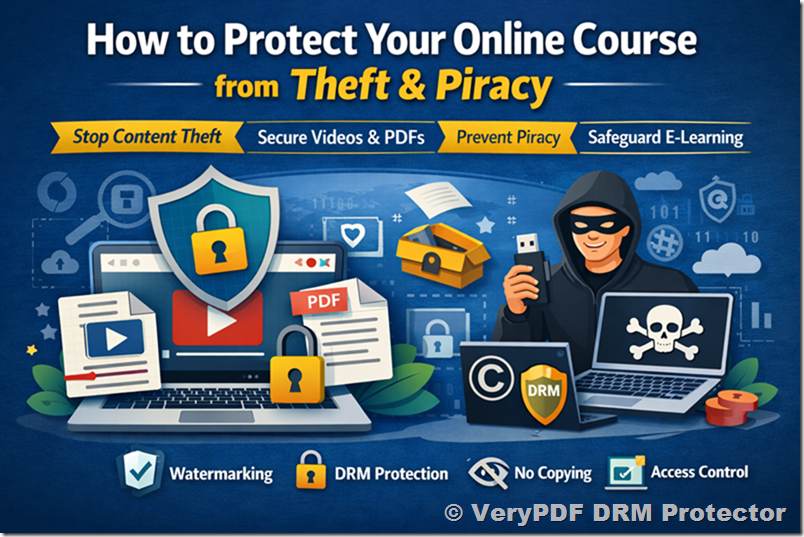 Here’s what you need to know:
1. Some Sharing is Beneficial
Not every instance of sharing is theft. Fair use often allows small portions of your material to be shared, provided proper credit is given. For example, if someone posts an infographic from your course on their blog with attribution and links back to your course, this can actually serve as free marketing.
The problem arises when content is shared without credit. In such cases, you have every right to request proper attribution or remove the content. Protecting your work doesn’t mean stifling legitimate promotion, it’s about controlling how your content is used.
2. Password Sharing Is Less Risky for Engaged Courses
Learners rarely want to disrupt their own progress. Courses with quizzes, certificates, or personalized content discourage users from sharing logins because it could interfere with their progress. Therefore, password sharing is usually less of a concern for interactive courses compared to simple video-based lessons.
3. Copying an Entire Course Is Hard Work
Stealing a full course is labor-intensive. Thieves must purchase your course, transfer content, remove references to your brand, and fix links and media. Even then, the quality usually suffers, making the pirated version less valuable than the original.
4. Marketing Stolen Content Is Challenging
Promoting a stolen course is no small task. Learners often avoid pirated content due to quality concerns, and platforms like Udemy may reduce visibility for low-quality uploads. Coupled with the risk of legal action, course theft is not a lucrative or low-risk endeavor for most thieves.
Practical Ways to Protect Your Course
While you may not stop a determined thief entirely, there are effective steps to make your course harder to steal:
1. Register Copyrights
Copyright protection is automatic in many countries, but registering your course with the relevant authority strengthens your legal position. In the U.S., you can register your course with the U.S. Copyright Office to claim ownership and seek damages if someone steals your work.
2. Watermark Your Content
Add visible watermarks to videos, images, and PDFs. Watermarks deter theft by forcing anyone attempting to reuse your content to edit it, which usually reduces quality and makes it harder to monetize.
3. Use Secure Video Streaming
Platforms like Vimeo and Wistia offer content protection features such as password-protected viewing, download restrictions, and domain-level embedding. These features help protect your video content from casual theft.
4. Prevent Concurrent Logins
For courses where password sharing is a concern, restrict simultaneous logins. This ensures one account can only be accessed by a single user at a time, reducing the risk of unauthorized sharing.
5. Disable Copy and Right-Click (When Necessary)
While this can frustrate some learners, disabling right-click and text copying may prevent ongoing theft if other measures fail. WordPress plugins like Disable Right Click for WP can help implement this, but use it judiciously to avoid usability issues.
6. Regularly Monitor for Theft
Set up a schedule to search for your course content online. Use exact sentences from your course descriptions, images, or PDFs in Google searches to spot potential theft. Contact sites hosting stolen content to request takedowns.
The Best Tool for Complete Protection: VeryPDF DRM Protector
For educators serious about safeguarding their course content, VeryPDF DRM Protector provides comprehensive, all-in-one protection. Key features include:
- Prevent PDF copying, printing, and screen capturing to stop unauthorized distribution
- Persistent protection even after downloads, so files remain secure on any device
- Dynamic watermarking to trace and identify unauthorized sharing
- Password and user access controls, including individual user permissions
- Expiration controls to automatically revoke access after a set period
- IP and device restriction to limit access to specific locations or devices
- Offline access protection to secure files even when learners work without internet
- Detailed activity logs and tracking to monitor who opens, views, or attempts to copy content
- Integration with LMS platforms for seamless course protection
- Custom branding options to maintain your course identity and credibility
- Anti-screenshot and screen recording protection to prevent content capture
- Flexible DRM policies, allowing different access rules for different learners or course materials
VeryPDF DRM Protector ensures that your intellectual property stays secure while maintaining a smooth and professional experience for legitimate learners. You can try it for free online at https://drm.verypdf.com/.
With these strategies and the right tools, you can confidently protect your online courses, discourage theft, and ensure your hard work benefits you, not content pirates.