What Is a Content Security Platform? How to Protect PDF Files, Videos, Audio Content, and Intellectual Property from Unauthorized Sharing

Many companies spend months creating training materials, reports, videos, product documentation, research papers, user guides, and other valuable digital content.

The problem starts when that content is shared.

A PDF can be forwarded to hundreds of people within minutes. A training video can be downloaded and uploaded to another website. Internal documents can be copied by employees who are leaving the company. Educational materials can be shared between students. Premium content can be distributed without permission.

Once content leaves your control, it becomes difficult to track where it goes and who is using it.

This is why more organizations are looking for a Content Security Platform.

A Content Security Platform helps organizations protect digital content, control access, monitor usage, and reduce unauthorized sharing. Instead of protecting only one file type, it provides a single system for securing PDF files, videos, audio files, images, reports, training materials, and other business content.

This page explains the common content security problems organizations face and how a Content Security Platform helps solve them.

What Is a Content Security Platform? How to Protect PDF Files, Videos, Audio Content, and Intellectual Property from Unauthorized Sharing


Why Traditional File Protection Is No Longer Enough

Many organizations still rely on simple methods such as:

Method Problem
Password protected PDF Passwords can be shared
ZIP file encryption Users can forward extracted files
Private download links Links can be copied and shared
Email attachments No control after delivery
Cloud storage permissions Files can often be downloaded and redistributed

The biggest weakness is simple.

Once a user receives a file, most systems lose control over what happens next.

This creates serious risks for businesses that distribute valuable content.


Common Content Security Problems Companies Face

Employees Sharing Confidential Documents

A company may spend years creating internal procedures, pricing documents, sales strategies, engineering specifications, or training materials.

An employee can copy these files and take them to a competitor in seconds.

Many businesses only discover the problem after sensitive information has already been leaked.


Students Sharing Course Materials

Online education providers often face the same issue.

Students purchase access to premium training materials and then share:

  • PDF workbooks
  • Course notes
  • Training videos
  • Audio lessons

One customer can become hundreds of unauthorized users.

This directly affects revenue.


Clients Forwarding Paid Reports

Consulting firms, market research companies, and financial analysts often sell premium reports.

The intended customer purchases one copy.

The report is then forwarded throughout the organization or even outside the company.

The content creator loses control completely.


Video Piracy and Screen Recording

Many organizations assume video content is harder to copy than documents.

Unfortunately, this is not true.

Users may:

  • Download videos
  • Record their screens
  • Share access credentials
  • Capture video streams

Without proper protection, premium video content can spread quickly.


What Is a Content Security Platform?

A Content Security Platform is a system that helps organizations:

  • Protect digital content
  • Control who can access content
  • Prevent unauthorized sharing
  • Track user activity
  • Apply security policies
  • Revoke access when needed

Instead of protecting files one by one, organizations can manage security from a central platform.

This approach is much easier to manage when hundreds or thousands of files are being distributed.


Key Features of a Content Security Platform

User-Based Access Control

One of the most important features is controlling exactly who can access content.

Organizations can allow access based on:

  • User account
  • Email address
  • Device
  • IP address
  • Geographic location
  • Organization

This helps prevent unauthorized users from opening protected content.


Dynamic Watermarking

Watermarks are one of the most effective ways to discourage content sharing.

Unlike static watermarks, dynamic watermarks can display:

  • User name
  • Email address
  • Company name
  • Date and time
  • IP address

When users know their identity is visible on the content, they are much less likely to redistribute it.


PDF Content Security

PDF files remain one of the most common business document formats.

Organizations frequently need to protect:

  • Training manuals
  • Research reports
  • Product documentation
  • Employee handbooks
  • Contracts
  • Educational materials

PDF Content Security helps prevent:

Risk Protection
Unauthorized sharing Access controls
Copying text Copy restrictions
Printing Print controls
Screenshots Visible watermarking
Expired access Automatic expiration

Because image protection is built into PDF security, image-based documents and embedded graphics can also be protected using the same platform.


Video Content Security

Video content often represents significant investments in time and money.

Examples include:

  • Online courses
  • Employee training
  • Product demonstrations
  • Recorded webinars
  • Educational content

Video security features may include:

  • User authentication
  • Device restrictions
  • Expiration dates
  • Playback controls
  • Dynamic watermarking
  • Access tracking

These controls help reduce unauthorized distribution.


Audio Content Security

Audio content is becoming increasingly valuable.

Examples include:

  • Podcasts
  • Training recordings
  • Internal communications
  • Premium audio programs

Organizations need the same level of protection for audio content as they do for documents and videos.

A Content Security Platform provides centralized management for all content types.


Usage Tracking and Audit Logs

One of the biggest questions content owners ask is:

“Who accessed my content?”

A Content Security Platform can record:

  • User activity
  • Login history
  • Viewing history
  • Device information
  • Access times
  • Security events

This visibility helps organizations understand how content is being used.


Remote Access Revocation

Sometimes access needs to be removed immediately.

Examples include:

  • Employee termination
  • Subscription expiration
  • Contract completion
  • Security incidents

Instead of relying on users to delete files, access can be revoked remotely.

This allows organizations to maintain control after distribution.


Why Businesses Choose a Unified Content Security Platform

Without a centralized platform, organizations often use separate tools for:

  • PDF protection
  • Video protection
  • Audio security
  • User management
  • Activity tracking

Managing multiple systems increases cost and complexity.

A unified Content Security Platform provides:

  • One administration portal
  • One security policy framework
  • One user management system
  • One audit system
  • One reporting system

This reduces operational overhead and improves security.


Industries That Benefit from Content Security

Education

Protect:

  • Online courses
  • Study guides
  • Lesson plans
  • Training videos

Corporate Training

Protect:

  • Employee training
  • Compliance programs
  • Internal knowledge bases

Financial Services

Protect:

  • Investment reports
  • Market research
  • Client documents

Healthcare

Protect:

  • Medical training materials
  • Internal procedures
  • Compliance documents

Legal Services

Protect:

  • Contracts
  • Legal opinions
  • Case files

Publishers and Content Creators

Protect:

  • Premium reports
  • Digital publications
  • Subscription content

How Content Security Platform Helps

Content Security Platform helps organizations secure valuable digital content through centralized access control, dynamic watermarking, audit logging, content tracking, and remote access management.

The platform supports:

  • PDF Content Security
  • Video Content Security
  • Audio Content Security
  • User Authentication
  • Dynamic Watermarking
  • Access Expiration
  • Usage Tracking
  • Audit Logs
  • Remote Revocation
  • API Integration

Organizations can distribute digital content while maintaining control over how it is accessed and used.


Frequently Asked Questions

What is a Content Security Platform?

A Content Security Platform is software that helps organizations protect digital content, control access, monitor usage, and reduce unauthorized sharing.

How is Content Security different from DRM?

DRM is usually focused on restricting content access. Content Security is broader and includes access control, auditing, tracking, watermarking, and content management.

Can a Content Security Platform protect PDF files?

Yes. It can protect PDF files using access controls, dynamic watermarks, expiration policies, and usage restrictions.

Can videos be protected from unauthorized sharing?

While no system can guarantee that content will never be copied, security controls can significantly reduce unauthorized distribution.

What is dynamic watermarking?

Dynamic watermarking displays user-specific information directly on content to discourage sharing.

Can I revoke access after content has been distributed?

Yes. Authorized administrators can revoke access remotely.

Does Content Security work for audio files?

Yes. Audio content can be protected using the same access control and tracking mechanisms.

Can I track who viewed a document?

Yes. Audit logs can record viewing activity and other user actions.

Is Content Security useful for online training?

Yes. Training materials are among the most common use cases.

Can organizations manage multiple content types from one platform?

Yes. A Content Security Platform provides centralized management for PDF, video, audio, and other digital content.

Is Content Security suitable for universities?

Yes. Universities often use content security systems to protect educational materials and research documents.

What industries benefit most from Content Security?

Education, corporate training, publishing, legal services, healthcare, financial services, and consulting firms commonly use content security solutions.

How to Sell PDF Documents Online Securely in 2026: Best Platforms, Tips, and PDF Protection Guide

Selling PDF documents online has become one of the easiest ways to earn income from digital content. Whether you create eBooks, research papers, business reports, study guides, templates, or training materials, PDFs allow you to reach buyers worldwide without printing or shipping costs.

The biggest challenge is not creating the PDF. The real challenge is protecting your content from copying, sharing, printing, and piracy.

This guide explains how to sell PDF documents online securely, the best platforms to use, and how to protect your files before selling them.

Why Selling PDFs Online Is Growing Fast

People now prefer digital content because it is easy to access from anywhere. Instead of waiting for physical delivery, buyers can download and read PDFs immediately after payment.

PDF files are widely used across many industries:

  • eBooks
  • Online courses
  • Research papers
  • Business reports
  • White papers
  • Educational materials
  • User manuals
  • Financial guides
  • Health and fitness programs
  • Professional training documents

Since PDFs work on computers, tablets, and smartphones, they remain one of the most popular digital product formats.

How to Sell PDF Documents Online Securely in 2026: Best Platforms, Tips, and PDF Protection GuideBenefits of Selling PDF Documents Online

1. Lower Costs

Traditional publishing comes with expenses such as:

Traditional Publishing

PDF Selling

Printing costs

No printing needed

Warehousing

No storage costs

Shipping fees

Instant delivery

Physical inventory

Unlimited digital copies

With PDFs, you can create a document once and sell it repeatedly.

2. Instant Delivery

Customers receive access immediately after payment.

This improves:

  • Customer satisfaction
  • User experience
  • Conversion rates
  • Repeat purchases

There is no waiting time or shipping delay.

3. Global Reach

When you sell PDFs online, your audience is not limited to your local market.

You can sell to buyers in:

  • United States
  • United Kingdom
  • Canada
  • Australia
  • Europe
  • Asia
  • Any country with internet access

This allows creators to build a worldwide customer base.

4. Easy Compatibility

PDFs work on almost every device:

  • Windows PCs
  • Mac computers
  • Android phones
  • iPhones
  • Tablets
  • eReaders

Buyers do not need special software to open most PDF documents.

5. Better Security Options

Compared to many file formats, PDFs support security features such as:

  • Password protection
  • Read-only access
  • Copy restrictions
  • Printing restrictions
  • Expiration controls
  • User authentication

These features help reduce unauthorized sharing.

Popular PDF Ideas That Sell Well in 2026

If you’re wondering what type of PDF to create, consider topics with strong demand.

Category

Examples

Personal Finance

Budget planners, investment guides

Health & Fitness

Workout plans, diet guides

Self Improvement

Productivity systems, habit trackers

Relationships

Dating advice, communication guides

Education

Study notes, exam preparation

Business

Reports, templates, training manuals

Technology

Tutorials, AI guides, software manuals

The best-selling PDFs usually solve a specific problem.

For example:

  • “30-Day Weight Loss Plan”
  • “Beginner Investing Guide”
  • “AI Prompt Library for Businesses”
  • “Freelance Pricing Handbook”

How to Create PDF Documents for Selling

Before you can sell PDFs online, you need professional-looking content.

Microsoft Word

A simple choice for creating:

  • eBooks
  • Reports
  • Guides
  • Manuals

You can export documents directly as PDFs.

Google Docs

Perfect for:

  • Collaboration
  • Fast editing
  • Cloud-based document creation

It also allows direct PDF export.

Canva

Canva is useful when you want:

  • Better design
  • Modern layouts
  • Visual branding
  • Professional graphics

Many creators use Canva to create attractive digital products.

Adobe InDesign

Best for advanced publishing projects such as:

  • Magazines
  • Professional eBooks
  • Detailed reports
  • High-end PDF products

How to Prepare PDFs Before Selling

Before publishing your PDF, check the following:

Content Quality

Make sure your PDF contains:

  • Accurate information
  • Useful insights
  • Clear formatting
  • Actionable advice

Professional Design

Improve readability using:

  • Headings
  • Tables
  • Charts
  • Images
  • Consistent fonts

Mobile-Friendly Formatting

Many buyers read PDFs on phones.

Avoid:

  • Tiny text
  • Overcrowded layouts
  • Large images that slow loading

Best Platforms to Sell PDF Documents Online

Choosing the right platform can directly affect your sales.

1. Amazon Kindle Direct Publishing (KDP)

Amazon remains one of the largest marketplaces for digital books.

Benefits

  • Massive customer base
  • Trusted brand
  • Worldwide reach
  • Built-in search traffic

Best For

  • eBooks
  • Educational content
  • Non-fiction guides

Things to Consider

Amazon usually pays royalties based on pricing plans, often ranging from 35% to 70%.

Before publishing, review the current royalty structure carefully.

2. Gumroad

Gumroad is one of the easiest platforms for selling PDFs.

Benefits

  • Beginner-friendly
  • Fast setup
  • Flexible pricing
  • Built-in marketing tools

Best For

  • Creators
  • Coaches
  • Consultants
  • Independent authors

Many creators use Gumroad because it requires very little technical setup.

3. Etsy

Although known for handmade products, Etsy has become a popular marketplace for digital downloads.

Benefits

  • Large audience
  • Digital product support
  • Instant delivery
  • Easy storefront setup

Best For

  • Templates
  • Planners
  • Educational materials
  • Printable PDFs

How to Choose the Right Platform

Ask yourself these questions:

Question

Why It Matters

Who is my audience?

Different platforms attract different buyers

What type of PDF am I selling?

Some marketplaces perform better for specific niches

Do I want to build a brand?

Some platforms offer more customization

What are the platform fees?

Fees affect profitability

The best platform depends on your goals and audience.

The Biggest Risk When Selling PDFs Online

Many creators focus only on sales.

However, content theft is becoming a major problem.

Without protection, buyers may:

  • Copy content
  • Share files with others
  • Upload PDFs to piracy websites
  • Print unlimited copies
  • Modify your content

This can reduce revenue and weaken your brand.

How to Sell PDF Documents Online With Maximum Security

Protecting your PDF before uploading it is one of the most important steps.

A strong PDF security solution can help prevent:

  • Unauthorized access
  • Document copying
  • Illegal sharing
  • Editing
  • Printing
  • Content theft

One of the most effective solutions is VeryPDF DRM Protector.

Why Choose VeryPDF DRM Protector?

VeryPDF DRM Protector helps creators and publishers secure their digital documents before selling them online.

Key Features

  • Strong DRM protection
  • Password security
  • Copy prevention
  • Print restrictions
  • Editing restrictions
  • User access control
  • Secure document distribution

These features help ensure that only authorized buyers can access your content.

Benefits of Using VeryPDF DRM Protector

Feature

Benefit

DRM Protection

Prevents unauthorized sharing

Print Control

Limits or blocks printing

Copy Protection

Stops content copying

Access Control

Restricts document access

Security Management

Protects valuable intellectual property

For creators selling premium reports, eBooks, training materials, or research papers, document protection can help reduce piracy and protect revenue.

Best Practices for Selling PDFs Successfully

Focus on Solving Problems

People buy solutions, not documents.

Instead of creating generic content, answer specific questions.

Use SEO-Friendly Titles

Examples:

  • How to Start Investing With $500
  • Beginner AI Guide for Small Businesses
  • Weight Loss Meal Plan PDF

These titles match what users actually search for online.

Build an Email List

Collect customer emails and stay connected.

Benefits include:

  • Repeat sales
  • Product launches
  • Promotions
  • Customer feedback

Offer Samples

A free preview can increase buyer confidence.

Examples:

  • First chapter
  • Sample report pages
  • Limited-access version

Protect Every PDF Before Uploading

Even high-quality content can lose value if it is copied and distributed for free.

Using PDF security software before selling is a smart long-term strategy.

Final Thoughts

Selling PDF documents online is one of the simplest ways to create and distribute digital products. Whether you sell eBooks, reports, educational materials, or business guides, PDFs provide low costs, global reach, and instant delivery.

Platforms like Amazon Kindle, Gumroad, and Etsy make it easy to reach buyers. However, protecting your content is just as important as creating it.

Before uploading your documents, use a reliable protection solution such as VeryPDF DRM Protector to help prevent copying, printing, editing, and unauthorized sharing. This extra layer of security can help protect your content, reputation, and revenue.

Frequently Asked Questions (FAQs)

1. Can I sell PDF documents online legally?

Yes. You can sell PDF documents online if you own the content or have permission to distribute it.

2. What is the best platform for selling PDFs?

Amazon Kindle, Gumroad, and Etsy are among the most popular options depending on your niche and audience.

3. How much can I earn selling PDF documents?

Income varies based on pricing, marketing, content quality, and audience demand.

4. What types of PDFs sell the most?

Finance guides, health programs, educational materials, business reports, and self-improvement content often perform well.

5. How do I prevent PDF piracy?

Use document security tools such as DRM protection, access controls, and copy restrictions.

6. Can buyers share my PDF with others?

Yes, unless you apply security measures that restrict sharing and unauthorized access.

7. Why is PDF protection important?

It helps protect intellectual property, revenue, and confidential information.

8. Can I sell PDFs without a website?

Yes. Platforms like Gumroad, Etsy, and Amazon allow you to sell PDFs without creating your own website.

9. Is Amazon Kindle good for selling PDF-based eBooks?

Yes. Amazon offers access to a large audience and provides a trusted marketplace for digital publishing.

10. How can I make my PDF look professional?

Use clear formatting, quality design, consistent branding, and readable layouts.

11. What is DRM protection?

DRM (Digital Rights Management) helps control how users access, copy, print, and distribute digital content.

12. Why should I use VeryPDF DRM Protector?

VeryPDF DRM Protector helps secure PDF documents with advanced protection features that reduce the risk of copying, printing, editing, and unauthorized sharing. It is a practical solution for anyone selling valuable digital content online.

How Can I Sell My PDF Book Without It Being Leaked? Best Ways to Protect and Sell Digital Books

Creating a digital book takes months of research, writing, editing, and design. After all that work, the last thing you want is to see your PDF shared for free on forums, cloud drives, or social media groups.

The hard truth is that no digital product is 100% leak-proof. If someone can view a file, they can always try to copy it. However, you can make unauthorized sharing much harder and reduce the risk significantly.

If you’re planning to sell a PDF book online, here are the most effective ways to protect it and keep control over your content.

Why PDF Books Get Leaked

Most PDF leaks happen because:

Cause

Risk Level

Buyers share the file with friends

High

PDFs are uploaded to file-sharing sites

High

Users remove weak password protection

Medium

Screenshots are taken and shared

Medium

Employees or partners distribute files

Low to Medium

A standard PDF password is usually not enough. Many PDF password removal tools can bypass weak protection within minutes.

That’s why professional publishers often use DRM protection instead of simple passwords.

How Can I Sell My PDF Book Without It Being Leaked? Best Ways to Protect and Sell Digital Books


What Is DRM Protection?

DRM (Digital Rights Management) is a technology that controls how people can access and use digital content.

Unlike normal PDF passwords, DRM can:

  • Prevent copying text
  • Block printing
  • Stop PDF downloads
  • Restrict screen captures
  • Lock access to specific devices
  • Set expiration dates
  • Revoke access remotely
  • Add dynamic watermarks

This makes it much harder for buyers to share your book illegally.


Best Way to Protect a PDF Book Before Selling

Use VeryPDF DRM Protector

One of the most effective solutions for authors, publishers, trainers, consultants, and businesses is VeryPDF DRM Protector.

It helps protect PDF books from unauthorized sharing and redistribution.

Key features include:

Feature

Benefit

No PDF passwords required

Stronger protection

Device locking

Limits access to authorized devices

Dynamic watermarking

Identifies the buyer on every page

Block printing

Prevent physical copies

Stop copy and paste

Protect content

Expiration controls

Sell subscriptions or limited access

Revoke access anytime

Disable leaked copies

Offline viewing control

Better security management

For example, if a customer purchases your PDF book, you can allow access on only one or two devices. If that PDF appears online later, you can identify the source through watermark information.

This approach is much stronger than simply sending a downloadable PDF file.


Watermark Every Copy You Sell

Watermarks are one of the easiest ways to discourage sharing.

Instead of delivering the exact same PDF to every buyer, add:

  • Customer name
  • Email address
  • Order number
  • Purchase date

Example:

Purchased by John Smith
john@email.com
Order #45821

When people know their information appears on every page, they are less likely to upload the file publicly.

Many DRM systems, including VeryPDF DRM Protector, can automate this process.


Sell Through a Secure Platform

The platform you choose also matters.

Here are some common options:

Platform

Protection Level

Direct PDF download

Low

Gumroad

Medium

Payhip

Medium

Shopify digital products

Medium

DRM-protected delivery

High

Many creators start with Gumroad or Payhip because they are easy to use. However, if your book has high value, DRM protection should be added on top of the selling platform.

Remember: a payment platform processes the sale. It does not necessarily stop piracy.


Avoid Sending Raw PDF Files

One common mistake is emailing the original PDF directly to customers.

This creates several problems:

  • Easy forwarding
  • Easy uploading
  • No access control
  • No tracking

Instead, use a secure viewer or DRM-protected distribution system.

That way, users access the content through controlled software rather than receiving a fully open PDF.


Use License-Based Access

Another effective strategy is license management.

Instead of selling a file, you sell access.

Benefits include:

Traditional PDF

Licensed PDF

Unlimited sharing

Controlled access

No device restrictions

Device restrictions

Cannot revoke

Can revoke

Easy piracy

Harder piracy

Static file

Managed content

This approach is widely used by professional publishers and training companies.


Can DRM Stop Screenshots?

Many authors ask this question.

The answer is: partially.

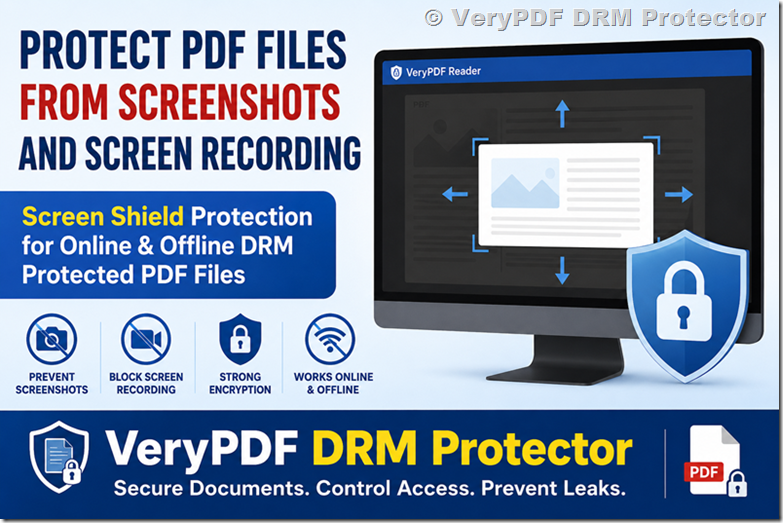
Some DRM systems can:

  • Block common screen capture tools
  • Black out screen recording attempts
  • Detect virtual machines
  • Restrict remote desktop access

However, no solution can completely prevent someone from taking a photo of a screen with another device.

The goal is to make copying difficult enough that most people will not bother.


What Happens If Your PDF Gets Leaked?

Even with protection, leaks can happen.

If you discover your book on a piracy site:

  1. Identify the source using watermarks.
  2. Disable access for the offending user.
  3. Send DMCA takedown notices.
  4. Report the content to hosting providers.
  5. Monitor future leaks.

DRM protection gives you tools to react quickly instead of losing control completely.


Free Protection vs DRM Protection

Many new authors try free methods first.

Here’s how they compare:

Protection Method

Security Level

PDF password

Low

Read-only PDF

Low

Watermark only

Medium

Password + watermark

Medium

Professional DRM

High

If your PDF book sells for a few dollars, basic protection may be enough.

If your book contains premium knowledge, training materials, business strategies, research, or professional content, DRM protection is usually worth the investment.


Real Example

Imagine you sell a specialized investment guide for $99.

Without protection:

  • One buyer purchases it.
  • They upload it to a Telegram group.
  • Hundreds of people download it for free.

With DRM protection:

  • Access is tied to authorized devices.
  • The buyer’s information appears as a watermark.
  • Printing and copying are blocked.
  • Access can be revoked if abuse is detected.

This greatly reduces the chance of widespread unauthorized distribution.


Final Thoughts

If you want to sell a PDF book without worrying about unauthorized sharing, the best approach is to combine multiple layers of protection:

  • Use DRM protection
  • Add personalized watermarks
  • Limit devices
  • Control printing and copying
  • Avoid distributing raw PDF files
  • Monitor for piracy

No digital content can be protected perfectly, but professional DRM solutions make piracy much more difficult and help you maintain control over your work.

For authors, publishers, educators, consultants, and businesses selling valuable PDF content, VeryPDF DRM Protector is one of the strongest options available. It provides advanced PDF security features that go far beyond simple password protection and helps protect your digital book revenue.


FAQs

1. Can a PDF be made completely impossible to copy?

No. Any digital file can potentially be copied. The goal is to make unauthorized copying difficult and unattractive through DRM and watermarking.

2. Is a PDF password enough to stop piracy?

Usually not. Many PDF password removal tools can bypass weak protection methods.

3. What is the safest way to sell a PDF book?

Using a DRM-protected PDF distribution system with device restrictions and watermarking is generally the safest option.

4. Does VeryPDF DRM Protector prevent PDF sharing?

It significantly reduces sharing by restricting access to authorized devices and users.

5. Can I stop users from printing my PDF?

Yes. DRM protection can disable printing completely or limit the number of prints allowed.

6. Can DRM prevent copy-and-paste?

Yes. Most professional DRM systems can block text copying and extraction.

7. What is dynamic watermarking?

Dynamic watermarking automatically inserts buyer-specific information into every copy of a PDF.

8. Can I revoke access after selling a PDF?

Yes. With DRM-based systems, access can often be revoked remotely if misuse is detected.

9. Should I use Gumroad or DRM software?

They serve different purposes. Gumroad handles payments, while DRM software protects your content. Many sellers use both together.

10. Can DRM stop screenshots?

It can reduce and block many screenshot methods, but no system can stop every possible screen capture method.

11. What if someone uploads my PDF to a piracy website?

You can use watermark information to identify the source and send DMCA takedown requests to remove the content.

12. Is DRM protection worth it for small authors?

If your PDF contains valuable information or generates meaningful income, DRM protection can help protect your work and reduce revenue loss from piracy.

PDF Security in AI Era: How to Stop Document Leaks, AI Copying, and Unauthorized Sharing

People used to think PDF files were safe once they were password protected. That is no longer true.

Today, tools like ChatGPT and Claude can read PDFs in seconds. Employees can upload company files to AI tools without permission. Sensitive documents can be copied, summarized, or reused in ways you never expected.

This creates a new problem: your document is not just being shared, it is being understood, extracted, and reused by AI systems.

This is where modern DRM protection becomes important.

PDF Security in AI Era: How to Stop Document Leaks, AI Copying, and Unauthorized Sharing


New problem: AI can read your PDF files

Old PDF security focused on simple things:

  • Password protection
  • No printing
  • No copying

But now the real risks are different:

1. AI can extract full meaning from documents

A user can upload your PDF into an AI tool and ask:

  • “Summarize this contract”
  • “Extract key clauses”
  • “Rewrite this document”

Even if copy is blocked, AI still reads it.


2. Confidential content can be reused

Once AI reads your document, users can:

  • Recreate your content in new words
  • Generate reports from your private files
  • Share clean rewritten versions externally

3. Data becomes part of workflows

Employees may unknowingly:

  • Upload client documents to AI tools
  • Paste sensitive text into chat tools
  • Share internal PDFs with third-party systems

This is where leaks happen.


New requirement: Control “reading without copying”

Old DRM idea:

“Block copy and print”

New DRM idea:

“Even if someone reads it, they should not be able to reuse it freely”

Modern document security now needs:

  • Control what users can extract
  • Control how content is understood
  • Control how long access is valid
  • Track who accessed what

What VeryPDF DRM Protector does

VeryPDF DRM Protector is built for this new type of document risk.

It is designed for companies, schools, and publishers who want more control over PDF files in the AI era.


Key features explained in simple terms

1. Private DRM deployment (on your own server)

You can install the system inside your company network.

Option

What it means

Cloud DRM

Files go through external servers

Private DRM

Everything stays inside your company

This is important for:

  • Legal documents
  • Internal company files
  • Government or education materials

2. Internal network deployment

Documents can be limited to:

  • Company LAN
  • VPN access
  • Internal users only

This reduces outside exposure.


3. Audit logs (who opened what)

You can see:

  • Who opened a file
  • When it was opened
  • How often it was accessed

This helps detect leaks early.


4. Permission control when employees leave

When someone leaves the company:

  • Their access can be removed immediately
  • Old files stop working on their devices

No need to resend files or change passwords.


5. Document lifecycle control

You can set rules like:

Rule type

Example

Expiration

File stops working after 30 days

Device limit

Only 2 devices allowed

Time access

Only available during project period

This is useful for temporary contracts and projects.


The real change: AI document leakage problem

This is the biggest shift happening now.

Old thinking:

  • “Stop copying”
  • “Stop printing”

New reality:

Risk

What actually happens

AI reading PDFs

Full document is understood

AI summarization

Key ideas extracted instantly

AI rewriting

Content is regenerated in new form

Bulk upload

Hundreds of PDFs processed at once

Even if users do not copy text, they can still reuse information.


What companies now need

To deal with AI-driven document leaks, companies need:

  • Control over viewing, not just copying
  • Restrictions on AI extraction behavior
  • Strong identity-based access
  • Time-based document control
  • Logging and traceability

Traditional PDF tools cannot handle this.


Why this matters for education and business

In education

  • Course materials can be uploaded into AI tools
  • Students can generate answers from lecture PDFs
  • Copyright content spreads quickly

In business

  • Contracts can be summarized and reused
  • Internal reports can leak insights
  • Sensitive pricing models can be exposed

Why older DRM tools are not enough

Many DRM tools still focus on:

  • Printing restriction
  • Simple encryption
  • Password protection

But they do not solve:

  • AI reading documents
  • Semantic extraction
  • Large-scale content reuse

This is the gap.


Simple comparison

Feature

Old PDF protection

Modern DRM (VeryPDF DRM Protector)

Copy protection

Yes

Yes

Print control

Yes

Yes

AI extraction control

No

Designed for this risk

Audit logs

Limited

Full tracking

Internal deployment

Rare

Supported

User revoke access

Difficult

Easy


Who should use it

This is useful for:

  • Software companies
  • Universities
  • Training providers
  • Legal teams
  • Financial companies
  • Publishers

Main benefits in real use

  • Stop uncontrolled sharing of PDFs
  • Reduce risk of AI-based leaks
  • Keep documents inside your organization
  • Control access even after download
  • See who accessed sensitive files

Final thought

PDF security is no longer just about blocking copy or print.

The real problem today is simple:

Once a document is readable by AI, it can be reused in ways you cannot control.

That is why modern DRM must focus on access control, lifecycle control, and AI-era protection.

VeryPDF DRM Protector is built for this shift, especially for organizations that deal with sensitive documents every day.


FAQs

1. What is PDF security in the AI era?

It means controlling not only copying, but also AI reading and reuse of documents.

2. Can ChatGPT read PDF files?

Yes, if a user uploads a PDF, AI tools can extract and analyze it.

3. Why is AI a risk for document security?

Because it can summarize and reuse confidential content easily.

4. Does password protection stop AI reading?

No. If the file can be opened, AI can read it.

5. What is DRM for PDFs?

It is a system that controls how a document is accessed and used.

6. Can I stop users from sharing PDFs?

You can reduce risk using DRM controls and access restrictions.

7. What happens when an employee leaves?

With DRM, you can revoke their access to all files instantly.

8. What is audit logging in DRM?

It records who opened a document and when.

9. Can DRM stop copying completely?

It can restrict copying, printing, and extraction depending on policy.

10. Why is AI document leakage a new problem?

Because users can extract meaning without copying text.

11. Is internal deployment important?

Yes, it keeps documents inside your own network.

12. Who should use DRM protection?

Any company with sensitive or valuable documents.