Protect your digital course content and paid PDFs from piracy and unauthorized access while keeping workflow simple

Protect your digital course content and paid PDFs from piracy and unauthorized access while keeping workflow simple

As I prepared my lecture slides for this semester, I caught myself worrying again: what if my carefully crafted PDFs ended up shared on some student forum or downloaded by someone outside my class? It’s a situation many professors and educational content creators facespending hours creating materials, only to lose control the moment they hit ‘send.’ Between students forwarding homework, sharing PDFs in group chats, or even converting lecture notes into editable documents, protecting your intellectual property has become a real challenge.

Protect your digital course content and paid PDFs from piracy and unauthorized access while keeping workflow simple

In my early years of teaching online, I remember the frustration of seeing students casually circulate my homework PDFs. One evening, I discovered an assignment I had distributed privately was now floating on a public forum. The content wasn’t just freely availableit could be modified, copied, or printed without my permission. That experience made me realize how vulnerable PDFs and other digital teaching materials are, even when distributed “securely.”

Many professors face these same challenges:

Students sharing PDFs online or among classmates. It’s hard to stop group chats or cloud storage sharing. A file meant for ten students can suddenly reach hundreds, undermining your control.

Unauthorized printing, copying, or converting to Word, Excel, or images. Even when PDFs are password-protected, students can often bypass restrictions with free tools, screen captures, or simple copy-paste.

Loss of control over paid or restricted course content. If you sell a course or charge for access to certain materials, unauthorized distribution can directly affect your revenue and the value of your work.

This is where VeryPDF DRM Protector has been a game-changer for me. It isn’t just a toolit’s like having a digital classroom monitor that ensures only the students you authorize can access your PDFs, and only in ways you allow.

With VeryPDF DRM Protector, you can restrict PDF access to specific students or users. You can prevent printing, copying, forwarding, or even attempts to remove DRM protections. Lecture slides, homework assignments, and paid course materials remain exactly where they should be: in the hands of the intended audience, without risk of leakage.

One of my favourite features is dynamic watermarks. Every PDF or printout shows the student’s name, email, and timestamp. It’s subtle but effectivestudents know any attempt to redistribute will be traceable. I remember a case where a student tried sharing an assignment outside the class; the watermark made it immediately clear who had leaked the content.

Another feature that saved me countless headaches is the expiry and self-destruct option. I can set PDFs to automatically expire after a certain number of views, prints, or even on a specific date. This is particularly useful for timed assignments or semester-specific materials. I no longer have to manually track which documents need to be pulled from circulationit happens automatically.

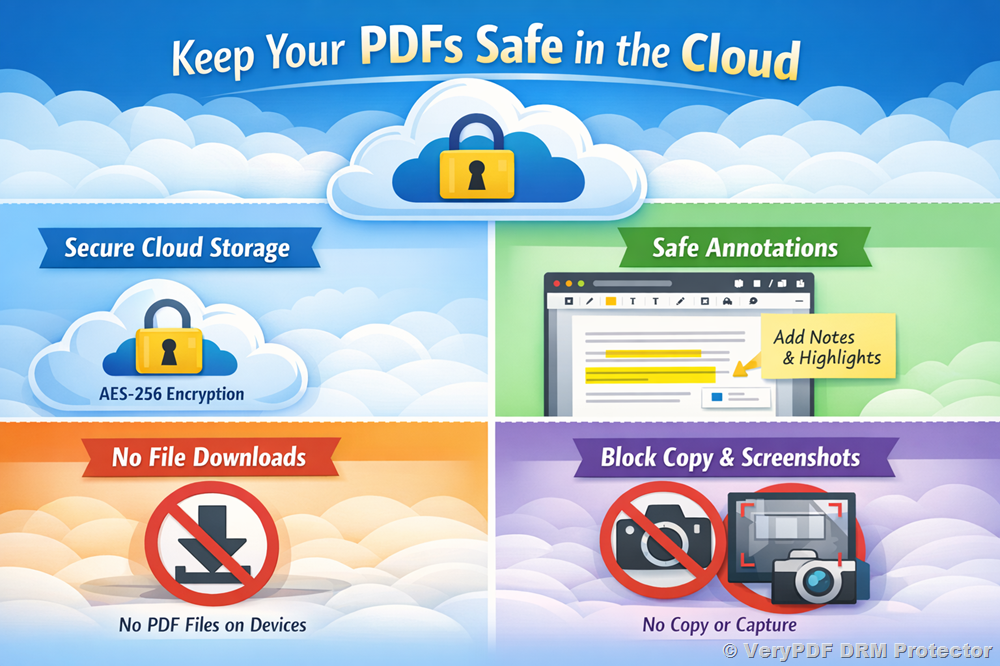
Printing control is also a lifesaver. You can stop printing altogether or limit print quality. My students can view assignments but can’t simply make high-quality copies for redistribution. Combine this with blocking screen sharing and screenshots, and even remote sessions via Zoom or WebEx can’t compromise your PDFs.

The best part? It’s simple to use. There’s no complicated policy setup or password juggling for students. They don’t need login credentials, which means there’s no risk of them sharing access with someone else. Decryption keys are delivered transparently to a secure client locked to the user’s device.

Here’s how I typically manage my PDFs now:

  • Lock PDFs to specific devices or USB sticks. Students can access materials offline but only on authorised devices.

  • Set dynamic watermarks. Each file clearly identifies the viewerdeterring redistribution.

  • Control printing and copying. Limit prints or disable them entirely, prevent conversions.

  • Set expiry dates and view limits. Automatically revoke access after deadlines.

  • Revoke access instantly if needed. Even after distribution, I can terminate access for a student or group.

These features collectively make VeryPDF DRM Protector more secure than browser-based viewers or traditional secure data rooms. Unlike platforms that rely on login credentials or online accesswhich can be shared or compromisedthis solution ensures documents never leave your control unless you allow them to.

For example, last semester, I distributed a paid module of supplementary reading PDFs for my online course. In the past, I’d worry about students sharing the files. This time, I applied device locking, dynamic watermarks, and print restrictions. Not a single file was leaked, and the module ran smoothly without me having to manually monitor downloads or access. It was a relief and saved me hours of administrative work.

If you’re considering protecting your course PDFs, here are some practical tips to implement immediately:

  • Always use device locking for sensitive materials. This ensures files can’t be opened on unauthorized devices.

  • Apply dynamic watermarks for every student. Visible identifiers discourage sharing and make tracing leaks straightforward.

  • Limit or prevent printing. Control how many times a PDF can be printed, or prevent printing entirely if possible.

  • Set expirations for time-limited content. Automatically expire access to assignments or lecture notes after due dates.

  • Regularly review access logs. Knowing who has accessed files can help identify potential leaks early.

I also love how easy it is to distribute protected PDFs. I can send files via email, upload them to a course platform, or even provide them on USB stickswithout worrying about students bypassing protection. Unlike other solutions that rely on complicated logins or cloud security, I know that my files remain safe no matter where they go.

In short, VeryPDF DRM Protector doesn’t just protect my PDFsit restores control over my teaching materials. I can focus on creating engaging content without the constant fear of unauthorized sharing.

I highly recommend this to anyone distributing PDFs to students. Whether it’s lecture slides, homework, or paid course modules, the protection it provides is comprehensive and straightforward.

Try it now and protect your course materials: https://drm.verypdf.com

Start your free trial today and regain control over your PDFs.

FAQs

Q: How can I limit student access to PDFs?

A: VeryPDF DRM Protector allows you to lock PDFs to specific devices or USB sticks, set expiry dates, and control viewing permissions per student.

Q: Can students still read PDFs without copying, printing, or converting?

A: Yes. Students can view materials normally while restrictions prevent printing, copying, screen captures, or conversions.

Q: How do I track who accessed my files?

A: Dynamic watermarks and access logs identify users and track interactions, making it easy to monitor usage.

Q: Does it prevent PDF piracy and unauthorized sharing?

A: Absolutely. Features like device locking, dynamic watermarks, print controls, and revocation ensure your content cannot be redistributed without authorization.

Q: Is it difficult to distribute protected lecture slides and homework?

A: Not at all. You can share PDFs via email, course platforms, USB, or web access, with all protections applied automatically.

Q: Can I revoke access after distribution?

A: Yes. You can terminate access for individual users or groups instantly, even if the files have already been shared.

Q: Does it work offline?

A: Yes. Students can access locked files offline on authorized devices without compromising security.

Tags/Keywords: protect course PDFs, prevent PDF piracy, stop students sharing homework, secure lecture materials, prevent DRM removal, anti-conversion PDF DRM, PDF security for teachers, lecture slide protection, online course PDF protection, homework PDF DRM

How to stop unauthorized users from editing, forwarding, or converting PDFs containing confidential educational or business content

How to stop unauthorized users from editing, forwarding, or converting PDFs containing confidential educational or business content

As I handed out my latest lecture slides last semester, a sinking feeling hit me. Within hours, I noticed a student had shared the PDF on a forum accessible to anyone online. Suddenly, what was meant to be exclusive material for my class was floating freely across the internet. As a professor, I worry constantly that my lecture PDFs, homework assignments, and paid course materials might be shared, edited, or converted without permission. It’s frustrating, time-consuming, and can even impact the credibility and revenue of educational content I’ve worked hard to create.

How to stop unauthorized users from editing, forwarding, or converting PDFs containing confidential educational or business content

Many educators face the same challenge: controlling access to digital content in a world where sharing a file takes just a few clicks. Students may not even intend harmthey simply want to help friends or find shortcutsbut the result is the same: loss of control, potential plagiarism, and content piracy. That’s where VeryPDF DRM Protector has changed the game for me and countless other teachers.

One of the most common issues I’ve faced is students forwarding PDFs or uploading homework online. This not only compromises my lesson plans but can also affect fairness in grading. Another headache is unauthorized printing or conversion of materials. PDFs designed to stay digital are suddenly editable Word documents, spreadsheets, or even images that circulate outside my class. And then there’s the risk of losing control over paid course contentmaterials that students or subscribers have paid for can quickly be duplicated and redistributed.

VeryPDF DRM Protector offers a practical, no-nonsense solution to these problems. It doesn’t rely on complicated login systems or fragile password protections. Instead, it gives educators like me a way to keep PDFs safe while still making them accessible to the right students.

Here’s how it works in real classroom scenarios:

  • Restrict access to enrolled students only: Each PDF can be locked to specific users or devices. That means a PDF shared by one student won’t work on another device. Even if someone tries to forward the file, it simply won’t open.

  • Prevent copying, printing, or conversion: The software blocks functions that would normally allow students to print your slides, copy text, or convert your PDFs to Word or Excel. You decide whether printing is allowed at all, limited to a certain number of pages, or disabled entirely.

  • Dynamic watermarks and tracking: Each time a student views or prints a PDF, their name, email, or other information can appear on the page. This discourages sharing because every copy is traceable.

I remember one semester when I shared a research assignment PDF with my students. Normally, I would dread the possibility of it ending up online, but this time, I applied VeryPDF DRM Protector. Not only did it prevent printing and copying, but I could also revoke access if I noticed unusual activity. When one student accidentally tried to open the file on another device, it simply wouldn’t workproblem avoided.

Another benefit is the control over distribution. You can set PDFs to expire after a certain number of views, days, or prints. This is especially useful for timed assignments or paid course materials. Students only access the file for the period you intend, which reduces the risk of it being shared later.

Here’s a step-by-step approach I follow to protect course PDFs:

  • Encrypt and protect each PDF before sharing.

  • Assign access to specific students or devices.

  • Decide on printing and copying permissions, or disable them entirely.

  • Enable dynamic watermarks to display user info when the PDF is opened or printed.

  • Set expiry or self-destruct rules for time-sensitive materials.

  • Revoke access instantly if you notice suspicious activity.

The anti-piracy benefits are significant. VeryPDF DRM Protector stops PDFs from being converted into editable formats, prevents unauthorized sharing even if the student tries screen capture software, and maintains your control over every copy of your materials. For me, this has meant fewer emails chasing lost PDFs, less worry about fairness in class, and more confidence that my content remains secure.

A particularly memorable moment was during an online seminar. One student tried to share my lecture slides via screen sharing on Zoom. Thanks to the DRM controls, the slides were protected from screenshots and screen recording apps. I could teach knowing my materials were safe, and the student’s attempt to bypass restrictions failed.

For educators distributing homework PDFs, lecture notes, or paid course content, VeryPDF DRM Protector is a time-saver. You no longer need to track who has your files or worry about them being forwarded or modified. Each PDF stays exactly as you intend, with full control over who sees it and how it’s used.

If you’re wondering how to start, here’s a simple workflow:

  • Step 1: Open your PDF in VeryPDF DRM Protector.

  • Step 2: Choose who can access itindividual students, groups, or specific devices.

  • Step 3: Configure permissions: disable printing, copying, or conversion if necessary.

  • Step 4: Apply dynamic watermarks with user information.

  • Step 5: Set expiry dates or limits on views/prints if needed.

  • Step 6: Distribute securely via email, web link, or USB.

I highly recommend this to anyone distributing PDFs to students or subscribers. It’s straightforward, effective, and gives peace of mind knowing your content is protected. No more wondering if a PDF has been shared, converted, or stolenit stays under your control.

Try it now and protect your course materials: https://drm.verypdf.com

Start your free trial today and regain control over your PDFs.

Frequently Asked Questions

How can I limit student access to PDFs?

You can assign PDFs to specific users or devices. Each PDF opens only for the intended recipient, preventing unauthorized access.

Can students still read the PDF without copying, printing, or converting?

Yes. DRM controls allow students to read the content normally while blocking actions like copying, printing, or conversion.

How can I track who accessed my PDFs?

Dynamic watermarks and audit logs identify which student accessed the PDF, when, and on which device.

Does this prevent PDF piracy and unauthorized sharing?

Absolutely. The software blocks forwarding, screen grabs, printing to PDF, and conversion, making piracy nearly impossible.

How easy is it to distribute protected lecture slides and homework?

Very easy. You can share via email, web links, USB, or internal systemsall while keeping full control of who can access the content.

Can I revoke access after distributing a PDF?

Yes. You can terminate access instantly, even if the document is already on a student’s device.

Are dynamic watermarks permanent?

Yes. They cannot be removed, ensuring that every viewed or printed copy is traceable to the user.

Tags/Keywords

protect course PDFs, prevent PDF piracy, stop students sharing homework, secure lecture materials, prevent DRM removal, anti-conversion PDF DRM, lecture PDF protection, educational PDF security, homework PDF protection, secure course materials

Maintain secure PDF distribution while preventing unauthorized printing, copying, forwarding, or DRM removal attempts

Maintain secure PDF distribution while preventing unauthorized printing, copying, forwarding, or DRM removal attempts

I’ll never forget the semester when I discovered half of my lecture PDFs circulating online. I had spent weeks creating detailed slides, examples, and homework assignments, only to find students sharing them through unofficial channels. As a professor, it’s frustratingand frankly, alarmingknowing that your carefully crafted materials can end up in the wrong hands. I realised then that traditional PDF securitypasswords or basic restrictionsjust wasn’t enough. I needed a way to protect course PDFs while still letting my students access them easily. That’s when I turned to VeryPDF DRM Protector.

Maintain secure PDF distribution while preventing unauthorized printing, copying, forwarding, or DRM removal attempts

In any educational setting, losing control over your PDFs can create chaos. Here’s what I’ve experienced firsthand: students sharing homework before submission, PDFs being printed or copied without permission, and paid course content ending up on public forums. It’s a headache that undermines both your teaching and your credibility.

One of the most common frustrations I’ve faced is students sharing PDFs outside the classroom. A single shared file can spread quickly, especially with group chats or online forums. Even if students have the best intentions, the risk of unauthorized distribution is real. Then there’s the issue of printing or copying: a student might take a screenshot, convert a PDF to Word, or simply print and redistribute pages. Losing control of your content in this way can be disheartening, especially when you’ve invested time in creating high-quality educational resources.

VeryPDF DRM Protector has been a game-changer. It allows me to restrict access to PDFs only to enrolled students, preventing unauthorized printing, copying, forwarding, or DRM removal attempts. Unlike traditional password protection, it doesn’t rely on users remembering or sharing credentials. The software locks PDFs to specific devices, USB sticks, or even allows secure viewing in a browser without installation. Once the PDF is protected, I can control who sees it, how it’s used, and for how long.

One of my favourite features is dynamic watermarks. Every PDF I distribute now includes visible, personalized watermarks with the student’s name, email, and even the date and time. This simple measure dramatically reduces the temptation to share or photograph the materials because each copy is traceable. It’s a subtle deterrent, but incredibly effective. I remember a case where a student tried to share a homework PDF online. Within minutes, I could identify the source thanks to the watermark and prevent further circulation. It’s like having an invisible security guard watching over every file.

Printing control is another lifesaver. Before using VeryPDF DRM Protector, students could print unlimited copies of lecture slides or homework. Now, I can either stop printing entirely or limit the number of prints. This feature alone has saved me countless headaches and prevented misuse of my materials. It’s also useful for graded assignments where controlling distribution is crucial.

Screen sharing and screenshots were another area of concern. During online sessions, I’d worry about students taking screenshots or using screen grab tools to save the content. VeryPDF DRM Protector blocks both, ensuring that even virtual learning environments remain secure. It’s a relief to know that my PDFs cannot be captured or shared via Zoom, WebEx, or other platforms.

Beyond security, the software makes my workflow easier. I no longer need to email files repeatedly or worry about someone misplacing a password. I can set expiration dates, control the number of views, and even revoke access after distribution. For example, a student who withdraws mid-course loses access instantly, without me having to track down and delete files manually. This feature alone saves hours each semester.

Implementing VeryPDF DRM Protector was surprisingly straightforward. Here’s how I manage my PDFs now:

  • Lock PDFs to enrolled students only: Each file is accessible only to designated users.

  • Restrict printing and copying: I can prevent printing entirely, limit the number of prints, and block copying or converting to Word, Excel, or images.

  • Apply dynamic watermarks: Watermarks display individual user information, discouraging redistribution.

  • Prevent screen grabs and screen sharing: No one can capture screenshots or record slides during online lessons.

  • Set expirations and revoke access: Files automatically expire or can be revoked anytime, even after distribution.

The anti-piracy benefits are impressive. I used to worry about students bypassing PDF security or using online tools to convert my content. Now, even if someone tries to manipulate a PDF, the encryption and device locks make it virtually impossible. This level of protection means I can confidently share paid course materials or sensitive lecture slides without fear.

I’ve also noticed that students respect the materials more. Knowing that every PDF is traceable and protected encourages them to use the content responsibly. It fosters a professional classroom environment where resources are valued rather than casually shared.

VeryPDF DRM Protector isn’t just for big courses or paid materials. Even small classes benefit from its protections. Whether it’s distributing homework, lab manuals, lecture slides, or project instructions, having control over digital content is essential. It’s reassuring to know that my hard work is safeguarded against unauthorized use.

If you’re wondering how to get started, here are a few practical tips:

  • Start small: Protect a few essential PDFs first to get comfortable with the system.

  • Use device locking: Assign PDFs to specific devices or USB sticks for offline access.

  • Set clear rules: Communicate to students that PDFs are protected and cannot be shared.

  • Monitor usage: Use access logs to see who viewed files and when.

  • Adjust permissions dynamically: Change access, print limits, or revoke documents as needed.

I’ve found that using VeryPDF DRM Protector not only protects my PDFs but also streamlines teaching. I no longer waste time chasing down unauthorized copies or worrying about content leakage. The software gives me peace of mind, knowing that my materials are secure, my students are accountable, and my teaching workflow is smoother.

In short, if you’re distributing PDFswhether for homework, lectures, or paid coursesthis is a tool you need. I highly recommend it to anyone who wants to protect course PDFs, prevent PDF piracy, and stop students sharing homework without permission. It’s practical, effective, and surprisingly easy to use.

Try it now and protect your course materials: https://drm.verypdf.com

Start your free trial today and regain control over your PDFs.

Frequently Asked Questions

How can I limit student access to PDFs?

With VeryPDF DRM Protector, you can lock PDFs to specific users or devices, ensuring only enrolled students can open them.

Can students still read PDFs without copying, printing, or converting?

Yes, they can view content safely on their approved device or via a secure web viewer without any risk of copying or printing.

How do I track who accessed my PDFs?

The software provides detailed logs, so you can see which users opened a file, when, and how many times.

Does this prevent PDF piracy and unauthorized sharing?

Absolutely. Dynamic watermarks, encryption, device locks, and access control prevent piracy and illegal distribution.

How easy is it to distribute protected lecture slides and homework?

It’s simple. You can distribute via email, web, USB, or secure links, and even revoke access after distribution.

Can I control printing and screen sharing?

Yes. You can prevent printing, limit the number of prints, and block screen grabs or online meeting sharing.

What if a student withdraws from the course?

You can instantly revoke access to any PDFs, ensuring they can no longer open or share the materials.

Keywords/Tags:

protect course PDFs, prevent PDF piracy, stop students sharing homework, secure lecture materials, prevent DRM removal, anti-conversion PDF DRM, PDF content protection, control student access, dynamic PDF watermark, revoke PDF access

How to prevent students or employees from bypassing DRM and sharing lecture slides, homework, or sensitive PDFs online

How to prevent students or employees from bypassing DRM and sharing lecture slides, homework, or sensitive PDFs online


As I sat down one morning to upload my latest lecture slides, I caught myself worrying again: What if students share these PDFs online before anyone even gets to class? Over the years, I’ve watched carefully prepared homework assignments, detailed lecture notes, and even paid course materials float around the internet. It’s frustrating, not just because of lost control, but because it undermines the learning experience I’ve worked so hard to create.

How to prevent students or employees from bypassing DRM and sharing lecture slides, homework, or sensitive PDFs online

In today’s digital classrooms, controlling PDF content isn’t just a nice-to-haveit’s essential. Students can easily copy, print, or even convert your materials to Word, Excel, or images, and suddenly your carefully curated resources are everywhere. That’s where VeryPDF DRM Protector comes in, helping educators like me protect course PDFs, secure lecture materials, and prevent PDF piracy.


I’ve faced several challenges over the years that many educators will relate to:

1. Students sharing PDFs online

It’s a common scenario: I upload homework or lecture slides to a course portal, thinking they’re only accessible to enrolled students. Yet, within days, I find links to my content on public forums. Not only is this frustrating, but it can also impact paid courses, intellectual property, and the integrity of the course itself.

2. Unauthorized printing, copying, or conversion

Even if students don’t post PDFs online, they often convert them to Word or screenshots to edit, share, or annotate freely. I remember one semester when my entire assignment packet appeared on a student blog, copied almost verbatim. That lost control over my content, and worse, it made grading chaotic.

3. Loss of control over paid or restricted content

For educators distributing paid materialsthink MOOCs or specialized training contentlosing access control can have direct financial consequences. PDFs without protection are vulnerable: anyone with a basic PDF reader can copy, print, or redistribute them.


VeryPDF DRM Protector solved all of these pain points for me. Here’s how it works in everyday teaching scenarios:

Restricting access to enrolled students

With VeryPDF DRM Protector, I can lock PDFs so only specific users or devices can open them. This isn’t just a passwordyou can actually tie documents to a student’s computer, tablet, or USB stick. Even if someone tries to share the file, it won’t open on another device.

Stopping printing, copying, forwarding, or DRM removal

I no longer worry about students printing entire lecture slides or copying homework answers. The software disables all functions that allow content modification or sharing. Printing can be completely blocked or limited, and attempts to remove DRM protections fail.

Preventing screen grabs and recording

Online teaching adds another challenge: students can take screenshots during live lectures. VeryPDF DRM Protector blocks screen recording software, print screen functions, and even stops screen sharing in apps like Zoom or WebEx. That means your content stays secure, no matter how students try to bypass controls.

Dynamic watermarks and audit tracking

I particularly love the dynamic watermarks. Each PDF can show the viewer’s name, email, date, and timeright on the document itself. This subtle layer of accountability discourages redistribution. And if there ever is a leak, I can track it back to the source, which is a huge relief.

Easy expiration and revocation

Another lifesaver is the ability to set expiration dates or revoke access instantly. Once a course ends or an assignment is due, I can make the PDFs inaccessible. That’s peace of mind I didn’t have before, knowing my materials won’t continue floating around after the course concludes.


Here are some practical tips I’ve found helpful for using VeryPDF DRM Protector in the classroom:

  • Lock PDFs to devices: Assign PDFs to student laptops, tablets, or USB sticks to prevent sharing.

  • Control printing: Disable printing for sensitive homework, or allow limited, quality-controlled prints for lecture slides.

  • Apply dynamic watermarks: Include student information on every page viewed or printed.

  • Revoke access instantly: If a student leaves the course or a material is compromised, revoke it immediately.

  • Set expirations: Limit access by date, number of views, or number of prints.

For example, last semester I uploaded my “Advanced Machine Learning” slides for a paid course. Normally, I’d worry someone would post them online by the end of the week. Using VeryPDF DRM Protector, I locked each PDF to enrolled students’ devices, applied dynamic watermarks, and restricted printing. Not a single file appeared outside the course portal. It saved me hours of stress, and my students respected the rules because they understood that the documents were traceable.

Another time, a student accidentally shared a PDF with a friend. I was able to revoke access immediately. The friend couldn’t open the file, and my content stayed secure. Moments like this make a massive difference in keeping educational materials safe.


Implementing DRM for your PDFs doesn’t have to be complicated. Even educators who aren’t tech-savvy can follow simple steps:

  1. Install VeryPDF DRM Protector on your computer.

  2. Select the PDFs you want to protectlecture slides, homework, or paid course materials.

  3. Set your restrictions: prevent copying, printing, and screen capture.

  4. Lock files to specific devices or users.

  5. Add dynamic watermarks to deter sharing.

  6. Distribute securely via email, USB, or your learning management system.

  7. Monitor and revoke access if needed.

The process is intuitive, and the protection is robust. I no longer worry about PDFs being leaked, converted, or printed without permission.


In conclusion, VeryPDF DRM Protector gives educators full control over digital course materials. It stops students or hackers from bypassing security, prevents PDFs from being converted or shared, and allows for dynamic control even after distribution. For anyone distributing PDFs to studentswhether lecture slides, homework, or paid course contentI highly recommend it. It simplifies content management, reduces stress, and protects your intellectual property.

Try it now and protect your course materials: https://drm.verypdf.com

Start your free trial today and regain control over your PDFs.


FAQs

1. How can I limit student access to PDFs?

You can lock PDFs to specific devices or user accounts, ensuring only enrolled students can open them.

2. Can students still read PDFs without copying, printing, or converting?

Yes. They can view the content normally but cannot print, copy, or convert the file.

3. How can I track who accessed my files?

VeryPDF DRM Protector includes audit features and dynamic watermarks, making it easy to identify the user and monitor usage.

4. Does this prevent PDF piracy and unauthorized sharing?

Absolutely. The software stops copying, printing, forwarding, and screen recording, keeping your content secure.

5. How easy is it to distribute protected lecture slides and homework?

Distribution is simple via email, USB, or online platforms. You can apply protection before sharing, and access controls remain in effect.

6. Can I revoke access after a document has been shared?

Yes. You can instantly revoke PDF access, even after distribution.

7. Are the PDFs protected against screen recording and screenshots?

Yes. DRM Protector blocks screen captures, print screens, and screen sharing apps like Zoom or WebEx.


Keywords: protect course PDFs, prevent PDF piracy, stop students sharing homework, secure lecture materials, prevent DRM removal, anti-conversion PDF DRM, lock PDFs to devices, dynamic watermarks, revoke PDF access, control PDF printing

Protect your PDFs from illegal sharing, conversion, printing, or copying while maintaining control over distribution

Protect your PDFs from illegal sharing, conversion, printing, or copying while maintaining control over distribution

As I prepared my lecture slides for a new semester, I found myself staring at my laptop with a sinking feeling. Last year, several of my PDFs ended up circulating online without my permission, and worse, some students submitted assignments that weren’t their own work because they had shared or copied my materials. I realised that despite all my efforts, my course content was vulnerable. This is a problem many of us in education face: how do you protect your PDFs while still making them accessible to the students who need them?

Protect your PDFs from illegal sharing, conversion, printing, or copying while maintaining control over distribution

It turns out, the answer isn’t complicatedit’s about using the right tools. That’s where VeryPDF DRM Protector comes in. Designed for professors, lecturers, and educational content creators, it allows you to secure your PDFs against illegal sharing, copying, printing, or conversion, all while maintaining full control over who can access your materials.

One of the most frustrating classroom pain points is students sharing PDFs or homework online. I once had a situation where a group of students uploaded my entire lecture set to a study forum. Overnight, my carefully structured slides were accessible to anyone, anywhere. With VeryPDF DRM Protector, you can restrict PDF access to specific students or devices. That means only the students enrolled in your course can open your lecture slides, homework assignments, or paid course materials. No more accidental public sharing, no more lost control.

Another challenge is preventing unauthorized printing, copying, or conversion. In my experience, PDFs are deceptively easy to manipulate. Students can copy text into Word, print multiple copies, or even convert content into images or spreadsheets. VeryPDF DRM Protector blocks these actions. You can disable printing entirely, limit the number of prints, enforce print quality, and stop PDFs from being converted to Word, Excel, or image formats. This ensures that your content stays exactly as you intended, preserving both intellectual property and grading integrity.

Loss of control over paid or restricted course content is also a major issue. As someone who occasionally sells educational resources online, I’ve faced situations where PDFs intended for paying students were downloaded and shared widely. VeryPDF DRM Protector addresses this with features like expiry dates, self-destruct options, and dynamic watermarks. You can set your PDFs to expire after a certain number of views or on a specific date, and each file can carry watermarks identifying the student accessing it. This not only deters redistribution but also helps trace leaks if they happen.

One real-life example that comes to mind is when I distributed homework PDFs for an online course. Previously, students would forward these files to friends who weren’t enrolled. With DRM protection, I was able to lock the PDFs to their individual devices and apply dynamic watermarks. Any attempt to share the files outside of the intended audience was immediately obvious, and it simplified grading because I knew each submission came from the right student.

Implementing VeryPDF DRM Protector is straightforward. Here’s how I set it up for my courses:

  • Lock PDFs to specific users or devices: This ensures that only the intended student can access the content. You can lock files to computers, tablets, mobile devices, or even USB sticks.

  • Restrict copying, printing, and conversion: In the PDF settings, I disabled copy-paste, prevented printing, and blocked conversions to Word, Excel, or image files.

  • Set expirations and self-destruct rules: Some homework PDFs are only relevant for a week, so I set them to expire automatically after a set number of views or on a particular date.

  • Add dynamic watermarks: Each PDF shows the user’s name, email, and date when viewed or printed, discouraging screenshots or photocopying.

  • Revoke access when needed: If a student drops the course or a file is accidentally shared, I can revoke access instantly, even after distribution.

Beyond these features, the anti-piracy benefits are remarkable. Students or hackers cannot bypass the protections because VeryPDF DRM Protector doesn’t rely on weak browser-based viewers or simple passwords. All security controls are enforced via the DRM Viewer, making it impossible to remove protection with JavaScript tweaks or plugin hacks. You maintain full control over distribution, and your PDFs remain secure whether they’re accessed online, offline, or even through virtual environments.

Using DRM also simplified my workflow. Instead of sending multiple versions of the same file with different permissions, I could upload one secure PDF, apply user restrictions, and distribute it confidently. Knowing that my course content was protected allowed me to focus on teaching instead of worrying about unauthorized sharing.

If you’re considering implementing VeryPDF DRM Protector in your classroom, here are some practical tips:

  • Plan your access restrictions ahead of time: Decide whether PDFs are view-only or allow limited printing.

  • Use dynamic watermarks for high-value materials: For paid courses or sensitive assignments, this acts as both a deterrent and a tracking tool.

  • Set expirations for time-sensitive content: This keeps old assignments or outdated lectures from circulating unnecessarily.

  • Monitor access logs: Keep an eye on who opened the PDFs and when to identify any irregular activity.

  • Revoke access immediately if needed: This is useful if a student leaves the course or a file is shared outside your intended audience.

In conclusion, VeryPDF DRM Protector is a game-changer for anyone distributing PDFs to students. It solves major teaching pain points: preventing students from sharing homework online, stopping unauthorized printing and copying, and protecting paid or sensitive course materials. For me, it has been invaluable in maintaining control over my lecture slides and assignments while saving time and reducing stress.

I highly recommend this to anyone distributing PDFs to students. Try it now and protect your course materials: https://drm.verypdf.com. Start your free trial today and regain control over your PDFs.

FAQ

How can I limit student access to PDFs?

You can lock PDFs to specific users, devices, or USB sticks. Only enrolled students or authorized devices can open the files.

Can students still read PDFs without copying, printing, or converting?

Yes. VeryPDF DRM Protector allows view-only access, so students can read the content without being able to copy, print, or convert it.

How do I track who accessed my PDFs?

The DRM Viewer logs access and displays dynamic watermarks with user information, so you can monitor who opened or printed your files.

Does it prevent PDF piracy and unauthorized sharing?

Absolutely. DRM controls stop copying, printing, screen grabbing, and conversion. Access can also be revoked at any time, ensuring secure distribution.

How easy is it to distribute protected lecture slides and homework?

Very easy. You can distribute protected PDFs via email, web, USB, or online platforms. The security settings stay intact regardless of the distribution method.

Can I set PDFs to expire or self-destruct?

Yes. You can set PDFs to expire after a specific number of views, prints, days, or on a fixed date.

Will students notice the protections while reading?

No, the viewing experience remains seamless. The DRM controls work in the background, protecting content without disrupting learning.

Keywords: protect course PDFs, prevent PDF piracy, stop students sharing homework, secure lecture materials, prevent DRM removal, anti-conversion PDF DRM, restrict PDF access, dynamic watermarks, revoke PDF access, PDF content security