VeryPDF DRM Protector Features FreeText, Highlight, Strikeout, and Ink Annotations for Collaborative PDF Editing Online

Secure Your Course PDFs and Stop Students Sharing Homework with VeryPDF DRM Protector

Keep your lecture materials safe, prevent students from sharing PDFs, and protect paid course content from piracy.

VeryPDF DRM Protector Features FreeText, Highlight, Strikeout, and Ink Annotations for Collaborative PDF Editing Online


Last semester, I found myself in a frustrating situation: a PDF of my lecture slides ended up circulating on a student forum before the next class even started. Despite my efforts to warn students about academic honesty, I realized that digital files could easily slip through my control. Like many professors, I worried that my course PDFshomework, lecture slides, or paid supplemental materialsmight be copied, printed, or converted without my permission. I needed a solution that would let me teach efficiently while keeping my content secure. That’s when I discovered VeryPDF DRM Protector.


One of the biggest headaches I’ve faced as an educator is students sharing course materials. A single PDF containing homework solutions or lecture notes can quickly spread beyond the classroom. This not only undermines the learning process but also risks the integrity of paid courses or proprietary research. Another common problem is unauthorized printing and copying. Even if students don’t share files online, they might convert them into Word documents or take screenshots, bypassing the intended limitations. The third challenge is losing control over digital course content. Once a PDF leaves your hands, you have no visibility over who accesses it, how many times it’s opened, or whether it ends up in the wrong place.

VeryPDF DRM Protector solves all these issues in a practical, easy-to-use way. The software allows you to protect your PDFs with DRM restrictions that are simple for students to use but impossible to bypass. For example, you can restrict PDF access to enrolled students only, prevent printing or copying, and block conversions to Word, Excel, or images. This ensures your lecture slides, homework assignments, and paid course materials remain exactly where you want themsecure, controlled, and accessible only to the right audience.

I’ve used VeryPDF DRM Protector in my classes, and it has made a huge difference. Here’s how it helps in real classroom scenarios:

  • Protecting lecture slides: I upload all my PDFs to VeryPDF DRM Protector and set them so only registered students can view them. Students can annotate slides for personal study, but they can’t copy or share the files. This keeps discussions in class based on the intended materials.

  • Securing homework assignments: Previously, some students would forward homework PDFs to peers not enrolled in the course. With DRM restrictions, only the assigned student can open the file, and it can’t be forwarded or printed.

  • Preventing piracy of paid content: For supplemental paid materials, DRM restrictions prevent downloading, copying, or converting the files. Even if someone tries to hack the PDF, the software blocks DRM removal and maintains full protection.

The anti-piracy benefits are significant. With VeryPDF DRM Protector, students and potential hackers cannot bypass security to convert PDFs into Word documents, Excel sheets, or image files. You maintain full control over content distribution, and your PDFs stay safe whether they’re being used in a lecture hall or accessed remotely.

Annotation is another standout feature. VeryPDF DRM Protector supports FreeText, Highlight, Strikeout, Ink, and Stamp annotations directly in the browser. Students can interact with materialshighlighting key points or adding noteswithout ever compromising security. Annotations are tied to individual users and the protected PDF, so personal notes are saved and can be reused whenever the student opens the file again.

Here’s a step-by-step example of how I enabled PDF annotations for my students:

  1. Log in to the VeryPDF DRM dashboard and locate your protected PDF.

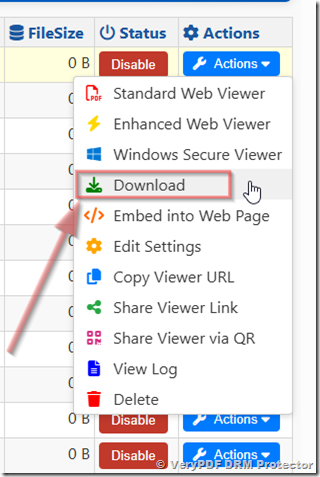
  2. Click “Actions” “Edit Settings” on the PDF file.

  3. In the “Advanced Settings” section, enable annotation features such as FreeText, Highlight, Ink, and Stamp.

  4. Click “Save.”

  5. Return to the book list and select “Enhanced Web Viewer” to let students view and annotate the PDF online.

This simple process allowed my students to actively engage with materials while keeping the content secure. They can highlight important passages, add comments, or even draw diagrams with the Ink tool, all without compromising DRM protection.

The software also provides tracking capabilities, which I found invaluable. I can see who accessed each PDF and when, giving me insight into student engagement and ensuring that materials aren’t being shared outside of the course. This feature alone saved me hours of manual follow-ups and prevented multiple incidents of unauthorized sharing.

From a workflow perspective, VeryPDF DRM Protector is incredibly efficient. Setting up protected PDFs and annotations took less than a few minutes per file, which meant I could focus more on teaching and less on policing content. It integrates seamlessly into existing classroom workflows, whether you’re distributing homework, lecture slides, or premium online course materials.

Real-life example: Last year, I distributed a set of advanced lecture slides to my graduate students. One student accidentally emailed the file to a peer from another department. Normally, this could have led to widespread sharing, but because the PDF was protected with DRM, the file couldn’t be opened by anyone not registered in the system. That single protection step saved weeks of potential problems and reinforced the importance of using DRM for educational content.

Another useful feature is the flexibility of annotation types. Students can choose from FreeText, Ink, Highlight, Strikeout, Stamps, and even custom shapes. These tools enhance learning by allowing visual and textual interaction with the content, while instructors retain full control over the original material. It’s a win-win: students engage more deeply, and course materials remain secure.

In summary, VeryPDF DRM Protector addresses the major pain points of teaching digital content:

  • Stop students from sharing PDFs: Restrict access to enrolled users only.

  • Prevent unauthorized copying, printing, or conversion: Maintain control over every PDF you distribute.

  • Protect paid or sensitive materials from piracy: DRM enforcement stops bypass attempts.

  • Enhance student interaction: Annotation tools keep learning active without compromising security.

  • Track access: Monitor who reads your PDFs and when, adding accountability.

I highly recommend this to anyone distributing PDFs to students. Whether you’re sharing lecture slides, homework assignments, or paid supplemental content, VeryPDF DRM Protector keeps your materials secure, prevents unauthorized sharing, and simplifies content management.

Try it now and protect your course materials: https://drm.verypdf.com

Start your free trial today and regain control over your PDFs.


FAQs

How can I limit student access to PDFs?

You can restrict access using VeryPDF DRM Protector by assigning PDFs to specific students or groups. Only registered users can open the file.

Can students still read PDFs without copying, printing, or converting?

Yes, DRM protection allows students to view and annotate PDFs safely without the ability to copy, print, or convert content.

How do I track who accessed my PDF files?

The software provides access logs showing which users opened the file and when, helping you monitor engagement and prevent unauthorized sharing.

Does this prevent PDF piracy and unauthorized sharing?

Absolutely. DRM restrictions prevent copying, printing, forwarding, and conversion, making it very difficult for anyone to bypass protection.

Is it easy to distribute protected lecture slides and homework?

Yes. You can upload PDFs, set DRM permissions, and distribute them online. Students can access, read, and annotate files in a secure environment.

Can students annotate PDFs safely?

Yes, annotations like FreeText, Highlight, Ink, and Stamp are saved per user and per PDF. They can interact with materials without compromising DRM security.

Does it work on mobile devices?

Yes, VeryPDF DRM Protector supports annotations and reading on touch devices, allowing students to engage with course materials from anywhere.


Tags / Keywords

protect course PDFs, prevent PDF piracy, stop students sharing homework, secure lecture materials, prevent DRM removal, anti-conversion PDF DRM, PDF annotation for students, online course content security, protect homework PDFs, secure lecture slides

How to Annotate PDF Documents for Accounting, Legal, and Research Teams Without Uploading Sensitive Data

How to Securely Annotate and Share Lecture PDFs Without Losing Control

I remember the frustration of preparing a full set of lecture slides, only to hear later that students had shared them across messaging apps or even uploaded them online. As an educator, there’s nothing more stressful than losing control of materials you’ve painstakingly created. You want students to engage with your content, but you also need to ensure your PDFs aren’t copied, printed, or converted without permission. This is a common challenge in classrooms, online courses, and even professional training settings.

How to Annotate PDF Documents for Accounting, Legal, and Research Teams Without Uploading Sensitive Data

The good news is, with the right tools, you can annotate and distribute PDF materials securely, keeping full control while still providing a smooth learning experience. That’s where VeryPDF DRM Protector comes in. It’s designed to protect your PDFs from unauthorized sharing or piracy while enabling safe annotation for both you and your students.

One of the biggest pain points I faced was students sharing PDFs outside the classroom. Even when I provided homework PDFs with clear instructions, some students would forward files to peers not enrolled in the course, or worse, upload them to public platforms. It felt like my work was slipping out of my hands, and it undermined the integrity of my teaching. With VeryPDF DRM Protector, you can restrict PDF access only to registered students. This means each student must log in to view the material, and sharing with others becomes virtually impossible.

Another common issue is unauthorized printing or conversion. I’ve seen cases where a PDF gets converted to Word or Excel, making it easy for anyone to reuse the content without credit. VeryPDF DRM Protector prevents this by locking down your PDF files: students can view and annotate, but they cannot copy text, print, or convert the document. For instance, when I released my advanced accounting lecture slides, I enabled annotation but disabled printing. Students could highlight and take notes directly in the PDF, yet the content stayed secure.

Sometimes, the problem isn’t just sharingit’s workflow chaos. Managing annotations across multiple students can get messy, especially when each PDF ends up edited differently on various devices. VeryPDF DRM Protector simplifies this with its annotation features. Students can highlight, add free text, insert images or stamps, and even draw lines or shapes. Annotations are saved per user and per protected PDF, so each student’s work is private. The next time they open the file, all their notes remain intact. This keeps learning interactive while preserving control over the core content.

Here’s a scenario from my legal studies course. I uploaded case study PDFs with sensitive client examples. I wanted students to annotate directly on the PDFs but couldn’t risk them being shared outside class. By enabling VeryPDF’s annotation features and restricting access to enrolled students, I let students make notes, highlight key points, and submit assignments digitally. Meanwhile, the content was fully protected: no printing, no copying, and no exporting to other formats. This balance between interaction and security was a game-changer.

The setup is straightforward. Once your PDFs are uploaded to the VeryPDF DRM system, you can activate annotations with just a few clicks:

  • Open your protected PDF on the DRM platform.

  • Click ‘Actions’ ‘Edit Settings.’

  • Enable annotation tools such as Highlight, FreeText, Ink, Stamp, and Save Annotations.

  • Save settings and return to your PDF list. Use the Enhanced Web Viewer to interact with the annotated PDF online.

For teachers using mobile devices, annotation is just as smooth. Students can draw, highlight, or add freehand notes on tablets or smartphones. They can also insert images, create text-based stamps, and even sign documents digitally. Everything is saved securely to their account, ensuring annotations persist without compromising your content.

Preventing PDF piracy is another major benefit. Hackers or students trying to bypass security will find it extremely difficult to remove DRM protection. Files can’t be copied, forwarded, or converted into Word or Excel. For paid course materials or premium lecture slides, this ensures your intellectual property remains protected while students focus on learning rather than redistributing content.

From a practical perspective, the tool also saves time. Instead of emailing students multiple versions of slides or worrying about leaked homework, I now use VeryPDF DRM Protector to distribute one secure PDF. Students access it online, make annotations, and submit work digitallyall within a controlled environment. No lost files, no unauthorized sharing, and no extra administrative work.

Here are a few ways I’ve used VeryPDF DRM Protector in my classes:

  • Lecture Slides: I enable annotations for students to highlight key concepts but restrict printing and copying.

  • Homework PDFs: Students can fill in answers digitally, while I monitor annotations per user to ensure originality.

  • Paid or Restricted Content: Course manuals or professional training PDFs remain protected from piracy and unauthorized sharing.

The anti-piracy benefits cannot be overstated. Even if a student tries to screen-capture content or convert the PDF, the DRM system blocks attempts to extract the original material. I’ve had moments where I caught early leaks from previous semesters, and implementing DRM immediately solved the problem.

For educators worried about accessibility, VeryPDF DRM Protector ensures students can read and annotate PDFs without friction. The interface is browser-based and intuitive, reducing technical barriers. Annotation tools include:

  • Highlight, Strikeout, Underline

  • Free text and sticky notes

  • Ink and shape drawing (rectangles, circles, arrows)

  • Stamps and signatures

  • Undo/Redo and clear all options

Each feature supports touch devices, allowing students to annotate naturally on tablets. Exporting annotations is also possible, making it easier for teachers to review work or integrate notes into assessments.

I highly recommend this tool to anyone distributing PDFs to students. It strikes the perfect balance between interactivity and security, helping you protect your work while enhancing student engagement. You can try it now and safeguard your course materials at: https://drm.verypdf.com. Start your free trial today and regain control over your PDFs.

Frequently Asked Questions

Q: How can I limit student access to PDFs?

A: With VeryPDF DRM Protector, you can restrict access to registered students only. Each student logs in to view files, preventing sharing with unauthorized users.

Q: Can students read PDFs without copying, printing, or converting?

A: Yes. DRM settings allow full viewing and annotation while blocking printing, copying, forwarding, and conversion to other formats.

Q: How can I track who accessed the files?

A: The platform records each user’s access. You can monitor who opened the PDF, what annotations they made, and when they viewed the content.

Q: Does it prevent PDF piracy and unauthorized sharing?

A: Absolutely. DRM protection stops copying, printing, and conversion, ensuring your materials remain secure from leaks and online distribution.

Q: How easy is it to distribute protected lecture slides and homework?

A: Very easy. Upload your PDFs to the platform, set access permissions, enable annotation tools, and share the link with students. All content is secure yet interactive.

Q: Can students annotate and save their notes?

A: Yes. Each annotation is saved per user and per PDF, so students can continue working without losing progress.

Q: Does it work on mobile devices?

A: Yes, annotations and PDF viewing are fully supported on tablets and smartphones, including touch-based drawing, highlighting, and stamping.

Tags/Keywords

protect course PDFs, prevent PDF piracy, stop students sharing homework, secure lecture materials, prevent DRM removal, anti-conversion PDF DRM, online course PDF security, student annotation PDF, digital lecture protection, safe PDF distribution

VeryPDF DRM Protector Tips Custom Stamp Creation, Timestamps, and Signature Tools for Secure PDF Workflows

Secure Your Lecture PDFs: Stop Students Sharing Homework and Prevent PDF Piracy

Keep your course PDFs safe, prevent unauthorized sharing or printing, and maintain full control over your lecture materials with DRM protection.

VeryPDF DRM Protector Tips Custom Stamp Creation, Timestamps, and Signature Tools for Secure PDF Workflows

Last semester, I caught a student uploading my lecture slides to an online forum before I even finished the module. It was frustratinghours of preparation, and suddenly my materials were freely circulating online. I knew I needed a better way to protect my PDFs, especially homework assignments and paid course materials, without making it difficult for students to access the content legitimately. That’s when I started using VeryPDF DRM Protector, and it transformed the way I manage digital classroom content.

One of the biggest headaches in teaching is losing control over your own materials. Students sharing PDFs, whether intentionally or just to help each other, can undermine the integrity of assignments. On top of that, unauthorized printing, copying, or converting PDFs into Word or Excel files can spread your work far beyond your classroom. For paid online courses, this can mean lost revenue and compromised intellectual property.

VeryPDF DRM Protector addresses all of these concerns. It allows you to restrict PDF access to specific students or groups, prevent printing and copying, and stop anyone from bypassing DRM protection. With these tools, I can distribute lecture slides, homework, and paid course PDFs confidently, knowing that only my enrolled students can view themand only in ways I allow.

Here’s how it works in practice:

  • Restrict Access by User: Each PDF can be locked to individual students, so sharing a file won’t give others access.

  • Prevent Copying and Printing: Students can read the material on-screen but cannot copy text or print it without permission.

  • Stop Conversion: DRM protection prevents PDFs from being converted to Word, Excel, or images, maintaining control over your intellectual property.

  • Track Access: You can monitor who accessed each file and when, making it easier to identify potential leaks or unauthorized use.

Using VeryPDF DRM Protector has also simplified my teaching workflow. For example, I can upload a PDF of lecture slides, enable annotations, and allow students to highlight or take notes directly within the protected document. The annotations are saved per student and cannot be shared with others, which keeps collaboration safe while still letting students interact with the material.

Here’s a practical example from my own classes: I recently released a set of homework PDFs with embedded annotations and custom stamps for submission deadlines. Thanks to DRM protection, one student tried to forward the PDF to a friend in another sectionbut the second student couldn’t open it at all. This saved me from having to reissue files and ensured that grades were based on actual work, not shared answers.

Activating annotations is straightforward:

  1. Open your protected PDF in the DRM system.

  2. Click “Actions” “Edit Settings” on the file.

  3. Enable tools like highlight, free text, ink, stamp, and save annotations.

  4. Save the settings and return to the web viewer to see the protected PDF with annotation options enabled.

Students can now highlight text, add freehand notes, or insert images and stamps, all within a secure environment. You can even add custom stamps with your logo, student names, or timestamps for full traceability. Signature tools allow students or teaching assistants to validate submissions digitally without compromising PDF security.

Another feature I rely on is timestamping. Each annotation or stamp can include the student’s username, the date, and custom text. This adds a layer of accountabilitystudents know their contributions are tracked, and I can verify submissions with confidence.

The anti-piracy benefits are clear: DRM protection stops unauthorized sharing, printing, or converting, so your content stays where it belongs. Even if a student tries to copy a PDF or use third-party software to extract content, VeryPDF DRM Protector prevents it. This reduces the risk of your work appearing online or being reused without permission.

Beyond security, this system makes classroom management easier. I no longer have to chase down missing homework or worry about students submitting shared solutions. Everything is contained within the protected PDFs, and annotations help me quickly review student work, provide feedback, and keep all content organised.

For professors who distribute paid course materials, the advantages are even more significant. You can protect PDFs for online courses, webinars, or supplemental resources, ensuring that only paying students can access them. DRM protection prevents file redistribution while maintaining a smooth reading experience for legitimate users.

Here’s a quick checklist of benefits I’ve experienced using VeryPDF DRM Protector:

  • Protect course PDFs from unauthorized access and sharing.

  • Stop students sharing homework or lecture slides online.

  • Prevent PDF piracy and DRM removal attempts.

  • Enable safe annotations, stamps, and signatures for interactive learning.

  • Track student access and maintain control over digital course content.

  • Simplify workflow for distributing and reviewing assignments.

In short, DRM protection allows you to teach without worrying about your materials being leaked or misused. It gives students the freedom to interact with the content safely while ensuring your intellectual property stays secure.

I highly recommend this to anyone distributing PDFs to students, whether for in-class lectures, homework assignments, or online courses. Try it now and protect your course materials: https://drm.verypdf.com. Start your free trial today and regain control over your PDFs.

FAQs

Q: How can I limit student access to PDFs?

A: VeryPDF DRM Protector lets you restrict each PDF to specific users or groups, so only enrolled students can open the file.

Q: Can students still read the PDF without copying, printing, or converting it?

A: Yes. DRM protection allows full on-screen reading while disabling printing, copying, and conversion.

Q: How can I track who accessed my files?

A: The system records user activity, including timestamps and access logs, so you can monitor who opened the PDF and when.

Q: Does this prevent PDF piracy and unauthorized sharing?

A: Absolutely. DRM protection stops printing, copying, forwarding, or converting, keeping your materials secure.

Q: How easy is it to distribute protected lecture slides and homework?

A: It’s very straightforward. Upload your PDF, set user permissions and annotation options, and share the secure link with students.

Q: Can students annotate PDFs safely?

A: Yes, annotations like highlights, free text, stamps, and signatures are supported and saved per user, ensuring safe interaction without sharing sensitive content.

Q: Can I add timestamps and custom stamps to track submissions?

A: Yes, you can include username, date, and custom text in stamps to enhance accountability and traceability.

Tags/Keywords

protect course PDFs, prevent PDF piracy, stop students sharing homework, secure lecture materials, prevent DRM removal, anti-conversion PDF DRM, PDF annotation security, student homework protection, online course PDF security, custom PDF stamps

VeryPDF DRM Protector Tips Undo, Redo, and Clear Annotations Efficiently to Reduce Errors and Save Time

Saving Time and Preventing PDF Mistakes While Protecting Your Course Materials

Teaching today often feels like juggling ten things at once. This article shows how professors can reduce annotation errors, save time, and protect course PDFs from sharing, piracy, and unauthorized conversion using VeryPDF DRM Protector.

VeryPDF DRM Protector Tips Undo, Redo, and Clear Annotations Efficiently to Reduce Errors and Save Time

I still remember one late evening in my office, surrounded by printed lecture notes and half-finished coffee cups. I had just finished marking student assignments on my laptop, adding comments and highlights to a PDF. Then it happened. One wrong click. All my annotations disappeared. Undo did not work the way I expected, and I had to start over. At the same time, a bigger worry sat in the back of my mind. Were these PDFs going to stay within my class, or would they end up shared in a group chat or uploaded somewhere online without my permission?

If you teach, you probably know this feeling well. We rely heavily on PDFs for lecture slides, homework, reading materials, and paid course content. PDFs are convenient, but they also create two major frustrations. First, managing annotations can be messy and time-consuming. Second, once a PDF leaves your hands, you often lose control over it. Students may share it, print it, copy text, or convert it to Word or images. That is exactly where VeryPDF DRM Protector has changed the way I work.

In my daily teaching routine, PDFs are everywhere. I annotate lecture slides before class to remind myself which points to emphasize. I mark homework with comments and highlights. I review research drafts and add suggestions directly in the document. When annotation tools are clumsy or unreliable, they slow everything down. Mistakes happen. Time is wasted. Stress builds up.

One of the most common pain points I hear from colleagues is annotation overload. We highlight too much. We add comments and then want to undo them. We accidentally draw a line across the wrong paragraph. Without smooth undo, redo, and clear options, fixing these mistakes feels harder than it should be. When you combine this with concerns about PDF security, the frustration doubles.

Students sharing PDFs is another constant worry. I have seen my own lecture slides show up in places they should never be. A student once told me, very casually, that last year’s class “already had all the PDFs.” That was not meant as a compliment. It was a reminder that once a file is shared, control is gone. Printing, copying, converting to Word, or even trying to remove DRM becomes a real risk.

This is why I started using VeryPDF DRM Protector, not just as a security tool, but as a teaching companion that actually respects how educators work.

What immediately stood out to me was how practical it felt. I did not need to be a technical expert. I could protect course PDFs, prevent students sharing homework, and still let them read and study comfortably. At the same time, the built-in PDF annotation features made my daily workflow smoother.

Annotations in VeryPDF DRM Protector feel natural, especially when teaching online or reviewing work remotely. I can highlight key passages, add free text comments, draw arrows to important formulas, or even sign feedback digitally. More importantly, I can undo, redo, or clear annotations without panic. That alone has saved me hours.

In a real classroom scenario, this matters more than you might think. Imagine reviewing thirty homework submissions in one evening. You add comments, then realize you misunderstood one answer. With a simple undo, you fix it. If you need to remove all annotations and start fresh, you can do that too. No exporting, no reloading files, no starting from scratch.

Another powerful aspect is that annotations are saved to the user’s account. This means my notes stay with me. When I reopen a protected PDF later, my annotations are still there. Students only see their own notes. My private comments remain private. This separation is critical in education, especially when dealing with sensitive feedback or grading notes.

Let us talk about security, because that is where many teachers feel helpless. We want students to access materials easily, but we do not want them copied, printed, or shared freely. With VeryPDF DRM Protector, I can restrict access to enrolled students only. Each student logs in and views the PDF through the secure web viewer.

From a teaching perspective, this changes everything. I can share lecture slides before class without worrying they will be forwarded to non-enrolled users. I can distribute paid course materials knowing they cannot be converted to Word or Excel. I can stop PDF piracy before it starts.

Here are some real teaching pain points and how I personally addressed them.

Students sharing PDFs online

This is probably the biggest issue. Once a PDF is downloaded, it is easy to share. With DRM protection, students can view but not freely distribute files. Access is tied to their account. Even if someone tries to share a link, it will not work for unauthorized users.

Unauthorized printing and copying

I used to find printed copies of my materials floating around campus. With DRM controls, I can disable printing and copying entirely. Students can read and study, but they cannot duplicate content.

Conversion to Word or images

Many teachers do not realize how easy it is to convert PDFs. One student converts a PDF to Word, edits it, and shares it as if it were original. VeryPDF DRM Protector blocks conversion and prevents DRM removal attempts, keeping my content intact.

Loss of control over paid content

If you sell online courses or premium materials, this is critical. DRM ensures that only paying or authorized users can access the content, protecting your work and your income.

The annotation features fit perfectly into this secure environment. I often annotate lecture slides during live online sessions. Students can highlight their own copies, add sticky notes, or underline key concepts. These annotations are personal and do not affect the original document.

I have also used image stamps and signatures for feedback. For example, when approving a project proposal, I add a “Reviewed” stamp with my name and date. It feels professional and saves time.

Undo, redo, and clear annotation tools deserve special mention. They sound simple, but in practice they are lifesavers. Teaching is dynamic. Our thoughts change as we read. Being able to reverse an action instantly reduces mental load. It lets me focus on teaching, not fighting software.

On tablets and touch devices, these tools are even more valuable. I often review work on my tablet while traveling. Drawing, highlighting, and erasing with a pen feels intuitive. The smart eraser removes intersecting elements cleanly, which is surprisingly satisfying.

Setting up annotations is straightforward. Once you enable the annotation toolbar in the advanced settings of a protected PDF, everything works in the browser. There is no complicated installation for students. They just log in and start reading.

Here is how this has simplified my workflow in practice.

Before class, I upload my lecture slides as protected PDFs.

I enable annotations so students can take notes.

I restrict printing and copying to protect course PDFs.

During class, I annotate slides live to emphasize points.

After class, students review the same PDF with their own notes saved.

For homework and assignments, the process is just as smooth.

I distribute homework as a protected PDF.

Students complete their work separately and submit answers through our LMS.

I review their submissions, annotate feedback, and export annotations if needed.

No files are shared outside the system.

One colleague told me how VeryPDF DRM Protector saved her from a serious issue. She teaches a paid certification course. One year, her materials were leaked online. The next year, she switched to DRM-protected PDFs. Not only did the leaks stop, but she also noticed students were more focused. They spent time reading instead of trying to copy content.

Another teacher shared that annotation export to Excel helped during moderation. He could track comments and feedback efficiently without exposing the original content.

From a human perspective, what I appreciate most is peace of mind. I no longer lie awake wondering where my PDFs might end up. I no longer fear making annotation mistakes that cost me hours. I feel in control again.

VeryPDF DRM Protector does not try to overwhelm you with jargon. It solves real problems teachers face every day. It protects lecture materials, prevents students sharing homework, and stops PDF piracy without making learning harder.

If you are distributing PDFs to students, especially in online or hybrid environments, this tool fits naturally into your routine. It respects both teaching and learning.

In the end, teaching is about trust, clarity, and focus. Tools should support that, not get in the way. VeryPDF DRM Protector has become part of my teaching toolkit because it does exactly that.

I highly recommend this to anyone distributing PDFs to students, whether you are teaching a single class or running a full online program. If you care about your time, your content, and your peace of mind, it is worth trying.

Try it now and protect your course materials: https://drm.verypdf.com

Start your free trial today and regain control over your PDFs.

Frequently Asked Questions

How can I limit student access to my PDFs?

You can restrict access by user account so only enrolled or authorized students can view your protected PDFs through the secure viewer.

Can students still read PDFs without copying, printing, or converting them?

Yes. Students can read comfortably and add personal annotations, but copying, printing, and conversion are blocked to protect your content.

How do I track who accessed my files?

Access is tied to user accounts, giving you clear control over who can view each protected document.

Does this really prevent PDF piracy and unauthorized sharing?

Yes. DRM protection prevents forwarding, conversion, and DRM removal attempts, stopping most common piracy methods.

Is it difficult to distribute protected lecture slides and homework?

No. Uploading and sharing protected PDFs is straightforward and works directly in the browser.

Can I use annotations on tablets and touch devices?

Yes. The annotation tools support touch devices, making it easy to draw, highlight, and comment naturally.

Can annotations be saved and reused later?

Yes. Annotations are saved to the user’s account and reappear when the same PDF is opened again.

Tags and Keywords

protect course PDFs, prevent PDF piracy, stop students sharing homework, secure lecture materials, prevent DRM removal, anti-conversion PDF DRM, protect teaching content

Step-by-Step Instructions to Highlight, Comment, and Draw on DRM-Protected PDFs for Educational and Research Use Cases

Secure and Annotate Your Course PDFs: Stop Students Sharing and Copying Materials

Ensure your lecture slides, homework, and paid course materials stay protected while allowing students to annotate and interact safely.

Step-by-Step Instructions to Highlight, Comment, and Draw on DRM-Protected PDFs for Educational and Research Use Cases

I remember one semester when I uploaded my carefully prepared lecture PDFs for my students, only to discover copies circulating online within days. It was frustratingI had spent hours crafting examples, diagrams, and notes, only to have them shared without my permission. On top of that, some students complained they couldn’t interact with the PDFs in the way they liked, highlighting or adding comments. Like many professors, I needed a way to protect my materials from unauthorized sharing while still giving students the tools to learn effectively. That’s when I discovered VeryPDF DRM Protector.

In classrooms today, three problems pop up constantly for educators distributing digital content:

  • Students sharing PDFs online: Once a PDF leaves your control, it’s easy for it to spread via email, messaging apps, or file-sharing platforms. Paid course materials and unique lecture notes can end up in the wrong hands.

  • Unauthorized printing, copying, or converting: PDFs can be printed, copied into Word or Excel, or converted to images, which completely undermines content security. This is especially problematic for exam materials, homework, or proprietary research guides.

  • Loss of control over your content: You want your students to learn from your resources, but not to redistribute them freely. Once a PDF is out, tracking who accessed itor preventing misusebecomes nearly impossible.

VeryPDF DRM Protector solves these problems elegantly.

By restricting access to enrolled students or specific users, it ensures that only those intended can view your materials. It prevents printing, copying, forwarding, and DRM removal, keeping lecture slides, homework PDFs, and paid content safe. You can finally regain control over how your digital resources are used.

The tool also adds PDF annotation capabilities without compromising security. Students can highlight, draw, add free text, or insert stamps in the PDFs, all in a secure environment. Annotations are saved per user and per document, meaning everyone’s notes are private and can be revisited whenever they reopen the file. It supports a wide range of annotation types: highlights, strikeouts, rectangles, circles, arrows, freehand drawing, text annotations, stamps, signatures, and even image insertions.

Here’s a real example: I uploaded my semester’s lecture notes with DRM protection and allowed annotations. One of my students added detailed highlights and comments directly in the PDF, while another inserted a few diagrams as part of their study notes. I could see that the annotations were saved under each student’s account and couldn’t be shared outside the class. That simple setup prevented unauthorized distribution while keeping the PDFs interactive and useful for learning.

Activating PDF annotations is simple:

  1. Open your protected PDFs at VeryPDF DRM Files Admin.

  2. Click Actions Edit Settings on the chosen PDF.

  3. In Advanced Settings, enable the annotation tools you want: highlights, free text, ink, stamps, and saving annotations.

  4. Click Save.

  5. Go back to your book list, click Actions Enhanced Web Viewer, and your students can now annotate securely online.

The anti-piracy benefits are substantial. Students or hackers can no longer bypass PDF security, convert your files to Word, Excel, or images, or share content freely. You maintain full control over your PDFs, even when distributing them online.

For example, a colleague was distributing paid course materials for an online workshop. Previously, he had students sharing PDFs with non-participants, resulting in lost revenue. By switching to VeryPDF DRM Protector, he restricted access to registered participants and enabled annotations without compromising security. No more unauthorized copies, and students could still engage with the material effectively.

Here are some practical classroom tips:

  • Use annotations to guide learning: Encourage students to highlight key points, write questions, or draw diagrams. This keeps them engaged without risking content leakage.

  • Set access limits: Assign PDFs only to registered students and set expiration dates for homework or lecture slides.

  • Track interactions: Monitor who accessed the file and when, helping you identify participation and engagement.

  • Protect exams and solutions: DRM prevents copying or forwarding, ensuring that test materials remain confidential.

By combining secure distribution with interactive annotations, teaching becomes smoother. I’ve found myself spending less time worrying about piracy and more time focusing on actual instruction. A single tool now protects my content, supports my students’ learning styles, and reduces the administrative headaches of managing digital PDFs.

I highly recommend VeryPDF DRM Protector to anyone distributing PDFs to students. It’s easy to use, effective at preventing piracy, and makes teaching digital content safer and more engaging. Try it now and protect your course materials: https://drm.verypdf.com. Start your free trial today and regain control over your PDFs.

FAQs

Q: How can I limit student access to PDFs?

A: VeryPDF DRM Protector lets you assign PDFs to specific students or groups. You can also set expiration dates, so access is temporary for homework or timed lessons.

Q: Can students still read PDFs without copying, printing, or converting?

A: Yes. DRM protection ensures students can view and annotate PDFs safely while preventing printing, copying, or file conversion.

Q: How can I track who accessed my PDF files?

A: The software logs user activity, so you can see which students opened files and when, making it easy to monitor engagement and participation.

Q: Does it prevent PDF piracy and unauthorized sharing?

A: Absolutely. DRM protection blocks printing, copying, forwarding, and conversion, keeping your content secure even if students attempt to share it.

Q: How easy is it to distribute protected lecture slides and homework?

A: Very easy. You upload the PDFs, assign access to your students, and enable annotation tools. Students can interact with materials immediately through the web viewer.

Q: Can students annotate PDFs without compromising security?

A: Yes. Each student’s annotations are private, saved in their account, and cannot be shared externally.

Q: What types of annotations are supported?

A: VeryPDF DRM Protector supports highlights, underlines, strikeouts, rectangles, circles, arrows, freehand drawings, text, stamps, signatures, and even images.

Tags/Keywords

protect course PDFs, prevent PDF piracy, stop students sharing homework, secure lecture materials, prevent DRM removal, anti-conversion PDF DRM, annotate protected PDFs, digital course security, PDF access control, secure homework distribution