How to Add Arrows, Rectangles, Circles, and Lines to PDFs for Visual Workflow Documentation in Legal and Education Use

How to Visually Annotate PDFs and Secure Course Materials from Sharing

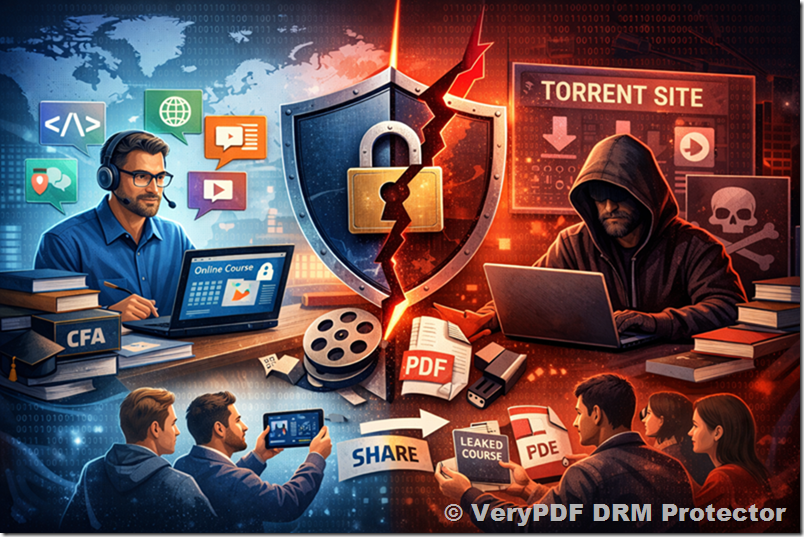
Protecting your course PDFs and lecture materials while keeping them interactive has always been a balancing act. As a professor, I’ve often felt frustrated: I want my students to engage with lecture slides, annotate their readings, and follow workflows clearlybut I also worry that my PDFs might be copied, shared online, or converted into editable files without my permission. It’s a real dilemma in today’s digital classrooms. How do you allow interaction without losing control?

How to Add Arrows, Rectangles, Circles, and Lines to PDFs for Visual Workflow Documentation in Legal and Education Use

One day, while preparing a key lecture on workflow documentation, I realized my PDF slides had been forwarded to students outside my class. It wasn’t just a small leak; it risked exposing paid course materials I’d spent hours creating. That’s when I discovered VeryPDF DRM Protector, which not only secures PDFs but also supports annotations like arrows, rectangles, circles, and linesperfect for visual workflow teaching.

In this post, I want to share my experience, practical steps, and tips for keeping your PDFs safe while letting students interact with them meaningfully.

Why Controlling PDF Access Matters

In my teaching experience, three issues keep recurring:

  • Students sharing PDFs online: Even well-meaning students sometimes forward lecture slides or homework to friends in other courses. Once online, your content can spread uncontrollably.

  • Unauthorized printing, copying, or converting: Students often try to convert PDFs to Word or Excel to manipulate content or copy it into other documents, undermining the integrity of your work.

  • Loss of control over paid or restricted materials: For those offering premium content or online courses, losing control means lost revenue and the devaluation of your intellectual property.

Without proper protection, all your effort can be compromised. That’s where DRM solutions come in.

How VeryPDF DRM Protector Solves These Problems

VeryPDF DRM Protector is designed with educators in mind. It not only prevents students from misusing PDFs but also enables interactive annotations that enhance teaching. Here’s how it helps in real classroom scenarios:

  • Restricting access to specific students: You can make PDFs accessible only to enrolled students or verified users, eliminating unauthorized viewers.

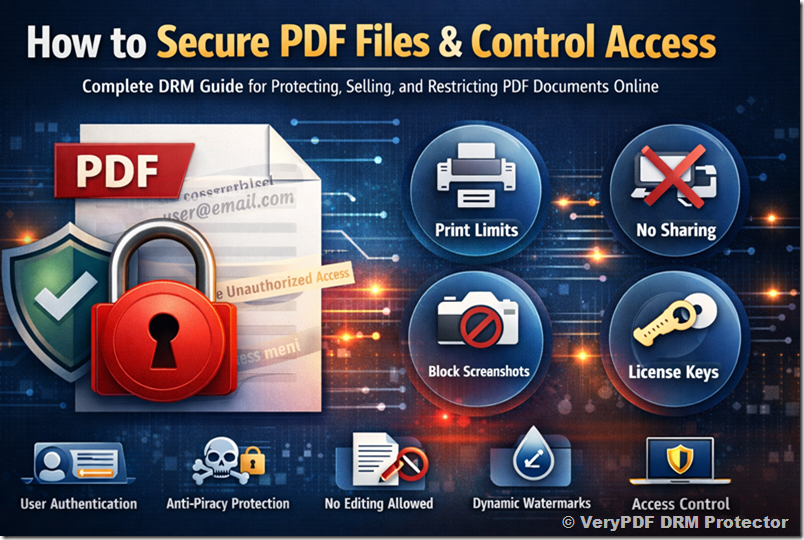
  • Preventing copying, printing, or forwarding: DRM settings lock your PDFs from actions that could lead to leakage. Students can read and annotate but cannot extract the content.

  • Protecting lecture slides, homework, and paid content: Even if a student tries to share or convert the file, DRM ensures the material remains secure.

For example, in my workflow documentation lecture, I needed students to annotate diagrams with arrows, circles, and connecting lines. Using VeryPDF DRM Protector, each student could add their annotations in a browser interface, save them individually, and revisit their notes laterall without compromising the security of the original PDF.

Interactive Annotations That Boost Learning

Annotations make teaching much more effective, especially for visual workflows or legal and educational documents. VeryPDF DRM Protector supports:

  • Arrows and lines: Perfect for showing process flows or connecting ideas.

  • Rectangles and circles: Highlight key areas or group related content visually.

  • Text annotations and sticky notes: Let students add comments, questions, or observations inline.

  • Ink and freehand drawing: Useful for brainstorming or diagramming directly on slides.

  • Stamps and signatures: Mark assignments, approvals, or completed work securely.

One of my students once asked me to clarify a complicated workflow in a PDF slide. Using the annotation tools, I drew arrows and added a circle around the critical section, then saved it. The annotations were visible only to that student, ensuring personalised guidance without risking sharing.

Step-by-Step: Activating PDF Annotations

Getting started with VeryPDF DRM Protector is straightforward. Here’s how I set up my lecture PDFs for secure, interactive annotations:

  1. Open the protected PDF files here: VeryPDF DRM Files

  2. Click “Actions” “Edit Settings” on your PDF.

  3. In the “Advanced Settings” field, enable annotation tools:

    • ToolbarButton_editorHighlight=show

    • ToolbarButton_editorFreeText=show

    • ToolbarButton_editorInk=show

    • ToolbarButton_editorStamp=show

    • ToolbarButton_SaveAnnotations=show

  4. Click “Save” to apply settings.

  5. Return to the book list and select “Enhanced Web Viewer” to view and annotate PDFs online.

Once enabled, students can interactively annotate PDFs with shapes, arrows, text, and stamps, and each annotation is saved securely under their account.

Real Benefits I’ve Seen in the Classroom

Using VeryPDF DRM Protector has transformed my teaching workflow:

  • Prevented content leakage: By restricting PDF access, I no longer worry about slides being forwarded to unauthorized students.

  • Reduced student misuse: Students can engage with the material meaningfully but cannot copy or convert it elsewhere.

  • Streamlined feedback: Personalised annotations allow me to comment on individual student PDFs securely.

  • Time-saving: Managing secure content online is faster than manually distributing printed copies or worrying about copyright.

I remember preparing a complex assignment workflow for my students. Previously, I had to explain every step verbally or in class handouts. With DRM-protected annotations, I added arrows and circles directly to the PDF. Students could follow the visual cues at their own pace, while I retained control over the file’s distribution.

Tips for Educators

  • Combine shapes and text annotations: Highlight key sections and add explanatory notes.

  • Use color coding: Different colors for arrows, circles, and text make it easier for students to differentiate concepts.

  • Encourage personal annotations: Students can take notes directly on their copies without affecting others’ view.

  • Check annotations per user: Ensure each student sees only their own annotations to maintain privacy.

By leveraging these simple practices, your PDFs become interactive learning tools rather than static handouts, all while remaining secure.

Conclusion

Managing PDF content in education doesn’t have to be a headache. VeryPDF DRM Protector allows professors and educators to protect course PDFs from piracy, prevent students sharing homework, and maintain full control over lecture materials. With its robust annotation tools, you can make your PDFs interactive and visually engaging while safeguarding your intellectual property.

I highly recommend this to anyone distributing PDFs to students. It has saved me countless hours of stress and prevented unauthorized access to my course materials.

Try it now and protect your course materials: https://drm.verypdf.com

Start your free trial today and regain control over your PDFs.

Frequently Asked Questions

Q: How can I limit student access to my PDFs?

A: VeryPDF DRM Protector lets you restrict PDF access to specific users, ensuring only enrolled students can view the content.

Q: Can students still read PDFs without copying, printing, or converting?

A: Yes. Students can annotate and read the files online while all DRM protections prevent extraction, printing, or forwarding.

Q: How can I track who accessed my PDFs?

A: The platform provides user-based tracking, showing who viewed and interacted with each protected PDF.

Q: Does it prevent PDF piracy and unauthorized sharing?

A: Absolutely. DRM restrictions stop copying, forwarding, printing, and converting, protecting your content from piracy.

Q: How easy is it to distribute protected lecture slides and homework?

A: Distribution is simple. Upload your PDFs to the platform, set permissions, and share secure links with students.

Q: Can annotations be saved and reused?

A: Yes. Students and instructors can save annotations per user and access them later, maintaining a personalised learning experience.

Q: Are mobile devices supported for annotation?

A: Yes. Students can annotate PDFs on tablets and smartphones with full functionality, including arrows, circles, text, and stamps.

Tags or Keywords:

protect course PDFs, prevent PDF piracy, stop students sharing homework, secure lecture materials, prevent DRM removal, anti-conversion PDF DRM, PDF annotation for educators, interactive PDFs, visual workflow PDFs, secure homework distribution

VeryPDF DRM Protector Tips Undo, Redo, Clear Annotations, and Customize Styles to Improve PDF Review Accuracy

How I Stopped PDF Sharing and Protected My Lecture Materials with VeryPDF DRM

As a professor, one of my biggest frustrations has always been seeing my carefully prepared lecture PDFs floating around the internet. I remember assigning a homework PDF to my students and, within days, finding copies shared on public forums. It’s not just about lost revenueit’s about losing control over my content and the trust of my students. I needed a way to protect my materials, prevent unauthorized sharing, and still allow students to interact with my PDFs. That’s when I discovered VeryPDF DRM Protector, and it completely changed how I manage course content.

VeryPDF DRM Protector Tips Undo, Redo, Clear Annotations, and Customize Styles to Improve PDF Review Accuracy

In my experience, there are a few pain points most educators face when distributing PDFs:

1. Students sharing PDFs online

It’s one thing to give students access to homework or lecture slides, but quite another when these files end up in the wrong hands. Shared PDFs can spread quickly via email, forums, or chat groups, undermining assignments and even affecting exam integrity.

2. Unauthorized printing, copying, or converting to Word

Even when PDFs are distributed privately, students sometimes convert them to Word or copy content into other formats. This not only risks plagiarism but also allows further distribution without consent.

3. Loss of control over paid or restricted content

For educators offering online courses or paid materials, the stakes are higher. Every PDF that’s leaked or copied reduces the value of your course and can lead to revenue loss.

To tackle these challenges, I turned to VeryPDF DRM Protector. Here’s how it helps in real classroom scenarios:

  • Restrict access to enrolled students: I can set PDFs so only specific students or accounts can open them. Even if someone tries to forward the file, it won’t open on an unauthorized device.

  • Prevent printing, copying, or forwarding: VeryPDF DRM Protector stops students from printing or copying content. Even screenshots or attempts to convert the PDF to Word, Excel, or images are blocked.

  • Protect lecture slides, homework, or paid course materials: All my essential teaching materials stay secure, and I can control who sees them.

The anti-piracy benefits are noticeable immediately. In one semester, a student tried to share a lecture PDF outside the class. Thanks to DRM protection, the file remained locked and useless to anyone not enrolled. It gave me peace of mind and allowed me to focus on teaching rather than policing content.

Another feature I love is PDF annotation support. With VeryPDF, students can highlight, add free text, insert images, or make comments without ever altering the original PDF. I can:

  • Save annotations per student and per PDF

  • Track progress and comments in real-time

  • Undo, redo, or clear annotations to maintain review accuracy

  • Customize styles, colors, and opacity for better visual clarity

For example, during a group project, students submitted annotated PDFs directly through the DRM system. I could see their notes, corrections, and highlights without worrying about someone tampering with the source material. This streamlined the review process and kept the original content secure.

The step-by-step setup is straightforward:

  1. Open your protected PDF files on the VeryPDF portal.

  2. Click “Actions” “Edit Settings” for the chosen PDF.

  3. In “Advanced Settings,” enable annotation tools like highlight, free text, ink, and stamp.

  4. Click “Save,” then open the Enhanced Web Viewer to annotate PDFs online.

This simple process allowed me to roll out annotations for all my course PDFs in just a few minutes. Students could interact with content safely, and I kept full control over the original materials.

Real classroom moments where DRM Protector proved essential:

  • During exam week, I shared sample solutions as PDFs. Normally, these would be copied or shared online. DRM protection ensured they stayed within the class.

  • For my paid online course, I could track who accessed lecture slides and prevent unauthorized sharing. This made course management much smoother.

  • Annotating collaborative assignments became easier, as each student’s input was visible but protected from editing by others.

Using VeryPDF DRM Protector also saved me time. Before, I had to constantly remind students not to share PDFs and check online for leaks. Now, I simply distribute materials via DRM-protected PDFs, and I know my content is secure.

If you’re distributing PDFswhether lecture slides, homework, or paid materialsthis tool is a game-changer. It keeps your content secure, stops piracy, and allows students to interact safely with your materials.

I highly recommend this to anyone distributing PDFs to students. Protecting your course materials doesn’t have to be complicated, and it frees you to focus on teaching.

Try it now and protect your course materials: https://drm.verypdf.com
Start your free trial today and regain control over your PDFs.

FAQs

Q1: How can I limit student access to PDFs?

A1: VeryPDF DRM Protector allows you to restrict PDFs to specific users or enrolled students. Only authorised accounts can open the file, preventing unwanted access.

Q2: Can students still read PDFs without copying, printing, or converting them?

A2: Yes. DRM protection allows students to view and annotate PDFs while blocking printing, copying, forwarding, or conversion to other formats.

Q3: How can I track who accessed my files?

A3: The system logs access per user. You can see which students opened PDFs, when they did, and what annotations they added.

Q4: Does it prevent PDF piracy and unauthorized sharing?

A4: Absolutely. Files are encrypted and locked to authorized users, preventing sharing, conversion, or bypassing of DRM controls.

Q5: How easy is it to distribute protected lecture slides and homework?

A5: Distribution is simple. Upload PDFs to the VeryPDF portal, set access and annotation permissions, then share the link with your students.

Q6: Can students annotate PDFs securely?

A6: Yes, students can highlight, add free text, insert stamps, and draw without altering the original content. All annotations are saved per student and per PDF.

Q7: Can I customize annotation styles and undo mistakes?

A7: Yes. You can adjust colors, opacity, stroke width, and undo, redo, or clear annotations as needed. This keeps review and feedback accurate.

Tags/Keywords

protect course PDFs, prevent PDF piracy, stop students sharing homework, secure lecture materials, prevent DRM removal, anti-conversion PDF DRM, PDF annotation security, lecture slide protection, homework PDF protection, digital content control

Step-by-Step Guide to Annotate PDF Documents Without Uploading Files for Secure Corporate and Educational Use

Secure and Annotate PDFs While Preventing Students from Sharing or Converting Materials

Protect your course PDFs and prevent students from sharing, copying, or converting lecture materials with secure DRM protection.

Step-by-Step Guide to Annotate PDF Documents Without Uploading Files for Secure Corporate and Educational Use

As a professor, I’ve often felt that uneasy sinking feeling when I realise that my carefully prepared lecture slides or homework PDFs might be circulating online without my permission. One semester, I noticed that a few students had shared a paid course packet with others who weren’t even enrolled in my class. It was frustrating, time-consuming, and frankly, demoralising. If only there was a way to let students annotate and interact with the materials without losing control or worrying about piracy.

This is where VeryPDF DRM Protector became a game-changer. It’s designed to protect course PDFs while still allowing students to annotate, highlight, and interact with materials in a secure environment. Here’s how I solved common classroom frustrations and ensured my PDFs stayed where they belonged.

One of the biggest challenges in teaching today is keeping digital content secure. Students frequently share PDFs or homework assignments online, intentionally or accidentally. This not only undermines the integrity of your courses but can also affect enrollment in paid programs. Another common issue is unauthorized printing or copyingonce a PDF is out, it’s incredibly hard to control. Lastly, converting PDFs into Word, Excel, or images is alarmingly easy, which often leads to uncontrolled distribution and piracy.

VeryPDF DRM Protector addresses all of these pain points. Here’s what makes it work so effectively in real classroom scenarios:

  • Restricting access: You can limit PDF access only to enrolled students or specific users. This means each student has their own secure login, preventing unauthorized sharing.

  • Preventing misuse: Printing, copying, forwarding, or even DRM removal is blocked. Students can read and annotate the materials but cannot distribute or modify them outside the secure platform.

  • Protecting valuable content: From lecture slides to homework PDFs or paid course materials, you maintain full control over your intellectual property.

For example, in one of my advanced biology courses, I uploaded the lab protocols as DRM-protected PDFs. Students could highlight important sections, add free text notes, and even insert images of their experimental results. But, they couldn’t print or copy the content to share with others. The best part? The annotations were saved individually for each student, so they could return to their notes later without compromising security.

Here’s a practical step-by-step example of how I use VeryPDF DRM Protector for annotation while maintaining security:

  1. Open the protected PDF in the VeryPDF DRM web viewer.

  2. Click “Actions” -> “Edit Settings” on the PDF file.

  3. In “Advanced Settings,” enable:

    • ToolbarButton_Download=show

    • ToolbarButton_editorHighlight=show

    • ToolbarButton_editorFreeText=show

    • ToolbarButton_editorInk=show

    • ToolbarButton_editorStamp=show

    • ToolbarButton_SaveAnnotations=show

  4. Click “Save,” then return to the book list and select “Enhanced Web Viewer” to annotate online.

The annotation tools are robust: students can highlight text, add freehand ink, insert stamps or shapes, write free text, or even draw signatures. I remember one student struggling with organizing her essay notes. Using the annotation tools, she could structure her thoughts directly on the PDF without losing access to the original content. Meanwhile, I remained confident that no one outside the class could misuse the files.

Beyond annotations, VeryPDF DRM Protector prevents students or hackers from converting PDFs to Word, Excel, or images. This stops the content from being distributed through unofficial channels, which is critical for paid courses or proprietary research materials. Maintaining control over content distribution ensures the integrity of the course and protects your time and effort invested in creating the materials.

The anti-piracy benefits are tangible. Once I started using DRM Protector, I no longer had to worry about students emailing PDFs to friends or posting them on forums. The system logs user access, so I can track who viewed or annotated a document. This visibility is invaluableit adds accountability and peace of mind.

Using DRM protection also simplifies workflow. In one semester, I was able to distribute a complete set of lecture slides for a semester-long seminar online. Students could annotate them in real-time, and I could even provide feedback directly on their annotations. It saved hours of back-and-forth emails, reduced printing costs, and eliminated the risk of unauthorized sharing.

Here are some practical tips for professors using VeryPDF DRM Protector:

  • Enable per-user annotations: Ensure each student’s notes are private and linked to their account.

  • Use multiple annotation types: Encourage students to use highlights, stamps, and freehand ink for better engagement.

  • Leverage access controls: Only enrolled students should access course PDFs to prevent leakage.

  • Monitor access logs: Regularly check who accessed the files to spot any unusual activity.

The combination of annotation flexibility and DRM protection makes it easy to run secure online courses without sacrificing interactivity. Students still get the learning benefits of annotating PDFs, while professors retain control over their content.

Over time, I’ve realized that investing in secure PDF tools like VeryPDF DRM Protector is not just about preventing piracyit’s about fostering a professional, respectful digital classroom environment. When students know the materials are protected, they treat them more responsibly. And as an instructor, I can focus on teaching instead of constantly worrying about unauthorized sharing.

I highly recommend this to anyone distributing PDFs to students. If you want to protect your lecture slides, homework assignments, or paid course content, this tool makes it simple to annotate securely and prevent misuse.

Try it now and protect your course materials: https://drm.verypdf.com

Start your free trial today and regain control over your PDFs.

Frequently Asked Questions

Q: How can I limit student access to PDFs?

A: VeryPDF DRM Protector allows you to restrict access to specific users or enrolled students only, preventing unauthorized sharing.

Q: Can students still read and annotate PDFs without copying, printing, or converting?

A: Yes, students can highlight, add free text, draw, or insert stamps directly in the protected PDF, all while restrictions prevent copying, printing, or conversion.

Q: How do I track who accessed the files?

A: The system logs user activity, so you can monitor which students viewed or annotated the PDFs.

Q: Does this prevent PDF piracy and unauthorized sharing?

A: Absolutely. The DRM protection blocks printing, copying, forwarding, and DRM removal, keeping your content secure.

Q: How easy is it to distribute protected lecture slides and homework?

A: Distribution is simpleyou upload PDFs to the DRM platform, set access permissions, and students access files securely online, no extra software needed.

Q: Can students save their annotations?

A: Yes, annotations are saved per user and can be revisited whenever they access the PDF again.

Q: Are mobile devices supported for annotations?

A: Yes, VeryPDF DRM Protector supports touch devices, allowing students to annotate on tablets or smartphones.

Tags/Keywords:

protect course PDFs, prevent PDF piracy, stop students sharing homework, secure lecture materials, prevent DRM removal, anti-conversion PDF DRM, secure PDF annotations, online course PDF security, lecture PDF protection, prevent unauthorized PDF sharing

How to Use Custom Stamps and Signatures in PDFs for Legal, Accounting, and Insurance Workflows with VeryPDF DRM Protecto

Secure Your Course PDFs: Prevent Sharing and Piracy with VeryPDF DRM Protector

Protecting your lecture slides and homework PDFs from unauthorized sharing has never been more important for educators. With students constantly exchanging files online, it’s easy to lose control over your hard work and course content. VeryPDF DRM Protector offers a practical solution to stop PDF piracy, prevent DRM removal, and ensure your materials remain secure while still accessible to the right students.

How to Use Custom Stamps and Signatures in PDFs for Legal, Accounting, and Insurance Workflows with VeryPDF DRM Protecto

I remember preparing a semester’s worth of lecture slides for my course last year. After uploading them for my students, I quickly discovered some PDFs were circulating outside the classroom, even on public forums. It was frustratingnot just because my content was being shared without permission, but also because it undermined the trust and integrity of the class. I needed a solution that could protect my PDFs, restrict access, and still allow my students to engage with the content effectively. That’s when I found VeryPDF DRM Protector.

One of the most common challenges teachers face is students sharing PDFs online or with classmates who aren’t enrolled in the course. This not only affects potential revenue for paid courses but also disrupts the learning experience. Students might print, copy, or convert your PDFs into editable formats like Word or Excel, making it difficult to maintain control over your materials. Another pain point is ensuring that homework or assessment PDFs aren’t circulated, which can compromise academic integrity.

VeryPDF DRM Protector addresses all of these issues. It allows you to restrict PDF access to specific students or groups, preventing anyone outside your intended audience from viewing the material. You can disable printing, copying, forwarding, and even stop attempts to remove DRM protections. In practical terms, this means your lecture slides, homework assignments, and paid course materials are fully secure, yet students can still read and annotate them as needed.

For example, I recently used DRM Protector to share annotated lecture slides with my students. Each student could add highlights, freehand notes, and even custom stamps for personal organization, but they couldn’t download, copy, or share the file with others. The software even tracks which students accessed the files, giving me confidence that materials weren’t being misused.

Setting up PDF annotations is straightforward. I simply opened my protected PDFs on the VeryPDF web interface, enabled annotation tools like highlights, free text, ink, and stamps, and allowed students to save their notes to their personal accounts. This feature not only encourages interaction but also ensures all annotations remain private per user and per document. I could even create custom stamps with dates and usernames for accountabilityperfect for assignments and feedback.

Here’s a step-by-step example of how I activate PDF annotations in my class:

  • Open the protected PDF files at https://drm.verypdf.com/wp-admin/admin.php?page=VeryPDFDRMFiles

  • Click “Actions” “Edit Settings” on the PDF file

  • In the “Advanced Settings” field, enable the toolbar buttons for download, bookmarks, highlights, free text, ink, and stamps

  • Click “Save”

  • Return to the book list page, click “Actions” “Enhanced Web Viewer” to view the PDF with full annotation features

This setup lets students annotate PDFs directly in their browser, even on mobile devices, without risking the file being copied or shared externally. Features like rectangles, circles, arrows, cloud lines, and signature support allow rich, interactive engagement. And for teachers, annotation tracking and export to Excel make reviewing class notes and feedback effortless.

Another major benefit is preventing PDF piracy. VeryPDF DRM Protector stops unauthorized conversions to Word, Excel, or image formats. Once I protected my course PDFs, I noticed a dramatic reduction in misusestudents couldn’t forward files to friends or post them online, and I retained full control over who accessed the content. This level of security gave me peace of mind, especially for paid courses or sensitive lecture materials.

Using DRM Protector also simplifies my workflow. Previously, I would send PDFs with individual passwords or watermark them manually, which was time-consuming. Now, the software handles restrictions automatically, while still allowing students to read, annotate, and interact with materials without frustration. It’s a perfect balance between security and usability.

Here are a few practical scenarios where VeryPDF DRM Protector has made a difference in my teaching:

  • Lecture Slides: I can upload semester-long slides and grant access only to enrolled students, preventing leaks.

  • Homework PDFs: Students complete assignments with annotations directly in protected PDFs, and I can track access without worrying about cheating.

  • Paid Online Courses: All materials are fully protected from piracy, allowing me to monetize content safely.

  • Interactive Notes: Students use freehand, highlight, and stamp tools without compromising file security, keeping learning interactive and engaging.

In short, VeryPDF DRM Protector lets you maintain full control over your PDFs while offering students a rich, interactive learning experience. It addresses the pain points of content leakage, unauthorized sharing, and PDF piracy, making it an essential tool for educators who distribute digital materials.

I highly recommend this to anyone distributing PDFs to students. It’s easy to set up, keeps your content secure, and provides peace of mind knowing that your lecture slides, homework, and paid courses are protected from unauthorized sharing or conversion.

Try it now and protect your course materials: https://drm.verypdf.com

Start your free trial today and regain control over your PDFs.

FAQs

How can I limit student access to PDFs?

You can restrict PDF access to specific users or groups using VeryPDF DRM Protector. Only enrolled students can open and view the files.

Can students still read PDFs without copying, printing, or converting?

Yes. Students can read, annotate, and interact with the PDF in their browser or device without being able to copy, print, or convert the file.

How do I track who accessed the PDFs?

The software logs user activity, so you can see which students accessed the PDF and when, ensuring accountability.

Does VeryPDF DRM Protector prevent PDF piracy?

Absolutely. It blocks unauthorized sharing, forwarding, printing, copying, and conversion to other formats, keeping your materials secure.

Is it easy to distribute protected lecture slides and homework?

Yes. Protected PDFs can be shared directly via the platform or links, and students can access them easily without compromising security.

Can I add annotations and custom stamps for students?

Yes. Students can highlight, add freehand notes, text, stamps, and even signatures, all saved per user and per document for privacy.

Does it work on mobile devices?

Yes. The DRM-protected PDFs with annotations are fully supported on desktops, tablets, and smartphones.

Tags/Keywords

protect course PDFs, prevent PDF piracy, stop students sharing homework, secure lecture materials, prevent DRM removal, anti-conversion PDF DRM, PDF annotation, secure online course materials, protect lecture slides, educational content security

How to Create and Use Custom Stamps with Timestamps, Signatures, and Text Styles in Protected PDFs

Protect Course PDFs with Smart Stamps, Signatures, and Timestamps That Stop Sharing

Create secure, annotated PDFs that prevent student sharing, block conversion, and keep full control of your teaching materials with DRM-based protection.

I still remember the first time I found my lecture slides online. A colleague emailed me a link and said, “Isn’t this yours?” It was my carefully prepared PDF, complete with examples I’d refined over years, now floating around a file-sharing forum. No credit. No permission. No control. As a professor, that moment hits hard. You spend hours building materials for your students, only to realize that once a PDF leaves your hands, it can be copied, printed, converted, or shared endlessly. That frustration is exactly why I started looking for better ways to protect course PDFs while still making them useful and interactive for students.

How to Create and Use Custom Stamps with Timestamps, Signatures, and Text Styles in Protected PDFs

Teaching today is a balancing act. On one hand, we want to give students flexible access to lecture notes, homework PDFs, and paid course materials. On the other, we need to prevent PDF piracy, stop students sharing homework, and secure lecture materials from unauthorized use. Simply locking a PDF with a password isn’t enough anymore. Students are clever, and tools to remove basic protection are everywhere. What we really need is a solution that combines strong DRM protection with practical teaching features, like annotations, signatures, and custom stamps that reinforce ownership and accountability.

In my own classes, three pain points kept coming up again and again. First, students would share PDFs with friends who weren’t enrolled. Sometimes it was innocent, sometimes not, but either way, it meant losing control of who had access. Second, I’d see assignments copied or converted into Word files, making plagiarism easier and harder to track. Third, for paid or restricted content, I worried constantly about DRM removal or someone repackaging my work as their own. These are common concerns among professors, lecturers, and educational content creators, and pretending they don’t exist doesn’t help anyone.

This is where VeryPDF DRM Protector changed my workflow. Instead of thinking only about “locking” PDFs, it helped me rethink how I distribute and interact with my course materials. At its core, it allows me to restrict access to specific users, prevent printing, copying, forwarding, and conversion, and maintain full control over my content. But what really surprised me was how useful its annotation and stamping features became in day-to-day teaching.

Let’s talk about real classroom use. When I upload a lecture PDF into VeryPDF DRM Protector, I can decide exactly who can open it. Only enrolled students. Only on approved devices. No downloading unless I explicitly allow it. That alone helps protect course PDFs from casual sharing. But then I can add custom stamps with timestamps, usernames, and even signatures. Every student sees the material marked in a way that clearly shows it’s personalized and protected. It subtly discourages sharing, because it’s obvious where the file came from.

Custom stamps sound like a small thing, but in practice they’re powerful. I often add a stamp that includes the student’s username and the date they accessed the file. If a PDF ever leaks, it’s immediately traceable. This alone has reduced misuse in my courses. Students know that the material is tied to them, and that accountability changes behavior. It’s not about punishment; it’s about setting clear boundaries.

The annotation features are equally important. VeryPDF DRM Protector supports highlights, free text, ink drawing, stamps, signatures, and more, all directly in the browser. Students can read and annotate without downloading or converting the file. They can highlight key passages, add sticky notes, or draw diagrams on touch devices. Crucially, these annotations are saved per user and per protected PDF. That means one student’s notes aren’t visible to another, and annotations don’t compromise the original content.

From a teaching perspective, this is gold. I can encourage active reading without sacrificing security. In one course, I asked students to highlight key arguments in a reading and add comments explaining their thinking. Because annotations are tied to their account, I knew the work was theirs. No copying, no forwarding annotated files to friends. It kept the focus on learning while still preventing PDF piracy.

Signatures are another underrated feature. For assignments, I now require students to sign their submission directly in the protected PDF. They can create a signature using text input or upload an image of their handwritten signature. Fonts, styles, and placement are flexible, but the result is clear authorship. This simple step has reduced disputes about submission ownership and reinforced academic integrity.

Behind the scenes, the DRM does the heavy lifting. Students can read the content, but they can’t print it unless I allow it. They can’t copy text into another document. They can’t convert the PDF to Word, Excel, or images. And attempts to remove DRM simply don’t work. This is what really helps prevent DRM removal and unauthorized redistribution. It’s not about making life difficult for students; it’s about protecting the value of educational content.

Setting this up doesn’t require technical expertise. The first time I enabled annotations, I was surprised at how straightforward it was. I opened the protected PDF settings, turned on the annotation tools I wanted, and saved. That was it. Students accessed the file through the enhanced web viewer and immediately had access to highlights, stamps, signatures, and notes. No plugins. No confusing downloads. Just a clean, controlled reading experience.

Here’s a simple example of how I use these tools week to week:

  • Upload lecture slides and restrict access to enrolled students only.

  • Enable highlights, free text, and stamp annotations.

  • Add a default stamp with course name and access date.

  • Ask students to annotate key sections before class.

  • Review participation through their engagement, not through copied text.

For homework PDFs, the process is similar. I distribute the assignment as a protected PDF. Students can read and annotate, but they can’t export or share the file. They complete their work within the allowed annotation tools and sign their submission. This approach has dramatically reduced “solution swapping” between students. It also saves me time, because I don’t have to chase down suspicious files or argue about originality.

Paid course materials benefit even more. If you sell online courses or premium content, you know how quickly PDFs can leak. With VeryPDF DRM Protector, even if someone tries to share a link, access is still controlled. You can revoke access instantly. You can limit viewing to a specific period. You can ensure that your work isn’t quietly converted and resold elsewhere. This level of control is essential if you want to maintain a sustainable teaching business.

One moment that really sold me on this approach happened last semester. A student emailed asking if they could share a lecture PDF with a friend who was “just curious.” Instead of worrying, I calmly explained that the material was protected and personalized, and that sharing wouldn’t work anyway. The conversation ended there. The system enforced the boundary, not me. That alone reduced stress.

Another benefit I didn’t expect was how much smoother my workflow became. Because annotations are saved automatically and tied to each user, I no longer receive dozens of emails with questions like “Can you resend the PDF?” or “I lost my notes.” Students log in and everything is there. From a teaching perspective, that’s a huge win.

If you’re concerned about accessibility, it’s worth noting that students can still read comfortably on different devices, including tablets and touch screens. The annotation tools are mobile-friendly, supporting freehand drawing, highlighting, and text notes. This flexibility matters, especially in hybrid or online courses where students use a range of devices.

At the end of the day, protecting course PDFs isn’t about mistrusting students. It’s about respecting the time and expertise that go into creating educational content. When you prevent PDF piracy, stop students sharing homework, and secure lecture materials, you create a healthier learning environment. Students focus on understanding the material, not finding shortcuts. Teachers focus on teaching, not damage control.

I’ve tried many approaches over the years, from simple passwords to watermarks. None of them offered the balance that VeryPDF DRM Protector does. Strong protection, practical annotation tools, and real control over distribution, all without overwhelming either me or my students. For anyone who distributes PDFs as part of teaching, this combination is hard to beat.

If you’re still relying on basic PDF security, I’d encourage you to rethink that approach. Today’s challenges require more robust solutions. With DRM that actually works, plus features like custom stamps, signatures, and per-user annotations, you can finally protect course PDFs without sacrificing usability.

I highly recommend this to anyone distributing PDFs to students, whether you’re teaching a small seminar or running a large online program. Try it now and protect your course materials: https://drm.verypdf.com. Start your free trial today and regain control over your PDFs.

Frequently Asked Questions

How can I limit student access to PDFs without hurting usability?

You can restrict access to enrolled students only while still allowing them to read and annotate in a browser. This way, learning stays flexible but controlled.

Can students read PDFs without copying, printing, or converting them?

Yes. Students can view and annotate protected PDFs, but printing, copying, and conversion to other formats are blocked by DRM.

How do I know who accessed my course materials?

Access is tied to user accounts. Stamps can include usernames and timestamps, making it clear who viewed each file and when.

Does this really prevent PDF piracy and unauthorized sharing?

Yes. Even if someone shares a link or file, DRM enforcement prevents access by unauthorized users and blocks DRM removal attempts.

Is it complicated to distribute protected lecture slides and homework?

Not at all. Upload the PDF, adjust a few settings, and share the secure link. Students access everything through a simple web viewer.

Can I use this for paid courses or premium content?

Absolutely. It’s especially effective for paid materials, helping you maintain control and prevent unauthorized redistribution.

Does annotation compromise the security of the PDF?

No. Annotations are saved per user and per document, without altering the protected source file or weakening DRM.

Tags: protect course PDFs, prevent PDF piracy, stop students sharing homework, secure lecture materials, prevent DRM removal, anti-conversion PDF DRM, protected educational PDFs, DRM for teachers