
Protecting sensitive information in PDFs is a critical challenge for publishers, educators, and businesses. While passwords can provide basic protection, they are easily bypassed. VeryPDF DRM Protector offers advanced document view limits and digital rights management (DRM) controls that secure your PDF content in ways traditional security methods cannot match.
✅ Comprehensive View Limits for PDFs
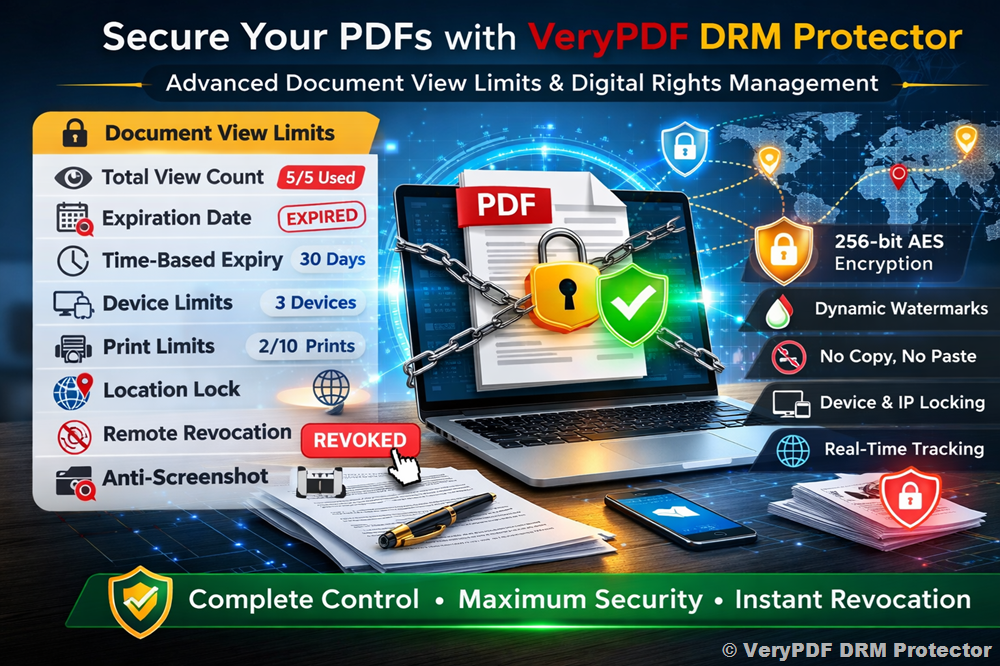
With VeryPDF DRM Protector Safeguard, you can enforce strict rules on how, when, and by whom your PDF documents are accessed. These controls are not password-based; instead, they are embedded in a secure viewer, ensuring that even shared files remain protected. Key document view limits include:
- Total View Count: Restrict how many times a document can be opened. For example, you can set a PDF to expire after XXX views.
- Expiration Date: Set a document to expire on a specific calendar date.
- Time-Based Expiry: Documents can expire after a specific number of days once first opened, such as 30 days from initial use.
- Device Limits: Control the number of computers or mobile devices authorized to access your content.
- Print Limits: Restrict printing to a certain number of copies or disable it entirely.
- Print-View Combined Limits: Automatically expire documents after a set number of prints.
- Remote Revocation: Instantly revoke access to documents, even if they have already been distributed.
- Location and Device Locking: Lock documents to specific IP addresses, countries, or devices to prevent unauthorized sharing.
- Screenshots/Screen Grab Prevention: Block screen capture tools to protect against copying or leaking content.
✅ Advanced Protection Features
VeryPDF DRM Protector doesn’t just restrict access—it ensures the integrity of your documents through multiple layers of security:
- No Passwords Needed: Uses 256-bit AES encryption and a secure viewer to enforce protections.
- Dynamic Watermarks: Embed user-specific information (like name or email) to deter sharing.
- Modification Control: Prevent users from editing, copying/pasting, or saving altered versions of the PDF.
- Anti-Screenshot Technology: Stops users from capturing screen images of your documents.
These features combine to provide a robust DRM solution that goes beyond simple passwords, ensuring your intellectual property and sensitive documents remain safe.
Managing View Limits After Distribution
VeryPDF DRM Protector allows publishers to adjust document controls even after distribution. This flexibility is crucial for managing access:
- Change Limits: Adjust view counts, print permissions, or expiration dates for individual users.
- Tracking: Monitor who accessed the document, when, and whether they printed it.
Technical Specifications
To ensure smooth operation, VeryPDF DRM Protector includes the following technical guidelines:
- File Size Limit: Protects files up to 200MB in size.
- Compatibility: Requires the Safeguard Secure PDF Viewer (Windows, Mac, Android, iOS) or the Safeguard Web Viewer for browser access.
- Offline Access: Policies can allow temporary offline viewing or require an internet connection for validation.
Why Document View Limits Matter
Digital Rights Management (DRM) view limits are essential for controlling sensitive content. They allow publishers to:
- Restrict the number of views per user.
- Set expiration based on time or number of uses.
- Prevent unauthorized printing, copying, or screen capturing.
- Enforce device and location restrictions.
These measures protect intellectual property, confidential documents, and sensitive data, while still enabling legitimate users to access the content they need.
Final Thoughts
Implementing document view limits with VeryPDF DRM Protector ensures your PDFs are secure, tamper-proof, and traceable. By combining device restrictions, view counts, expiration dates, and anti-copying technologies, this solution provides a comprehensive approach to digital content protection that traditional methods cannot match. Publishers, educators, and businesses can confidently distribute sensitive documents knowing they remain secure at all times.