Protect Your Teaching Files From Being Misused and Ensure They Are Only Read by the Students in Your Registered Classes

Protect Your Teaching Files From Being Misused and Ensure They Are Only Read by the Students in Your Registered Classes

Keep your course PDFs safe from unauthorized sharing and ensure only enrolled students can access your teaching materials.

Protect Your Teaching Files From Being Misused and Ensure They Are Only Read by the Students in Your Registered Classes


As a professor, one of my biggest frustrations has always been seeing my carefully prepared lecture slides and assignments floating around the internet, accessible to anyone with a simple download link. It’s a nightmare when students share PDFs or homework files without realizingor sometimes caringthat it undermines both the integrity of the class and the effort I’ve put into creating the content. I constantly worried: “Am I losing control over my teaching materials? How can I make sure only my registered students see these files?”

This is a common challenge for educators everywhere. Whether you’re teaching in-person classes, hybrid courses, or fully online programs, the risk of students sharing materials without permission can be stressful. Fortunately, I recently discovered a solution that has transformed how I distribute my PDFs: VeryPDF DRM Protector.


Common Classroom Challenges with Digital PDFs

1. Students sharing PDFs online

In one of my larger courses, I found out that some students were uploading homework PDFs to social media groups. Suddenly, content meant only for my class was accessible to the world. Not only did this jeopardize the fairness of assignments, but it also made it harder to track submissions and ensure students completed work honestly.

2. Unauthorized printing or copying of materials

Even when students don’t share files online, printing out lecture slides and distributing them is a problem. It’s easy for PDFs to be copied, printed, and handed to others. I remember a situation where a paid online course I offered had its content circulated widely after a single student printed the PDFs and shared them. The loss of revenue and control was significant.

3. Losing control over paid or restricted content

When you sell or provide premium content, losing control can have real consequences. Students or external users might access paid course materials without permission, and tracking who saw what becomes almost impossible. I needed a way to secure PDFs while still making them accessible to my students.


How VeryPDF DRM Protector Solves These Problems

VeryPDF DRM Protector became my go-to solution for managing digital teaching files. In simple terms, it allows me to control exactly who can access my PDFs, while preventing unauthorized printing, copying, or forwarding. Here’s how it worked for me in real scenarios:

Restricting access to enrolled students

  • Each student receives a secure version of the PDF.

  • Only registered students can open the file with their credentials.

  • If a file is shared outside the class, it won’t open on another device.

Preventing printing, copying, and forwarding

  • DRM Protector prevents students from printing slides or copying text from the PDFs.

  • No more worrying about assignments ending up in other courses or online forums.

  • It keeps homework, lecture slides, and other paid resources safe.

Protecting paid or premium course materials

  • For my online courses, I can distribute paid PDFs without the fear of unauthorized access.

  • Students can read the content comfortably but cannot duplicate it.

  • This reduced my stress and allowed me to focus on teaching instead of chasing file leaks.


Real-Life Example: How DRM Protector Made a Difference

In my recent “Advanced Biology” course, I prepared a set of 20 lecture PDFs, each with extensive diagrams and assignments. I distributed them using VeryPDF DRM Protector. Here’s what happened:

  • Before DRM: A student shared a PDF on a group chat, and I quickly realized that multiple non-enrolled students could download it.

  • After DRM: The same PDF was protectedwhen a student tried to open it on an unauthorized device, the file didn’t open. Only enrolled students could view the content.

This simple step saved me hours of troubleshooting and clarified expectations with my students. I could distribute homework PDFs and lecture notes without fear of them being misused.


Practical Tips for Using VeryPDF DRM Protector in Your Teaching

Using DRM Protector is straightforward. Here’s a step-by-step approach I follow:

1. Upload your PDF files to VeryPDF DRM Protector

  • Drag and drop lecture slides, homework, or any course material.

  • The interface is clean and user-friendly, no technical knowledge required.

2. Set access permissions

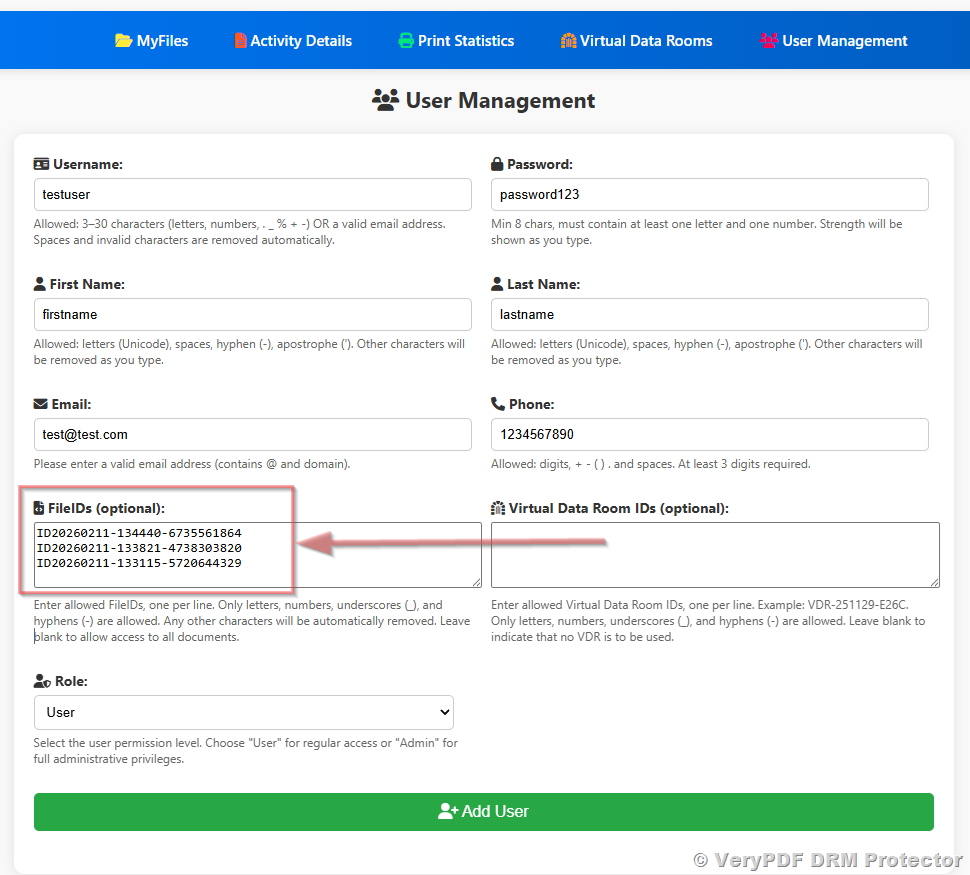
  • Decide which students can access the file.

  • Restrict printing, copying, and forwarding.

  • You can also set expiration dates if needed for temporary access.

3. Distribute secure files

  • Send the protected PDFs via email or your learning management system.

  • Each student gets a secure file linked to their identity.

4. Monitor and track access

  • Check which students have accessed the files.

  • Track any attempts at unauthorized opening.

5. Update content as needed

  • Need to revise a lecture? Upload the new PDF and resend.

  • Old versions can be disabled automatically to prevent outdated material from circulating.

By following these simple steps, I regained full control over my teaching content. It’s a practical, stress-reducing tool for any professor or teacher handling digital files.


Why I Recommend VeryPDF DRM Protector

I highly recommend VeryPDF DRM Protector to anyone distributing PDFs to students. It’s not just about preventing unauthorized sharingit’s about peace of mind and efficiency. With DRM Protector:

  • I no longer worry about my PDFs being shared or printed without permission.

  • My students focus on learning rather than spreading files.

  • I can protect both free and paid course materials with the same ease.

  • It saved me time, reduced conflicts, and made my teaching workflow smoother.

If you’re tired of stressing over who has access to your PDFs, try it now and protect your course materials: https://drm.verypdf.com/. Start your free trial today and regain control over your teaching PDFs.


FAQs About Protecting PDFs in the Classroom

1. How can I limit student access to PDFs?

VeryPDF DRM Protector lets you restrict access so that only enrolled students can open your files. You can tie the files to specific devices or student accounts.

2. Can students still read the PDFs without copying or printing?

Yes. DRM Protector allows reading while blocking printing, copying, and sharing. Students can engage with your content safely.

3. Is it easy to distribute protected files to my students?

Absolutely. You can upload files and send secure PDFs directly through email or your learning platform. Students receive them with a simple click to open.

4. Does it work for both homework and lecture slides?

Yes. Whether you’re sharing assignments, lecture notes, or paid content, DRM Protector secures all types of PDF materials.

5. How can I track who accessed my files?

You can monitor student access and see attempts to open files on unauthorized devices, giving you full control over distribution.

6. Can I update or revoke access if needed?

Yes. DRM Protector allows you to update content, revoke old versions, or set expiration dates for temporary access.

7. Will this save time compared to managing shared PDFs manually?

Definitely. By automating protection and tracking, you spend less time chasing leaks and more time teaching.


Keywords/Tags:

protect course PDFs, secure classroom materials, stop students sharing homework, lecture note security, prevent PDF leaks, protect paid course content, control student access, prevent unauthorized printing, safeguard teaching materials

Ensure Your Course Materials Stay Exclusive to Your Teaching Group and Arent Shared Publicly Without Permission

Ensure Your Course Materials Stay Exclusive to Your Teaching Group and Aren’t Shared Publicly Without Permission

As a professor, I’ve often found myself staying late into the night worrying about whether my carefully prepared lecture PDFs or homework assignments might end up circulating online. I remember one semester when a student accidentally uploaded our entire set of course slides to a public forum. The feeling of losing control over my intellectual property was frustrating and stressful. Many educators face this dilemma daily: how can we share our teaching materials with students while keeping them secure and exclusive to the classroom?

Ensure Your Course Materials Stay Exclusive to Your Teaching Group and Arent Shared Publicly Without Permission

Managing digital content in education isn’t as simple as it seems. PDFs are easy to copy, forward, or print, and once they’re out there, it’s almost impossible to regain control. Students might unintentionally share materials, or in some cases, some might distribute them without realizing the consequences. Over the years, I’ve discovered a practical solution that makes this challenge far less daunting: VeryPDF DRM Protector.

One of the first issues I faced was students sharing homework or lecture slides with friends outside the class. It wasn’t just about lost grades or unfair advantagesit was about maintaining the integrity of the course and ensuring that the materials I spent hours preparing reached only the intended audience. With VeryPDF DRM Protector, I was able to restrict PDF access exclusively to enrolled students. By doing so, every document I distributed had a digital lock, allowing students to view it but preventing unauthorized forwarding. It was a relief to know that my content remained under my control, even if someone tried to pass it along.

Another common pain point was unauthorized printing or copying. In some classes, students would print multiple copies of lecture slides and distribute them freely. While my goal was always to encourage learning, it was disheartening to see my content misused. VeryPDF DRM Protector addresses this by allowing fine-grained restrictions, such as disabling printing and copy-pasting. In practice, this means students can engage with the material on their devices without the risk of me losing ownership or control. I remember a situation where a student tried to print a set of slides for a study group the DRM restrictions prevented the action entirely, saving me from a potentially messy conversation about copyright and fairness.

A third issue, especially relevant for paid or premium course content, is loss of control over distribution. When I offered specialized workshops online, I needed to ensure that my content was delivered only to paying participants. Without proper protection, PDFs could easily leak, resulting in lost revenue and compromised exclusivity. VeryPDF DRM Protector gave me the ability to securely distribute content with confidence. The system is incredibly user-friendly, so I could set restrictions and distribute files without needing IT support or technical expertise. This saved hours of administrative work and allowed me to focus on what I do best: teaching.

From a practical standpoint, using VeryPDF DRM Protector is straightforward:

  • Upload your PDF: Simply select the lecture slides, assignments, or paid course materials you want to protect.

  • Set restrictions: Choose whether students can print, copy, or forward the document.

  • Distribute securely: Share the file via email or your learning management system, knowing only authorized users can access it.

  • Track access: Keep an eye on who has opened the document and when, which is especially useful for assignments or sensitive content.

I’ve also found that the system simplifies classroom workflow. Before DRM protection, I used to spend time chasing down students who shared materials or clarifying what was allowed. Now, I can upload my materials once, apply the necessary protections, and distribute them confidently. For instance, last semester, I rolled out a set of homework PDFs with copy and printing disabled. Not a single file was shared externally, and I didn’t have to spend time policing distribution. That peace of mind is invaluable.

Even in smaller, discussion-focused classes, DRM protection adds value. For example, I prepared a series of specialized readings for a seminar on modern literature. Some students asked if they could print them for personal notes. Because I used VeryPDF DRM Protector, they could read the files on their devices while respecting the usage limitations I set. It reinforced the expectation of responsible use without creating friction or resentment.

Here are some tips I’ve learned from using DRM protection in teaching:

  • Always clarify expectations: Let students know that the PDFs are protected and why. Most students are understanding when they know it’s about intellectual property.

  • Use access tracking: It’s helpful to know who has opened critical documents, especially for deadlines or homework submissions.

  • Combine with LMS tools: DRM protection works best when integrated with your existing learning management system. You can share materials securely without changing how students access them.

  • Update and rotate content as needed: For courses spanning multiple semesters, refreshing the protected files ensures students always get the latest version.

Beyond the practical benefits, DRM protection also reduces stress. Instead of worrying about lost materials or unauthorized sharing, I can focus entirely on teaching and creating quality content. Knowing that my course PDFs, homework assignments, and lecture slides are secure allows me to engage more creatively with my students.

I highly recommend VeryPDF DRM Protector to anyone distributing PDFs to students. It’s an easy, effective solution that keeps your teaching materials exclusive, prevents unauthorized printing or sharing, and saves valuable time. If you want to regain control over your course PDFs and ensure that your content reaches only the intended audience, this tool is a game-changer.

Try it now and protect your course materials: https://drm.verypdf.com/

Start your free trial today and regain control over your teaching PDFs.

Frequently Asked Questions:

  1. How can I limit student access to my PDFs?

    VeryPDF DRM Protector allows you to restrict access to specific users, ensuring that only enrolled students can open your files.

  2. Can students still read the content without copying or printing?

    Yes, students can view the PDFs on their devices while printing, copying, and forwarding are disabled.

  3. Is it easy to distribute protected course materials?

    Absolutely. You can upload the PDFs, set the restrictions, and share them via email or your learning management system.

  4. Does it work for homework, lecture slides, and paid course materials?

    Yes, it protects all types of digital course content, from regular assignments to premium or paid resources.

  5. Can I track who accessed the files?

    Yes, the software allows you to monitor document access, giving you insight into who opened the files and when.

  6. Will DRM protection interfere with student learning?

    Not at all. Students can read the content on their devices as intended; restrictions only prevent unauthorized actions like copying or printing.

  7. Is it complicated to use for someone without technical skills?

    No, VeryPDF DRM Protector is designed to be user-friendly. Upload your PDFs, set restrictions, and distributeno technical expertise required.

Tags/Keywords:

protect course PDFs, secure classroom materials, stop students sharing homework, lecture note security, prevent PDF leaks, digital course protection, homework PDF security, online course content protection, teaching material DRM, secure educational PDFs

Stop Your Lecture Notes From Being Shared With Unauthorized People and Keep Them Only for Your Classroom Students

Stop Your Lecture Notes From Being Shared With Unauthorized People and Keep Them Only for Your Classroom Students

As a professor, I’ve often found myself staring at my computer screen, heart sinking, when I discover that my carefully crafted lecture PDFs have been circulating outside my classroom. I remember preparing a comprehensive set of slides for a semester-long course on digital marketing, only to find some of them shared on public forums. It was frustratingnot only because it compromised my intellectual property, but also because it disrupted the learning experience I had designed specifically for my students. Like many educators, I wanted a way to keep my materials safe, accessible only to my enrolled students, without making the distribution process a nightmare.

Stop Your Lecture Notes From Being Shared With Unauthorized People and Keep Them Only for Your Classroom Students

One of the biggest challenges in modern teaching is protecting digital course content. PDFs are incredibly convenientthey’re easy to create, distribute, and viewbut that convenience comes at a cost. Students can forward them, copy sections, print them, or even post them online without your permission. Suddenly, a resource you spent hours preparing is no longer exclusive to your classroom. Worse, it can undermine the value of your paid courses or specialized assignments. I needed a solution that would let me retain control while keeping the focus on teaching.

That’s when I discovered VeryPDF DRM Protector. This tool became a game-changer for my workflow. It’s designed to protect PDF files in ways that feel seamless to both teachers and students. With VeryPDF DRM Protector, I can securely share lecture slides, homework assignments, and other educational materials while preventing unauthorized copying, printing, or forwarding. The software is user-friendly and doesn’t require any technical expertise to implement, which is a relief for someone like me who wants to focus on teaching rather than file management.

One common issue I faced was students sharing PDFs outside the classroom. In one instance, I assigned a complex problem set, expecting students to discuss it collaboratively within the class forum. Within a week, I noticed the assignment circulating on a public document-sharing site. Not only did this compromise my content, but it also created confusion among students who hadn’t attempted the problems yet. With VeryPDF DRM Protector, I now restrict access to these PDFs strictly to enrolled students. The system ensures that only intended recipients can open the files, and anyone without authorization is automatically blocked. It’s a simple step, but it has saved me countless headaches.

Another problem was unauthorized printing and copying. I once found that a student had printed my entire lecture deck and handed it out to a friend taking a different course. The extra printing and uncontrolled distribution defeated the purpose of my teaching plan and caused frustration for everyone involved. By enabling the no-print and no-copy options in VeryPDF DRM Protector, I can ensure my PDFs remain digital and view-only. Students can still learn from the materials, but the risk of uncontrolled physical copies is eliminated. This has significantly reduced misunderstandings and conflicts in my classroom.

I also struggled with maintaining control over paid or restricted content. I run a few online workshops where access to PDFs is part of the enrollment fee. Without proper protection, participants could easily share materials with others, reducing the value of the course. VeryPDF DRM Protector allows me to safeguard paid content by applying advanced access restrictions and usage controls. I can define who sees what, when, and how. In one case, I had an advanced research methods guide that I was distributing exclusively to graduate students. Thanks to DRM protection, it stayed secure, and I didn’t have to worry about unauthorized sharing. It also gave me peace of mind to focus on teaching rather than policing content distribution.

Implementing VeryPDF DRM Protector is straightforward, even for someone without technical expertise. Here’s how I manage it for my classroom materials:

  • Step 1: Upload your PDF Drag your lecture slides, homework, or course guides into the software interface. It’s fast and intuitive.

  • Step 2: Set permissions Decide who can open the file. You can restrict it to specific students or groups.

  • Step 3: Enable protections Choose whether to block printing, copying, or forwarding. You can also set expiration dates if the content is temporary.

  • Step 4: Distribute safely Share the protected PDF via email, your course platform, or cloud storage. Students can access it without extra hassle.

  • Step 5: Monitor access Track who opens the file, ensuring your content reaches only your intended audience.

I particularly love the dynamic watermarking feature. Every time a student opens a PDF, it displays identifying information, which discourages unauthorized sharing. Once, a student mentioned they wouldn’t post a homework file online after seeing their name on the PDF pageit was a subtle yet powerful deterrent. Beyond protection, this feature also simplifies my workflow, as I no longer need to follow up constantly or worry about misplacement.

VeryPDF DRM Protector also shines when it comes to flexibility. I use it for a variety of materialsfrom lecture notes and assignment sheets to paid online course modules. In each case, the setup is almost identical, which means I don’t need to learn new tools or processes for different content types. The software has reduced my workload by preventing problems before they arise rather than having to fix issues afterward. It’s like having a digital security assistant that works quietly in the background, letting me focus on teaching.

In conclusion, if you’ve ever felt frustrated by students sharing PDFs, unauthorized printing, or loss of control over your course materials, I highly recommend giving VeryPDF DRM Protector a try. It solves these problems in a straightforward, effective way, allowing you to focus on what matters mostyour teaching. You can restrict access, prevent misuse, and ensure your materials are used exactly as intended, all without complex technical steps. I’ve experienced firsthand how it protects my intellectual property, reduces conflicts, and keeps my classroom resources secure.

Try it now and protect your course materials: https://drm.verypdf.com/

Start your free trial today and regain control over your teaching PDFs.

FAQs

How can I limit student access to my PDFs?

VeryPDF DRM Protector allows you to set access permissions for specific students or groups, ensuring that only enrolled participants can open your files.

Can students still read materials without copying or printing?

Yes. The software supports view-only modes where students can read the content on their device but cannot copy, print, or forward it.

Is it easy to distribute protected course materials?

Absolutely. You can share your PDFs via email, cloud storage, or your learning management system, with protections already applied.

Does it work for both homework and lecture slides?

Yes. The tool is versatile and can protect any type of PDF, including assignments, lecture decks, research papers, and paid course materials.

Can I track who accessed my files?

Yes. VeryPDF DRM Protector provides monitoring features so you can see which students opened the file, adding an extra layer of control.

Can I set expiration dates for course materials?

Yes. You can set time limits for file access, which is particularly useful for temporary resources or semester-specific content.

Does it require technical expertise to use?

Not at all. The interface is intuitive and designed for educators, with simple steps to protect, distribute, and monitor your PDFs.

Tags / Keywords:

protect course PDFs, secure classroom materials, stop students sharing homework, lecture note security, prevent PDF leaks, homework PDF protection, lecture slides security, DRM for educators, protect teaching materials, safe course distribution

How to Resolve "Maximum Allowed Devices" Errors in VeryPDF DRM Protector

If you are using VeryPDF DRM Protector to secure your PDF files and have enabled “Allow PDF to Be Opened Only on the First N Devices”, you may occasionally encounter an error stating that the PDF has reached the maximum number of allowed devices.

This article explains the actual causes, temporary solutions, and preventive measures to ensure legitimate readers can continue accessing their PDFs without consuming extra licenses.

How to Resolve "Maximum Allowed Devices" Errors in VeryPDF DRM Protector


Understanding the Problem

When using VeryPDF DRM Protector with the “Allow PDF to Be Opened Only on the First N Devices” setting, some legitimate readers may encounter the following error message:

CheckForFirstNDevices: [ERROR] This PDF file has reached the maximum number of allowed devices. Max allowed devices = 1.

How to Resolve "Maximum Allowed Devices" Errors in VeryPDF DRM Protector

At first glance, this may seem confusing, because the reader might have done nothing “wrong.” In many cases, they:

  • Use the same machine they originally activated the PDF on.
  • Keep the PDF in the same folder as when they first opened it.
  • Have a stable internet connection, allowing the DRM server to communicate normally.

Despite all of these conditions being met, the DRM system may still block access.

Why This Happens

This occurs because VeryPDF DRM Protector identifies a device using a combination of hardware, software, and network information, not just the physical computer. Even minor changes in the environment can make the DRM system believe that a “new device” is attempting to open the PDF. Common triggers include:

  • Switching browsers – Each browser (Chrome, Firefox, Edge) stores DRM-related device information differently. Opening the same PDF in a new browser can register a new device.
  • Using VPNs or proxies – The DRM server detects a change in IP address, which may cause the PDF to appear as being accessed from another device.
  • Changing hardware – Replacing network cards or hard drives alters system identifiers used to generate the device fingerprint.

In short, the error does not mean the reader is doing anything wrong—it simply indicates that the DRM system thinks the PDF has reached the maximum number of allowed devices based on its tracking rules.

Real-World Example

A reader opens a PDF for the first time in Chrome, then later tries to open it in Firefox. Even though it is the same physical computer and the PDF hasn’t been moved, the DRM system sees Firefox as a new device and may show the “maximum allowed devices” error.

This behavior ensures strong security and prevents unauthorized sharing but can sometimes affect legitimate readers if environmental changes occur.


Actual Causes of Device-Locking

VeryPDF DRM Protector identifies and tracks devices using a sophisticated combination of hardware and software fingerprints, along with network and browser information. This ensures that PDF files are only opened on authorized devices, preventing unauthorized sharing. However, this system is sensitive to changes in the computing environment. Even small changes can make the DRM system think a new device is attempting to access the PDF, triggering the “maximum allowed devices” error.

Here are the main triggers for device-limit errors in detail:

1. Using a VPN or Proxy

  • What happens: When a reader connects to the internet via a VPN or proxy, their public IP address changes.
  • Why it triggers a lock: VeryPDF DRM Protector monitors network environment as part of its device fingerprint. A new IP can make the system interpret the connection as a different device, even though the physical computer hasn’t changed.
  • Real-world scenario: A reader opens a PDF at home, then connects via a VPN while traveling. The DRM system may block access, showing the “maximum allowed devices” error.

2. Switching Browsers

  • What happens: Each browser (Chrome, Firefox, Edge, etc.) stores DRM-related device information differently.
  • Why it triggers a lock: Opening the same PDF in a new browser registers it as a new device.
  • Real-world scenario: A reader first opens the PDF in Chrome, later tries Firefox, then Edge. Each switch could register a separate device, consuming the limited device quota.

3. Changing Network Cards (NIC)

  • What happens: Network cards have unique identifiers (MAC addresses). Replacing or changing the network card alters this identifier.
  • Why it triggers a lock: The DRM system incorporates the MAC address into the device hash. A new MAC address is treated as a different device.
  • Impact: Even if all other hardware is unchanged, replacing a NIC may require manual reactivation in the DRM panel.

4. Changing Hard Drives

  • What happens: Installing a new hard drive changes certain system identifiers used for device fingerprinting.
  • Why it triggers a lock: The DRM system detects these changes as a new device.
  • Impact: Readers who replace or upgrade their hard drive may temporarily lose access until the new device hash is recognized or cleared in the DRM panel.

5. Other Major Hardware Changes

  • What happens: Replacing the CPU, motherboard, or other critical hardware components significantly alters system fingerprints.
  • Why it triggers a lock: The DRM system cannot match the new hardware fingerprint with the original device, triggering the device limit error.
  • Impact: Access may require manual intervention in the DRM panel to restore the reader’s permissions.

Important Note: Certain changes do not trigger device locking, including:

  • Moving the PDF to another folder or drive
  • Normal system updates (OS patches, security updates, or software updates that do not change critical identifiers)

By understanding these triggers, administrators and readers can take preventive measures to avoid accidental device-limit errors and ensure smooth access to protected PDFs.


Step-by-Step Solutions

If a reader encounters the device-limit error, follow these detailed steps to restore access without consuming extra licenses. Each step explains why it matters, what to do, and what to check.

Step 1: Check Network Environment

  • Why this matters: VeryPDF DRM Protector monitors the network environment (IP address) as part of the device fingerprint. VPNs or proxies can make the system interpret the connection as a different device.
  • What to do:
    • Ask the reader to disconnect any VPNs or proxy servers.
    • Ensure the reader is on a stable internet connection.
    • Reopen the PDF; the DRM system should now recognize the original device.
  • Notes:
    • If the PDF opens successfully after disconnecting the VPN, the issue was caused by network masking.
    • Advise readers to avoid VPN usage when accessing DRM-protected PDFs in the future.

Step 2: Check Browser

  • Why this matters: Each browser (Chrome, Firefox, Edge, etc.) stores DRM-related device information differently. Changing browsers or browser versions can register a new device in the DRM system.
  • What to do:
    • Confirm the reader is using the same browser and version that was used for the initial activation.
    • If the reader switched browsers or updated to a new version, ask them to temporarily revert to the original browser and version.
  • Notes:
    • Using multiple browsers for the same PDF may consume multiple device licenses.
    • Stick to one browser for accessing DRM-protected PDFs to avoid accidental device registration.

Step 3: Check Hardware Changes

  • Why this matters: Major hardware changes can alter system fingerprints, which the DRM system uses to track devices.
  • What to do:
    • Ask the reader whether any critical hardware components have been changed recently (network cards, hard drives, CPU, motherboard).
    • If hardware has been modified, a manual reactivation may be required in the DRM Panel.
  • Notes:
    • Minor changes (like RAM upgrades) usually do not trigger device locks.
    • Document hardware changes to simplify future troubleshooting.

Step 4: How to Release a Locked Device Manually

Even with strict device restrictions, legitimate readers may occasionally encounter a device lock due to network, browser, or hardware changes. VeryPDF DRM Protector allows administrators to manually release a locked device, restoring access immediately without issuing a new license.

Step-by-Step Process

  1. Access the DRM Management Interface
  2. Locate the Relevant PDF File
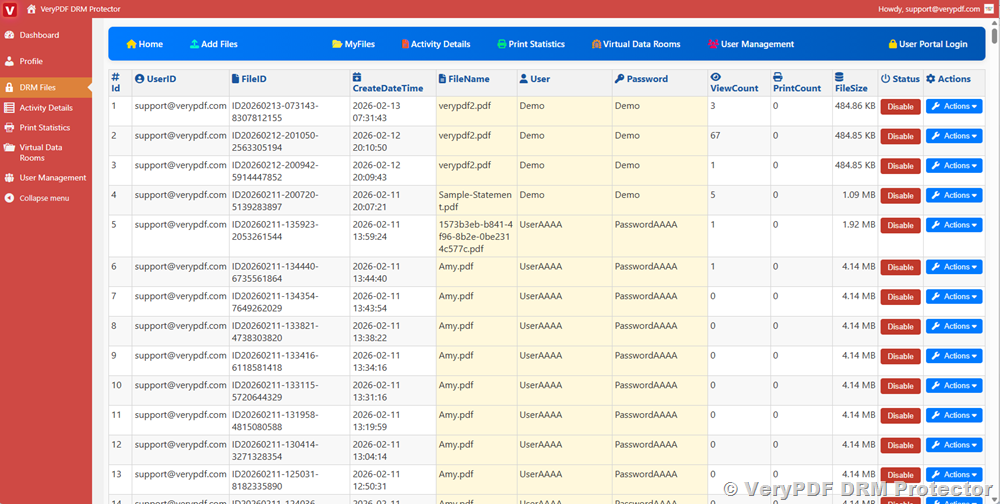
    • Use the interface to search or browse for the File ID of the PDF that has locked the user’s device.
  3. Open Settings for the File
    • Click the Actions button next to the target File ID.
    • Select Settings from the dropdown menu.
  4. Scroll to Advanced Settings
    • In the advanced settings section, you may see entries like:
    • VeryPDFDRM_LockToFirstNDevices=3
    • VeryPDFDRM_LockToDeviceID0=89cd096b401add3b5af126f090819ada
    • VeryPDFDRM_LockToDeviceID1=85633fe8882217ae3846d1fb6f7cb628
    • VeryPDFDRM_LockToDeviceID2=c3225f717ed455e9da6c205d26c4289d

How to Resolve "Maximum Allowed Devices" Errors in VeryPDF DRM Protector

Explanation of Settings

  • VeryPDFDRM_LockToFirstNDevices → Maximum number of devices allowed for this PDF. In this example, 3 devices are permitted.
  • VeryPDFDRM_LockToDeviceID0 → Represents the first registered device’s unique fingerprint.
  • VeryPDFDRM_LockToDeviceID1 → Represents the second registered device’s fingerprint.
  • VeryPDFDRM_LockToDeviceID2 → Represents the third registered device’s fingerprint.

Each VeryPDFDRM_LockToDeviceID entry corresponds to a device that has successfully opened the PDF. Device IDs are numbered from 0 to N-1, where N is the maximum number of allowed devices.

How to Release a Device Lock

  1. Remove the corresponding VeryPDFDRM_LockToDeviceID line from the advanced settings or set its value to empty:
  2. VeryPDFDRM_LockToDeviceID1=
  3. Click Save to apply changes.
  4. The DRM system will recalculate device bindings, freeing up the slot previously occupied by the locked device.
  5. The legitimate reader can now access the PDF immediately without consuming an additional license.

Key Points:

  • Manual release does not compromise security; all other registered devices remain tracked.
  • Useful for legitimate readers who temporarily changed networks, used a VPN, or switched browsers or hardware.
  • Administrators can repeat this process as needed to ensure smooth access while maintaining strict device limits.

Step 5: Educate Readers

  • Avoid VPNs or proxies while opening DRM-protected PDFs.
  • Keep browser versions consistent with the original activation.
  • Minimize critical hardware changes, especially network cards and hard drives.
  • PDFs can be moved between folders without triggering device locks, but readers should maintain stable paths for consistency.

Conclusion

The “maximum allowed devices” error is typically triggered by changes in:

  • Network environment (VPNs or proxies)
  • Browser or browser version
  • Critical hardware changes (especially network cards)

Temporary solutions include disconnecting VPNs, reverting to the original browser version, and checking the DRM Panel for false device activations. Following these steps allows legitimate readers to continue accessing the PDF without consuming extra licenses.

For a deeper understanding of device-limited PDFs, see:
How “Allow PDF to Be Opened Only on the First N Devices” Really Works

How “Allow PDF to Be Opened Only on the First N Devices” Really Works

Allow PDF to Be Opened Only on the First N Devices

A Deep Technical Explanation of VeryPDFDRM_LockToFirstNDevices

1. Introduction

In today’s digital distribution landscape, content publishers face a constant challenge: how to securely deliver PDFs while preventing unauthorized access or sharing. Whether it’s paid course materials, licensed software manuals, research publications, or confidential business documents, maintaining control over who can open a file—and on which devices—is critical for protecting intellectual property, complying with licensing agreements, and preserving revenue streams.

One of the most effective tools for achieving this is the “Allow PDF to be opened only on the first N devices” feature offered by VeryPDF DRM. Unlike a simple license counter, this mechanism is designed to track unique device environments and ensure that each PDF can be accessed only by a limited number of authorized devices, based on a composite digital fingerprint that considers hardware, software, and network characteristics.

This article provides a comprehensive technical overview of the VeryPDFDRM_LockToFirstNDevices option, including:

  • How the feature works internally and why it behaves strictly
  • Common scenarios and triggers that can cause device locks
  • Best practices for configuration to balance security with user convenience
  • Step-by-step guidance on releasing locked devices
  • Advanced options for custom hardware or environment-based locking for clients with special security requirements

By the end of this article, readers will understand not only how to configure and manage this DRM feature, but also the underlying principles that make it reliable, secure, and predictable—allowing content publishers to confidently distribute PDFs in even the most demanding commercial or academic environments.

How “Allow PDF to Be Opened Only on the First N Devices” Really Works


How to Configure the “Lock PDF to First N Opened Devices” Option

VeryPDF DRM provides two ways to set the “Allow PDF to be opened only on the first N devices” option, giving publishers flexibility depending on workflow and timing.

1. Front-End Configuration (During PDF Protection)

When generating a protected PDF via the web interface, you can directly set the device restriction at the time of PDF creation:

  1. Log in to your DRM account at:
  2. https://drm.verypdf.com/online/
  3. Upload the PDF you want to protect.
  4. In the protection settings panel, locate the “Allow PDF to be opened only on the first N devices” option.
  5. Enable the option and specify the desired maximum number of devices.

How “Allow PDF to Be Opened Only on the First N Devices” Really Works

By doing this, the VeryPDFDRM_LockToFirstNDevices parameter is automatically inserted into the DRM system, and the PDF is protected with the device limitation immediately upon generation. This method is ideal for publishers who want the setting applied from the start.

2. Back-End Modification (After PDF Generation) & How to Release a Device Lock

Even after a PDF has been generated and protected, VeryPDF DRM allows administrators to adjust device restrictions or release locked devices through the administrative back-end. This flexibility ensures that content publishers can maintain strict control while handling legitimate exceptions without issuing new licenses.

Adjusting the Device Limit (VeryPDFDRM_LockToFirstNDevices)

If you wish to change the maximum number of devices that can open a PDF:

  1. Open the DRM management interface:
  2. https://drm.verypdf.com/wp-admin/admin.php?page=VeryPDFDRMFiles
  3. Locate the PDF using its FileID.
  4. Click Actions → Settings to open the configuration panel.
  5. Scroll to Advanced Settings, where you will find the VeryPDFDRM_LockToFirstNDevices parameter.
  6. Modify its value to the desired number of allowed devices. For example:
  7. VeryPDFDRM_LockToFirstNDevices=3

This setting allows up to three distinct device environments to access the PDF.

  1. Save your changes.

Once saved, the DRM system immediately applies the new device limit. All subsequent access requests are checked against this updated setting, ensuring the PDF remains secure while accommodating the new device policy.

How “Allow PDF to Be Opened Only on the First N Devices” Really Works

Releasing a Locked Device (VeryPDFDRM_LockToDeviceID)

Occasionally, legitimate readers may become locked out due to hardware changes, network modifications, or other environment variations. Administrators can manually release these locked devices by adjusting the VeryPDFDRM_LockToDeviceID entries:

  1. In the same Advanced Settings panel, locate the registered device list:
  2. VeryPDFDRM_LockToDeviceID0=<hashed fingerprint>
  3. VeryPDFDRM_LockToDeviceID1=<hashed fingerprint>
  4. VeryPDFDRM_LockToDeviceID2=<hashed fingerprint>

Each VeryPDFDRM_LockToDeviceID represents a device environment that has successfully opened the PDF. IDs are numbered from 0 up to N‑1, where N equals the VeryPDFDRM_LockToFirstNDevices value.

  1. To release a device lock, either:
    • Remove the corresponding line entirely, or
    • Set its value to empty, for example:
    • VeryPDFDRM_LockToDeviceID1=
  2. Save your changes.

After saving, the DRM system recalculates device bindings automatically. The reader can immediately access the PDF again without consuming an additional license.

Why This Two-Step Approach Matters

This two-step management process provides publishers with:

  • Upfront control: Set strict device limits during PDF creation via the web interface.
  • Post-generation flexibility: Adjust the limit or release locked devices at any time through the back-end.
  • Security without compromise: Maintain strong device-based DRM while accommodating legitimate access changes.
  • Operational efficiency: Reduce support requests and prevent unnecessary license consumption.

Tip: Combining both front-end configuration (during PDF protection) and back-end modification ensures maximum flexibility, reliability, and security for any distribution model.


2. What Does “First N Devices” Mean?

The “First N Devices” feature in VeryPDF DRM Protector is a critical security mechanism that tightly controls how a protected PDF is accessed. When the VeryPDFDRM_LockToFirstNDevices option is enabled, the DRM system will allow a PDF file to be opened only on the first N unique device environments that successfully access it. Each environment is identified through a combination of hardware, software, and network characteristics, which together create a digital device fingerprint.

Once the limit of N devices has been reached, the system enforces strict access rules:

  • No additional devices are permitted: Any attempt to open the PDF from a new device or environment beyond the allowed N will be blocked immediately.
  • Access from new environments is rejected: Even if the user owns multiple devices, or reconnects from a different network, any environment not previously registered with the PDF will be denied access.
  • Document remains bound to registered devices: The PDF continues to function normally only on the environments that were first authenticated and recorded by the DRM system.

The purpose of this feature is to prevent unauthorized distribution and maintain strict license control. Specifically, it is designed to mitigate several common risks:

  • Account sharing: Prevents multiple people from using the same license or login credentials to access the PDF from different devices.
  • License forwarding: Stops users from sharing license-protected PDFs with others or copying the file to unregistered machines.
  • Multi-user access with a single credential: Ensures that a license is tied to specific devices rather than a login that could be shared or stolen.
  • Abuse through VPN switching or environment spoofing: Protects against attempts to bypass device restrictions by using VPNs, proxies, or other methods that alter the perceived network environment.

In practice, this means that the first N unique environments are “locked in” and any subsequent access attempt from a new or modified environment is treated as a potential security breach. This approach provides a highly secure, yet manageable control mechanism, giving publishers and content owners confidence that their digital content is accessed only by legitimate users under controlled conditions.


3. Important Concept: A “Device” Is Not Just Hardware

A common misconception among users and even some content publishers is that a “device” refers solely to a physical computer or mobile device. In reality, VeryPDF DRM defines a device as a complete usage environment, which is a combination of hardware, software, and network factors. This distinction is critical to understanding how the First N Devices restriction works.

The DRM engine creates a composite digital fingerprint for each device environment. This fingerprint is generated by analyzing multiple layers of the system, including but not limited to:

  • Browser identity and version (for Secure Web Viewer): Different browsers or even different versions of the same browser can be identified as distinct environments.
  • Operating system and system configuration: Changes such as OS updates, system settings, or installed components can influence the fingerprint.
  • Network characteristics: IP address, subnet, gateway, and routing information are considered; switching networks, using VPNs, or connecting from a different location can result in a new device identification.
  • Network interface information: MAC addresses, active network adapters, and their configuration may contribute to the fingerprint.
  • Disk and system identifiers: Hardware identifiers such as hard disk serial numbers or CPU signatures are included to strengthen uniqueness.
  • DRM runtime and security context: The active DRM runtime environment and security parameters ensure that the file is being accessed under controlled conditions.

Because the device is defined as a dynamic environment rather than a static piece of hardware, the same physical computer can be recognized as a new device if any significant component of its environment changes. Examples include switching browsers, updating the OS, connecting to a different network, or using a VPN.

This strict environment-based recognition is not a bug or flaw—it is an intentional security design. By considering the entire usage environment rather than just the physical machine, VeryPDF DRM ensures high-level protection against unauthorized distribution, account sharing, and license misuse. This approach allows publishers and content owners to enforce robust security policies while still providing legitimate users with a reliable reading experience.


4. How VeryPDFDRM_LockToFirstNDevices Works Internally

The VeryPDFDRM_LockToFirstNDevices option is the core mechanism that enforces device restrictions in VeryPDF DRM Protector. Understanding its internal workflow is essential for both publishers and system administrators to properly configure DRM settings and troubleshoot access issues.

Example Configuration

VeryPDFDRM_LockToFirstNDevices = 1

This setting enforces the strictest device limitation, allowing the PDF to be accessed by only the first authorized device environment.

Step-by-Step Behavior

  1. First Successful Access
    When a user opens a protected PDF for the first time, the DRM engine generates a unique environment fingerprint. This fingerprint is based on multiple factors, including hardware identifiers, browser version, operating system, network settings, and other runtime parameters.
  2. Fingerprint Storage
    The generated fingerprint is stored internally as:
  3. VeryPDFDRM_LockToDeviceID0 = <hashed fingerprint>

This hashed fingerprint becomes the reference for all future access attempts.

  1. Subsequent Access Verification
    Each time the PDF is opened again, the DRM engine recalculates the current environment fingerprint. It then compares this fingerprint with the stored fingerprints for the document.
  2. Mismatch Handling
    If the recalculated fingerprint does not match any of the stored fingerprints, the system interprets this as an attempt to open the PDF from a new device environment.
  3. Device Limit Enforcement
    If the maximum number of allowed devices (N) has already been reached, the DRM engine denies access immediately, displaying a device limit error.
  4. Error Behavior
    The error is not a malfunction; it is an expected result of the device limit enforcement policy. Even subtle changes in the user environment—such as switching networks, using a VPN, or updating a browser—can trigger the system to detect a “new device,” especially when VeryPDFDRM_LockToFirstNDevices is set to 1.

In essence, this mechanism binds a PDF to the first N recognized device environments. It ensures that only authorized environments can access the file, while providing highly secure, predictable behavior. This strict design is intentional and forms the foundation of VeryPDF DRM’s robust protection against unauthorized sharing, account misuse, and environment spoofing.


5. Actions That Commonly Trigger Device Re-Identification

With strict settings (especially when N = 1), even small environment changes can trigger a lock.

For VeryPDF Secure Web Viewer

  • Changing the web browser (Chrome, Edge, Firefox, etc.)
  • Upgrading or downgrading the browser version
  • Changing IP address or network (home → office → public Wi-Fi)
  • Connecting or disconnecting a VPN or proxy
  • Long-running sessions combined with network changes

For VeryPDF Reader for Windows

  • Changing the IP or network environment
  • Enabling or disabling a VPN
  • Changing the hard disk
  • Changing the network card
  • Major system configuration changes

Key point:
The DRM system locks to environment consistency, not just hardware identity.


6. Why a Block Can Occur on the “Same Computer”

A very common question from publishers and users is:

“Why was the PDF blocked even though the reader used the same physical computer?”

Understanding this requires a closer look at how VeryPDF DRM identifies a device environment. Even if the same machine is being used, the DRM system does not rely solely on the physical hardware. Instead, it creates a composite device fingerprint that includes hardware identifiers, network characteristics, and system configuration. If any critical component of this environment changes, the system treats it as a new device.

Typical Causes of Device Lock Trigger

The most frequent reasons why access is blocked on what appears to be the same computer include:

  1. IP Address Changes
    The DRM engine tracks the network environment. If the IP address changes—due to switching networks, reconnecting to Wi-Fi, using a different router, or dynamic IP allocation from the ISP—the system may consider this a new device.
  2. VPN or Proxy Usage
    Connecting to or disconnecting from a VPN or proxy can significantly alter the network fingerprint. Even if the hardware is unchanged, the DRM engine may detect a new environment because the network routing, gateway, or IP has changed.
  3. Hardware Changes
    Changes in critical hardware components—such as replacing or adding a network card, changing the hard disk, or significant modifications to system configuration—can trigger a device re-identification.

Important Clarification

  • Leaving a PDF open for several days does NOT trigger a device lock by itself.
  • Only changes in IP, network, or hardware environment can cause the DRM engine to detect a “new device” and enforce the device limit.

Recovery by Restoring the Original Environment

One advantage of VeryPDF DRM’s environment-based locking is that access can be immediately restored if the user returns to the original device environment. For example:

  • If a VPN was connected and triggered a lock, simply disconnecting the VPN restores the previous network environment, allowing the PDF to be opened again.
  • Similarly, switching back to the original network IP or undoing temporary hardware changes will also re-enable access without consuming additional licenses.

How the DRM System Interprets These Changes

From the perspective of VeryPDF DRM:

  • Any alteration in the network or hardware that contributes to the device fingerprint is treated as a new execution environment.
  • Under a strict setting like VeryPDFDRM_LockToFirstNDevices = 1, the system will block access immediately when a mismatch is detected.
  • Once the environment matches a previously registered fingerprint, access is automatically restored.

This behavior is not a malfunction or instability, but a deliberate design choice to enforce maximum security. By strictly tying PDF access to specific device environments, the system prevents unauthorized sharing or multi-user abuse while ensuring that legitimate readers can regain access quickly once the original environment is restored.


7. Recommended Best Practice Configuration

For many content publishers, training providers, and educational institutions, strict device control is essential, but overly rigid settings can create unnecessary friction for legitimate users. For example, setting:

VeryPDFDRM_LockToFirstNDevices = 1

enforces a single-device policy per reader, but in real-world scenarios, this can often be too restrictive. Minor, legitimate changes in the user environment—such as connecting to a different network or temporarily using a VPN—may inadvertently trigger a device lock.

Recommended Setting

To strike a balance between security and usability, we recommend:

VeryPDFDRM_LockToFirstNDevices = 3 or 5

Why This Configuration Works Better

  1. Effectively enforces single-user access
    Even with N = 3 or 5, the PDF is still effectively bound to the authorized reader. Unauthorized sharing is prevented while allowing a reasonable number of environment changes.
  2. Allows limited environment changes
    Users can change browsers, switch networks, or toggle VPN usage within the allowed number of device fingerprints, reducing accidental lockouts.
  3. Prevents unnecessary support requests
    By tolerating a few legitimate environment changes, publishers and administrators avoid repeated customer support inquiries for access issues.
  4. Does not consume additional licenses
    The allowed device slots are pre-allocated, so temporary changes within the N environments do not consume extra licenses.
  5. Improves reliability and user experience
    Readers experience fewer disruptions while publishers maintain strong control over content distribution.

Who Uses This Approach

This balanced configuration is widely adopted by organizations that need strong DRM protection without frustrating legitimate users:

  • Publishers distributing e-books, manuals, or course materials
  • Universities providing restricted access to digital resources for enrolled students
  • Training providers who sell licensed educational content
  • SaaS documentation platforms distributing confidential guides or manuals to clients

In practice, setting VeryPDFDRM_LockToFirstNDevices to 3 or 5 offers a sweet spot between maximum security and practical usability, ensuring that PDFs remain protected while readers enjoy uninterrupted access.


8. Meaning of Different Values

Value

Behavior

0

No device limit (unrestricted access)

1

Extremely strict, environment-sensitive lock

3–5

Strong security with practical tolerance

>5

Suitable for mobile or enterprise users

Setting the value to 0 disables device restriction entirely, which is not suitable for most commercial distribution models.


9. How to Release a Locked Device Manually

Even with strict device restrictions, legitimate readers may occasionally encounter a device lock due to network or hardware changes. VeryPDF DRM Protector allows administrators to manually release a locked device, restoring access immediately without issuing a new license. This process ensures uninterrupted access for legitimate users while maintaining overall document security.

Step-by-Step Process

  1. Access the DRM Management Interface
    Open the administrator panel in a web browser:
  2. https://drm.verypdf.com/wp-admin/admin.php?page=VeryPDFDRMFiles

    How “Allow PDF to Be Opened Only on the First N Devices” Really Works
  3. Locate the Relevant PDF File
    Use the interface to search or browse for the FileID of the PDF that has locked the user’s device.
  4. Open Settings for the File
    Click the Actions button next to the target FileID, then select Settings from the dropdown menu.
  5. Scroll to Advanced Settings
    In the advanced settings section, you will find entries similar to the following:

VeryPDFDRM_LockToFirstNDevices=3
VeryPDFDRM_LockToDeviceID0=89cd096b401add3b5af126f090819ada
VeryPDFDRM_LockToDeviceID1=85633fe8882217ae3846d1fb6f7cb628
VeryPDFDRM_LockToDeviceID2=c3225f717ed455e9da6c205d26c4289d

How “Allow PDF to Be Opened Only on the First N Devices” Really Works

Explanation of Settings

  • VeryPDFDRM_LockToFirstNDevices → Maximum number of devices allowed for this PDF. In this example, 3 devices are permitted.
  • VeryPDFDRM_LockToDeviceID0 → Represents the first registered device’s unique fingerprint.
  • VeryPDFDRM_LockToDeviceID1 → Represents the second registered device’s fingerprint.
  • VeryPDFDRM_LockToDeviceID2 → Represents the third registered device’s fingerprint.

Each VeryPDFDRM_LockToDeviceID entry corresponds to a device environment that has successfully opened the PDF. The device IDs are numbered starting from 0 up to N‑1, where N is the maximum number of allowed devices set in VeryPDFDRM_LockToFirstNDevices. For example, if the limit is 3, the registered devices are tracked as VeryPDFDRM_LockToDeviceID0, VeryPDFDRM_LockToDeviceID1, and VeryPDFDRM_LockToDeviceID2.

How to Release a Device Lock

To release a locked device, perform one of the following actions:

  1. Remove the corresponding VeryPDFDRM_LockToDeviceID line from the advanced settings.
  2. Set its value to empty, for example:
  3. VeryPDFDRM_LockToDeviceID1=

Save Changes and Recalculate Device Bindings

  • After modifying the advanced settings, click the Save button.
  • The DRM system will automatically recalculate device bindings, freeing up the slot previously occupied by the locked device.
  • The legitimate reader can now access the PDF immediately without consuming an additional license.

Key Points

  • Manual release does not compromise security, because the DRM system still tracks all other registered devices.
  • This process is particularly useful for legitimate readers who temporarily changed network settings, used a VPN, or had minor hardware modifications.
  • Administrators can repeat this process as needed to ensure smooth access while maintaining strict control over device limits.

10. Custom Hardware Locking for Special Requirements

For customers with advanced security, regulatory, or compliance requirements, VeryPDF offers custom device-locking solutions that go beyond standard DRM configurations. These customizations provide an extra layer of protection, ensuring that sensitive PDFs can only be accessed under highly controlled conditions.

Key Device Locking Options

Depending on project needs, VeryPDF can implement locks based on the following important device identifiers:

1. Hardware Identifiers

  • CPU / Processor ID – Uniquely identifies the processor, binding the PDF to a specific machine.
  • Hard Disk / SSD Serial Number – Prevents copying the PDF to another computer.
  • Network Card / MAC Address – Ensures the PDF only works on a particular network interface.
  • USB Disk ID – Locks the PDF to a specific USB drive, useful for portable secure distribution.

2. Software / Operating System

  • OS Type and Version – Ensures that the PDF runs only on authorized systems.
  • Browser Type and Version (for web-based PDFs) – Differentiates device environments when using Secure Web Viewer.

3. Network / Domain

  • IP Address – Detects changes in network location to prevent unauthorized remote access.
  • Windows Domain Name – Restricts PDF access to machines joined to a specific corporate or institutional domain.

4. Hybrid Fingerprints

  • Combination of hardware, network, and software identifiers – Produces a robust, highly unique device fingerprint, balancing security and usability.

Typical Use Cases

Custom hardware locking is commonly applied in environments where high security and strict access control are critical, including:

  • Corporate internal documentation – Confidential reports, policies, and manuals
  • Government or regulated industries – Legal documents, compliance manuals, secure reports
  • Licensed software documentation – Manuals or guides with controlled distribution
  • Enterprise training environments – Training materials restricted to registered employees or trainees

Tailored Solutions and Support

  • Each custom locking solution is designed to meet the client’s specific requirements, ensuring maximum security without compromising legitimate access.
  • VeryPDF provides full consultation and implementation support, helping clients select the most effective combination of device identifiers.
  • Clients with special security needs can contact VeryPDF at any time to develop a bespoke DRM solution that fits their environment, compliance, or regulatory demands.

11. Conclusion

The “Allow PDF to be opened only on the first N devices” feature is a high-security DRM mechanism designed to protect sensitive content. Unlike a simple license counter, it works by binding the PDF to specific device environments, ensuring that only authorized users can access the file under controlled conditions.

Key Takeaways

  1. Device locking is environment-based by design
    The DRM engine generates a composite digital fingerprint that considers hardware, network, operating system, and browser information. This ensures that even the same physical machine may be treated as a new device if its environment changes significantly.
  2. Strict settings maximize security but require careful configuration
    Setting VeryPDFDRM_LockToFirstNDevices = 1 provides the highest level of protection, but minor network or hardware changes may trigger device locks. Administrators and publishers must understand these sensitivities to prevent unintended access issues.
  3. Small tolerance values (3–5) provide the best balance
    Allowing 3–5 device slots for each PDF effectively enforces single-user access while accommodating legitimate changes in the environment, such as IP changes, browser updates, or temporary VPN use. This approach minimizes support requests and improves user experience.
  4. Manual release is always available for legitimate cases
    Administrators can release a locked device through the DRM management panel, allowing legitimate readers to regain access without consuming additional licenses.
  5. Custom hardware locking is fully supported when needed
    For clients with advanced security or regulatory requirements, VeryPDF can implement custom locking strategies using CPU ID, hard disk serial numbers, USB drives, Windows domain names, or hybrid combinations. These options provide robust protection for corporate, academic, government, or enterprise content.

Final Thoughts

When configured correctly, the First N Devices feature delivers:

  • Strong protection against unauthorized sharing
  • Predictable and reliable DRM behavior
  • Flexible options for managing legitimate users
  • Smooth user experience even in demanding commercial distribution scenarios

By understanding both the technical principles and practical best practices, content publishers can confidently use VeryPDF DRM to secure PDFs without compromising accessibility or convenience.