 How Universities Can Prevent Students from Bypassing PDF Restrictions and Sharing Lecture Notes or Exam Materials...
How Universities Can Prevent Students from Bypassing PDF Restrictions and Sharing Lecture Notes or Exam Materials Online
As a professor, I can't count how many times I've heard stories about students sharing PDFs of lecture slides or exam materials online. It's not only frustrating but also a major threat to academic integrity. The reality is, students are more tech-savvy than ever and can easily bypass standard document security measures, making it hard to protect the intellectual property and hard work I've poured into creating these materials. What can I do to safeguard my content without restricting access too much? How can I ensure my course materials aren't shared or misused by students? This is where VeryPDF DRM Protector comes into play.
In this post, I'll discuss the challenges universities face with content protection and how using DRM-protected PDFs can help enforce academic content security, stop piracy, and prevent unauthorized distribution of lecture materials and exam papers.
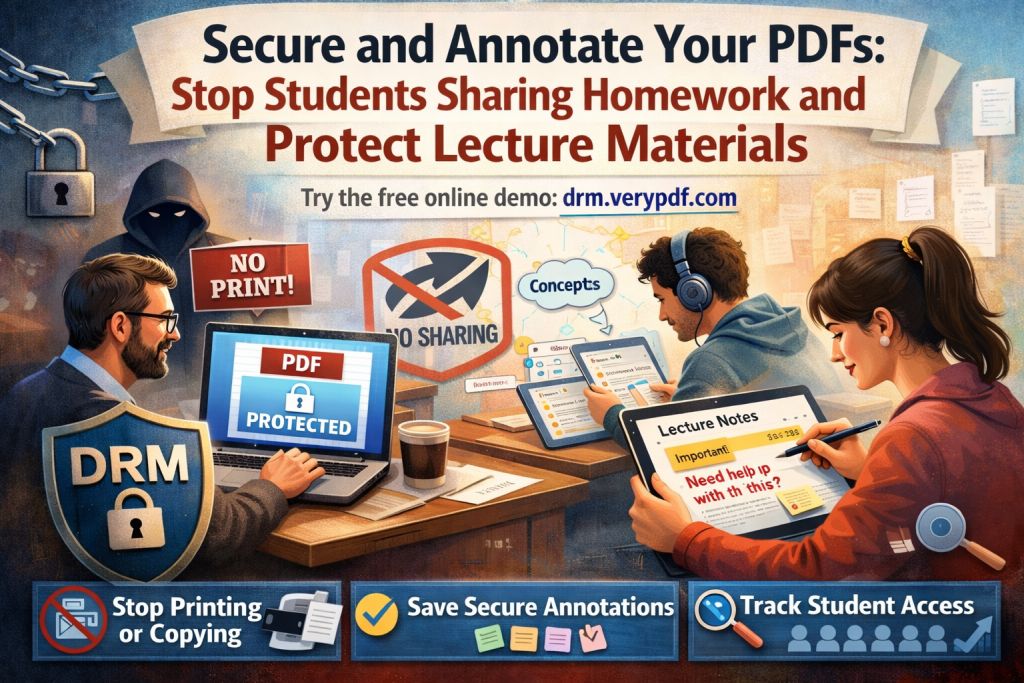
The Struggles Professors Face in Protecting Lecture Materials
As an educator, I'm constantly juggling many responsibilities, from preparing lectures to engaging with students and grading assignments. One of my greatest concerns, however, is protecting my work from being distributed without my permission.
-
Students sharing PDFs online: I've often found my lecture slides or exam materials on websites like Reddit or shared in WhatsApp groups, sometimes even within days of distributing them to the class. This not only compromises the value of my content but also diminishes the integrity of the academic process.
-
Unauthorized printing or copying: Even more concerning is the ability for students to print, copy, or convert my PDFs into other formats like Word or image files. This allows them to share the content without my consent or even make alterations that could undermine the academic rigor of the materials.
-
Loss of control over paid or restricted content: I also offer paid course materials, and while I try to keep things protected, I can't track how many times students share or use them inappropriately. If I can't control access, I lose out on both the monetary and academic value of the content.
These pain points are common across universities and educational institutions, where the line between sharing educational content and violating intellectual property rights is often blurred. What's the solution? Well, this is where VeryPDF DRM Protector offers a robust and reliable defense.
How DRM Protects Your Course PDFs and Lecture Materials
The solution to preventing students from bypassing PDF restrictions and protecting your intellectual property is Digital Rights Management (DRM) technology. With DRM, you can restrict how your PDFs are accessed, printed, shared, or converted.
Here's how it works in practical terms:
-
Restricting access to specific students: You can lock your PDFs to specific devices or users. This means only those enrolled in your course, or individuals you've authorized, can open the document. It's a simple but effective way to ensure your materials aren't freely circulated.
-
Preventing printing and copying: One of the biggest concerns for educators is students printing out or copying content. With DRM, you can completely disable printing or even restrict it to a limited number of prints. You can also block copying or saving the content to prevent the material from being redistributed.
-
Preventing conversions: DRM also prevents students from converting your PDF files into other formats such as Word, Excel, or image files. This helps maintain the integrity of the document and ensures it's not altered or shared on other platforms without your knowledge.
-
Watermarking and traceability: With VeryPDF DRM Protector, you can add dynamic watermarks that display user-specific information such as their name or email address. These watermarks serve as a deterrent for anyone trying to share or print your content, as the information is permanently embedded in the document.
-
Expiry and Revocation: Another fantastic feature is the ability to set expiry dates for your documents. Whether you want a document to expire after a certain number of views, after a set number of days, or after a fixed date, you can set these controls easily. If a document gets leaked, you can also revoke access instantly, even if it has already been shared.
Real-Life Scenarios: How DRM Solved My Problems
I can personally vouch for how effective VeryPDF DRM Protector has been in solving these common problems:
-
Preventing unauthorized distribution: Just last semester, I noticed that my exam papers were circulating on a popular online study group forum. After implementing DRM protection, I was able to lock the exams to specific student devices, which immediately stopped unauthorized distribution.
-
Control over lecture slides: I used to worry about students taking screenshots during lectures or sharing slides via email. With DRM, I was able to prevent screenshots entirely, even during Zoom meetings, which eliminated the possibility of students sharing sensitive content.
-
Simplified workflow: Before DRM, I had to constantly remind students not to share materials or make copies. With the protection in place, I didn't have to worry anymore, and I could focus more on my actual teaching. It was one less thing to stress over.
-
Security for paid course materials: In one instance, I found that some of my course materials were being resold online. Using DRM, I was able to restrict access to the materials, lock them to specific devices, and even prevent any unauthorized prints. This ensured my materials were only available to paying students.
Why VeryPDF DRM Protector Works for Educators
What sets VeryPDF DRM Protector apart from other document security tools is its simplicity and effectiveness. Unlike secure data rooms that require users to log in and risk sharing their credentials, DRM protection via VeryPDF ensures that no credentials need to be shared. The encrypted client keystore locks content to the user's device, keeping it safe from unauthorized access.
Moreover, other document sharing methods, such as email or file-sharing services, can leave documents exposed to piracy. With DRM, your content is never uploaded in an unprotected form, ensuring that it's kept secure from start to finish.
Conclusion: Protect Your Educational Content Today
If you're an educator looking to protect your PDF lecture materials and prevent students from bypassing content security, I highly recommend using VeryPDF DRM Protector. It's a reliable solution that ensures your content remains secure, accessible only to authorized individuals, and free from unauthorized distribution.
Try it now and protect your course materials: https://drm.verypdf.com
Start your free trial today and regain control over your PDFs.
FAQ
-
How can I limit student access to my PDFs?
You can lock your PDFs to specific devices or users, ensuring that only authorized individuals can access the documents. -
Can students still read the PDFs without copying, printing, or converting them?
Yes, you can restrict copying, printing, and conversions entirely. The PDF will be viewable only under your defined conditions. -
How can I track who accessed the files?
DRM allows you to monitor and track document usage, ensuring you can see when, where, and by whom a document was accessed. -
Does DRM prevent PDF piracy and unauthorized sharing?
Absolutely! DRM protects your content by locking it to devices, adding dynamic watermarks, and preventing unauthorized printing, copying, and sharing. -
How easy is it to distribute protected lecture slides and homework?
It's incredibly simple. You can distribute your DRM-protected PDFs by email, web, or USB, and they'll remain secure regardless of how they're shared.
Tags or Keywords
Protect course PDFs, prevent PDF piracy, stop students sharing homework, secure lecture materials, prevent DRM removal, anti-conversion PDF DRM