Protect Your Teaching Content From Being Shared Online and Keep It Accessible Only to Your Classroom Students

Protect Your Teaching Content From Being Shared Online and Keep It Accessible Only to Your Classroom Students

As a professor, I’ve often felt the sinking feeling of discovering my carefully prepared lecture PDFs circulating on student forums before a single class had even met. One semester, I spent weeks developing a set of assignments and supplemental reading materials, only to find a few students had shared them online. It wasn’t just frustratingit undermined the effort I put into designing a structured, sequential learning experience. If you’ve ever experienced the same, you know how important it is to keep your teaching materials secure while still making them accessible to your students.

Protect Your Teaching Content From Being Shared Online and Keep It Accessible Only to Your Classroom Students

Many educators face similar challenges. Students sometimes unintentionally share homework PDFs, lecture slides, or paid course content. Others may print or copy materials in ways you hadn’t intended. Without proper protection, your intellectual property and carefully curated content can spread beyond your classroom, creating confusion, misuse, and even loss of potential revenue if your courses are paid. Over the years, I’ve tried several solutions, but VeryPDF DRM Protector has truly changed how I manage my digital teaching resources.

One of the most common headaches in teaching is students sharing PDFs or assignments online. You might think, “I trust my students,” but even a well-meaning student can upload materials to a cloud storage site or a social media group. Suddenly, your lecture slides or assignments are out in the open. This not only diminishes the exclusivity of your course but can also disrupt the learning processsome students may try to find answers online instead of engaging with the content as intended. I remember a time when an entire set of homework PDFs for my introductory statistics class ended up on a public forum. It was stressful and undermined the course structure I had carefully designed.

Another persistent issue is unauthorized printing or copying of materials. Even when PDFs are distributed with the best intentions, students may print multiple copies, share them with peers, or modify the content. This can be particularly problematic if you’re teaching paid courses or specialized programs where each PDF represents a significant investment of time and expertise. I’ve had instances where printed copies of my lecture notes circulated widely, creating confusion when students referenced outdated versions or incomplete sections.

Finally, there’s the challenge of maintaining control over paid or restricted course content. In professional or online courses, students pay for access to exclusive materials. If these PDFs are freely shared, it not only impacts revenue but also compromises the integrity of the course experience. I had once offered a specialized seminar with supplementary PDF guides, and seeing those guides appear outside the classroom made me realize I needed a stronger solution for content protection.

This is where VeryPDF DRM Protector became a game-changer. It’s simple, intuitive, and incredibly effective at securing classroom materials. With DRM Protector, you can restrict access so only enrolled students can view your PDFs. Printing, copying, or forwarding is blocked, giving you peace of mind that your content remains in the hands of your intended audience. For me, this meant I could focus on teaching rather than constantly chasing down unauthorized distributions.

Using it is straightforward. When I prepare lecture slides or homework PDFs, I simply upload the files to VeryPDF DRM Protector. From there, I set the access controls. I can allow students to view the content but prevent them from copying or printing it. I can even set expiration dates or revoke access if necessary. This has saved countless hours of administrative work and reduced the friction between me and my students when it comes to managing course materials.

Here’s how you can make the most of it in your classroom:

  • Restrict access to enrolled students only: Assign passwords or individual licenses so that only registered students can open the PDFs.

  • Prevent copying and printing: Ensure that your lecture slides, homework, or supplemental readings cannot be duplicated or printed without your permission.

  • Set access expiration: For temporary assignments or special projects, control how long a PDF remains accessible.

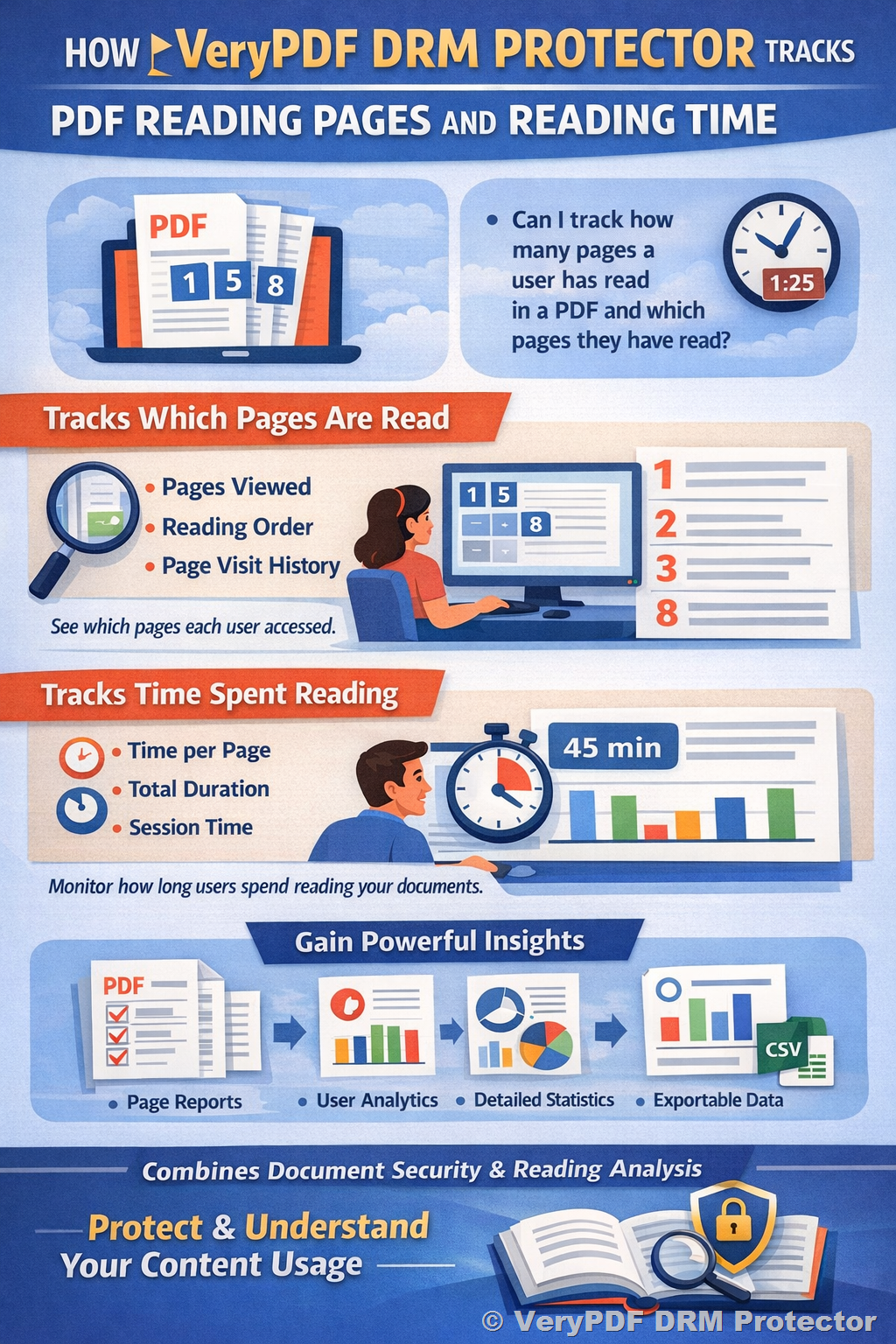
  • Track file activity: Monitor who has accessed the files and when, giving you insight into engagement.

  • Simplify distribution: Share a single link to a protected PDF rather than sending multiple attachments via email.

In practice, I’ve noticed remarkable improvements. For example, during a semester-long course on data analysis, I protected every assignment and lecture slide using VeryPDF DRM Protector. Students could view the materials on their devices but were unable to forward them to peers outside the course. When one student asked to print a copy, I could explain the restrictions confidently, knowing the material was secure. It reduced conflicts, saved time, and ensured that my intellectual property was respected.

Another instance involved a paid workshop I offered during the summer. Normally, distributing PDF guides and lecture slides could risk leaking the content, but with DRM Protector, I confidently provided all materials digitally. Students appreciated the ease of access, and I didn’t have to worry about files appearing online. The ability to protect both free and paid resources has made teaching and course management much less stressful.

VeryPDF DRM Protector also integrates seamlessly into daily workflow. I can prepare multiple documents at once, set consistent access rules, and share them with my students in just a few clicks. The interface is user-friendly, so I don’t need to spend time learning complex software. It’s a simple, reliable solution for a problem that has frustrated educators for years.

Here’s a quick step-by-step guide to get started:

  1. Upload your PDFs: Choose the lecture slides, homework, or course guides you want to protect.

  2. Set access restrictions: Define who can view the content and whether copying, printing, or forwarding is allowed.

  3. Distribute securely: Share the protected files through email, learning management systems, or direct links.

  4. Monitor usage: Check which students have accessed the materials to ensure engagement.

  5. Update and revoke access if needed: Easily make changes if a student drops the course or if you need to refresh content.

Using DRM Protector has changed my perspective on digital teaching. I no longer have to worry about losing control over my PDFs or assignments. Instead, I can focus on delivering engaging lessons, knowing my content is safe and only accessible to the students I intend.

In conclusion, if you’re a professor, lecturer, or educational content creator, I highly recommend VeryPDF DRM Protector. It addresses the core issues we face in managing digital teaching materialsunauthorized sharing, printing, and copyingwhile making distribution simple and secure. It’s a practical, easy-to-use solution that keeps your content protected and your teaching workflow stress-free. Try it now and protect your course materials: https://drm.verypdf.com/. Start your free trial today and regain control over your teaching PDFs.

FAQs

How can I limit student access to PDFs?

You can assign passwords or individual licenses to each student so only authorized users can view the materials.

Can students still read PDFs without copying or printing?

Yes. DRM Protector allows viewing while disabling printing, copying, or forwarding.

Is it easy to distribute protected course materials?

Absolutely. You can share a single protected file via email, LMS, or direct link, without worrying about leaks.

Does it work for homework and lecture slides?

Yes. All types of PDF materials, including assignments, lecture notes, and paid resources, can be protected.

Can I track who accessed the files?

Yes. DRM Protector allows you to monitor file activity and see which students have opened the documents.

What happens if a student drops the course?

You can revoke access instantly, ensuring the content remains exclusive to enrolled students.

Can I protect paid course materials online?

Definitely. DRM Protector secures paid PDFs, preventing unauthorized sharing and protecting your intellectual property.

Tags/Keywords

protect course PDFs, secure classroom materials, stop students sharing homework, lecture note security, prevent PDF leaks, protect teaching materials, manage digital classroom content, prevent unauthorized PDF access, protect online course PDFs, PDF content security

Protect Your Teaching Files From Being Misused and Ensure They Are Only Read by the Students in Your Registered Classes

Protect Your Teaching Files From Being Misused and Ensure They Are Only Read by the Students in Your Registered Classes

Keep your course PDFs safe from unauthorized sharing and ensure only enrolled students can access your teaching materials.

Protect Your Teaching Files From Being Misused and Ensure They Are Only Read by the Students in Your Registered Classes


As a professor, one of my biggest frustrations has always been seeing my carefully prepared lecture slides and assignments floating around the internet, accessible to anyone with a simple download link. It’s a nightmare when students share PDFs or homework files without realizingor sometimes caringthat it undermines both the integrity of the class and the effort I’ve put into creating the content. I constantly worried: “Am I losing control over my teaching materials? How can I make sure only my registered students see these files?”

This is a common challenge for educators everywhere. Whether you’re teaching in-person classes, hybrid courses, or fully online programs, the risk of students sharing materials without permission can be stressful. Fortunately, I recently discovered a solution that has transformed how I distribute my PDFs: VeryPDF DRM Protector.


Common Classroom Challenges with Digital PDFs

1. Students sharing PDFs online

In one of my larger courses, I found out that some students were uploading homework PDFs to social media groups. Suddenly, content meant only for my class was accessible to the world. Not only did this jeopardize the fairness of assignments, but it also made it harder to track submissions and ensure students completed work honestly.

2. Unauthorized printing or copying of materials

Even when students don’t share files online, printing out lecture slides and distributing them is a problem. It’s easy for PDFs to be copied, printed, and handed to others. I remember a situation where a paid online course I offered had its content circulated widely after a single student printed the PDFs and shared them. The loss of revenue and control was significant.

3. Losing control over paid or restricted content

When you sell or provide premium content, losing control can have real consequences. Students or external users might access paid course materials without permission, and tracking who saw what becomes almost impossible. I needed a way to secure PDFs while still making them accessible to my students.


How VeryPDF DRM Protector Solves These Problems

VeryPDF DRM Protector became my go-to solution for managing digital teaching files. In simple terms, it allows me to control exactly who can access my PDFs, while preventing unauthorized printing, copying, or forwarding. Here’s how it worked for me in real scenarios:

Restricting access to enrolled students

  • Each student receives a secure version of the PDF.

  • Only registered students can open the file with their credentials.

  • If a file is shared outside the class, it won’t open on another device.

Preventing printing, copying, and forwarding

  • DRM Protector prevents students from printing slides or copying text from the PDFs.

  • No more worrying about assignments ending up in other courses or online forums.

  • It keeps homework, lecture slides, and other paid resources safe.

Protecting paid or premium course materials

  • For my online courses, I can distribute paid PDFs without the fear of unauthorized access.

  • Students can read the content comfortably but cannot duplicate it.

  • This reduced my stress and allowed me to focus on teaching instead of chasing file leaks.


Real-Life Example: How DRM Protector Made a Difference

In my recent “Advanced Biology” course, I prepared a set of 20 lecture PDFs, each with extensive diagrams and assignments. I distributed them using VeryPDF DRM Protector. Here’s what happened:

  • Before DRM: A student shared a PDF on a group chat, and I quickly realized that multiple non-enrolled students could download it.

  • After DRM: The same PDF was protectedwhen a student tried to open it on an unauthorized device, the file didn’t open. Only enrolled students could view the content.

This simple step saved me hours of troubleshooting and clarified expectations with my students. I could distribute homework PDFs and lecture notes without fear of them being misused.


Practical Tips for Using VeryPDF DRM Protector in Your Teaching

Using DRM Protector is straightforward. Here’s a step-by-step approach I follow:

1. Upload your PDF files to VeryPDF DRM Protector

  • Drag and drop lecture slides, homework, or any course material.

  • The interface is clean and user-friendly, no technical knowledge required.

2. Set access permissions

  • Decide which students can access the file.

  • Restrict printing, copying, and forwarding.

  • You can also set expiration dates if needed for temporary access.

3. Distribute secure files

  • Send the protected PDFs via email or your learning management system.

  • Each student gets a secure file linked to their identity.

4. Monitor and track access

  • Check which students have accessed the files.

  • Track any attempts at unauthorized opening.

5. Update content as needed

  • Need to revise a lecture? Upload the new PDF and resend.

  • Old versions can be disabled automatically to prevent outdated material from circulating.

By following these simple steps, I regained full control over my teaching content. It’s a practical, stress-reducing tool for any professor or teacher handling digital files.


Why I Recommend VeryPDF DRM Protector

I highly recommend VeryPDF DRM Protector to anyone distributing PDFs to students. It’s not just about preventing unauthorized sharingit’s about peace of mind and efficiency. With DRM Protector:

  • I no longer worry about my PDFs being shared or printed without permission.

  • My students focus on learning rather than spreading files.

  • I can protect both free and paid course materials with the same ease.

  • It saved me time, reduced conflicts, and made my teaching workflow smoother.

If you’re tired of stressing over who has access to your PDFs, try it now and protect your course materials: https://drm.verypdf.com/. Start your free trial today and regain control over your teaching PDFs.


FAQs About Protecting PDFs in the Classroom

1. How can I limit student access to PDFs?

VeryPDF DRM Protector lets you restrict access so that only enrolled students can open your files. You can tie the files to specific devices or student accounts.

2. Can students still read the PDFs without copying or printing?

Yes. DRM Protector allows reading while blocking printing, copying, and sharing. Students can engage with your content safely.

3. Is it easy to distribute protected files to my students?

Absolutely. You can upload files and send secure PDFs directly through email or your learning platform. Students receive them with a simple click to open.

4. Does it work for both homework and lecture slides?

Yes. Whether you’re sharing assignments, lecture notes, or paid content, DRM Protector secures all types of PDF materials.

5. How can I track who accessed my files?

You can monitor student access and see attempts to open files on unauthorized devices, giving you full control over distribution.

6. Can I update or revoke access if needed?

Yes. DRM Protector allows you to update content, revoke old versions, or set expiration dates for temporary access.

7. Will this save time compared to managing shared PDFs manually?

Definitely. By automating protection and tracking, you spend less time chasing leaks and more time teaching.


Keywords/Tags:

protect course PDFs, secure classroom materials, stop students sharing homework, lecture note security, prevent PDF leaks, protect paid course content, control student access, prevent unauthorized printing, safeguard teaching materials

Ensure Your Course Materials Stay Exclusive to Your Teaching Group and Arent Shared Publicly Without Permission

Ensure Your Course Materials Stay Exclusive to Your Teaching Group and Aren’t Shared Publicly Without Permission

As a professor, I’ve often found myself staying late into the night worrying about whether my carefully prepared lecture PDFs or homework assignments might end up circulating online. I remember one semester when a student accidentally uploaded our entire set of course slides to a public forum. The feeling of losing control over my intellectual property was frustrating and stressful. Many educators face this dilemma daily: how can we share our teaching materials with students while keeping them secure and exclusive to the classroom?

Ensure Your Course Materials Stay Exclusive to Your Teaching Group and Arent Shared Publicly Without Permission

Managing digital content in education isn’t as simple as it seems. PDFs are easy to copy, forward, or print, and once they’re out there, it’s almost impossible to regain control. Students might unintentionally share materials, or in some cases, some might distribute them without realizing the consequences. Over the years, I’ve discovered a practical solution that makes this challenge far less daunting: VeryPDF DRM Protector.

One of the first issues I faced was students sharing homework or lecture slides with friends outside the class. It wasn’t just about lost grades or unfair advantagesit was about maintaining the integrity of the course and ensuring that the materials I spent hours preparing reached only the intended audience. With VeryPDF DRM Protector, I was able to restrict PDF access exclusively to enrolled students. By doing so, every document I distributed had a digital lock, allowing students to view it but preventing unauthorized forwarding. It was a relief to know that my content remained under my control, even if someone tried to pass it along.

Another common pain point was unauthorized printing or copying. In some classes, students would print multiple copies of lecture slides and distribute them freely. While my goal was always to encourage learning, it was disheartening to see my content misused. VeryPDF DRM Protector addresses this by allowing fine-grained restrictions, such as disabling printing and copy-pasting. In practice, this means students can engage with the material on their devices without the risk of me losing ownership or control. I remember a situation where a student tried to print a set of slides for a study group the DRM restrictions prevented the action entirely, saving me from a potentially messy conversation about copyright and fairness.

A third issue, especially relevant for paid or premium course content, is loss of control over distribution. When I offered specialized workshops online, I needed to ensure that my content was delivered only to paying participants. Without proper protection, PDFs could easily leak, resulting in lost revenue and compromised exclusivity. VeryPDF DRM Protector gave me the ability to securely distribute content with confidence. The system is incredibly user-friendly, so I could set restrictions and distribute files without needing IT support or technical expertise. This saved hours of administrative work and allowed me to focus on what I do best: teaching.

From a practical standpoint, using VeryPDF DRM Protector is straightforward:

  • Upload your PDF: Simply select the lecture slides, assignments, or paid course materials you want to protect.

  • Set restrictions: Choose whether students can print, copy, or forward the document.

  • Distribute securely: Share the file via email or your learning management system, knowing only authorized users can access it.

  • Track access: Keep an eye on who has opened the document and when, which is especially useful for assignments or sensitive content.

I’ve also found that the system simplifies classroom workflow. Before DRM protection, I used to spend time chasing down students who shared materials or clarifying what was allowed. Now, I can upload my materials once, apply the necessary protections, and distribute them confidently. For instance, last semester, I rolled out a set of homework PDFs with copy and printing disabled. Not a single file was shared externally, and I didn’t have to spend time policing distribution. That peace of mind is invaluable.

Even in smaller, discussion-focused classes, DRM protection adds value. For example, I prepared a series of specialized readings for a seminar on modern literature. Some students asked if they could print them for personal notes. Because I used VeryPDF DRM Protector, they could read the files on their devices while respecting the usage limitations I set. It reinforced the expectation of responsible use without creating friction or resentment.

Here are some tips I’ve learned from using DRM protection in teaching:

  • Always clarify expectations: Let students know that the PDFs are protected and why. Most students are understanding when they know it’s about intellectual property.

  • Use access tracking: It’s helpful to know who has opened critical documents, especially for deadlines or homework submissions.

  • Combine with LMS tools: DRM protection works best when integrated with your existing learning management system. You can share materials securely without changing how students access them.

  • Update and rotate content as needed: For courses spanning multiple semesters, refreshing the protected files ensures students always get the latest version.

Beyond the practical benefits, DRM protection also reduces stress. Instead of worrying about lost materials or unauthorized sharing, I can focus entirely on teaching and creating quality content. Knowing that my course PDFs, homework assignments, and lecture slides are secure allows me to engage more creatively with my students.

I highly recommend VeryPDF DRM Protector to anyone distributing PDFs to students. It’s an easy, effective solution that keeps your teaching materials exclusive, prevents unauthorized printing or sharing, and saves valuable time. If you want to regain control over your course PDFs and ensure that your content reaches only the intended audience, this tool is a game-changer.

Try it now and protect your course materials: https://drm.verypdf.com/

Start your free trial today and regain control over your teaching PDFs.

Frequently Asked Questions:

  1. How can I limit student access to my PDFs?

    VeryPDF DRM Protector allows you to restrict access to specific users, ensuring that only enrolled students can open your files.

  2. Can students still read the content without copying or printing?

    Yes, students can view the PDFs on their devices while printing, copying, and forwarding are disabled.

  3. Is it easy to distribute protected course materials?

    Absolutely. You can upload the PDFs, set the restrictions, and share them via email or your learning management system.

  4. Does it work for homework, lecture slides, and paid course materials?

    Yes, it protects all types of digital course content, from regular assignments to premium or paid resources.

  5. Can I track who accessed the files?

    Yes, the software allows you to monitor document access, giving you insight into who opened the files and when.

  6. Will DRM protection interfere with student learning?

    Not at all. Students can read the content on their devices as intended; restrictions only prevent unauthorized actions like copying or printing.

  7. Is it complicated to use for someone without technical skills?

    No, VeryPDF DRM Protector is designed to be user-friendly. Upload your PDFs, set restrictions, and distributeno technical expertise required.

Tags/Keywords:

protect course PDFs, secure classroom materials, stop students sharing homework, lecture note security, prevent PDF leaks, digital course protection, homework PDF security, online course content protection, teaching material DRM, secure educational PDFs

Stop Your Lecture Notes From Being Shared With Unauthorized People and Keep Them Only for Your Classroom Students

Stop Your Lecture Notes From Being Shared With Unauthorized People and Keep Them Only for Your Classroom Students

As a professor, I’ve often found myself staring at my computer screen, heart sinking, when I discover that my carefully crafted lecture PDFs have been circulating outside my classroom. I remember preparing a comprehensive set of slides for a semester-long course on digital marketing, only to find some of them shared on public forums. It was frustratingnot only because it compromised my intellectual property, but also because it disrupted the learning experience I had designed specifically for my students. Like many educators, I wanted a way to keep my materials safe, accessible only to my enrolled students, without making the distribution process a nightmare.

Stop Your Lecture Notes From Being Shared With Unauthorized People and Keep Them Only for Your Classroom Students

One of the biggest challenges in modern teaching is protecting digital course content. PDFs are incredibly convenientthey’re easy to create, distribute, and viewbut that convenience comes at a cost. Students can forward them, copy sections, print them, or even post them online without your permission. Suddenly, a resource you spent hours preparing is no longer exclusive to your classroom. Worse, it can undermine the value of your paid courses or specialized assignments. I needed a solution that would let me retain control while keeping the focus on teaching.

That’s when I discovered VeryPDF DRM Protector. This tool became a game-changer for my workflow. It’s designed to protect PDF files in ways that feel seamless to both teachers and students. With VeryPDF DRM Protector, I can securely share lecture slides, homework assignments, and other educational materials while preventing unauthorized copying, printing, or forwarding. The software is user-friendly and doesn’t require any technical expertise to implement, which is a relief for someone like me who wants to focus on teaching rather than file management.

One common issue I faced was students sharing PDFs outside the classroom. In one instance, I assigned a complex problem set, expecting students to discuss it collaboratively within the class forum. Within a week, I noticed the assignment circulating on a public document-sharing site. Not only did this compromise my content, but it also created confusion among students who hadn’t attempted the problems yet. With VeryPDF DRM Protector, I now restrict access to these PDFs strictly to enrolled students. The system ensures that only intended recipients can open the files, and anyone without authorization is automatically blocked. It’s a simple step, but it has saved me countless headaches.

Another problem was unauthorized printing and copying. I once found that a student had printed my entire lecture deck and handed it out to a friend taking a different course. The extra printing and uncontrolled distribution defeated the purpose of my teaching plan and caused frustration for everyone involved. By enabling the no-print and no-copy options in VeryPDF DRM Protector, I can ensure my PDFs remain digital and view-only. Students can still learn from the materials, but the risk of uncontrolled physical copies is eliminated. This has significantly reduced misunderstandings and conflicts in my classroom.

I also struggled with maintaining control over paid or restricted content. I run a few online workshops where access to PDFs is part of the enrollment fee. Without proper protection, participants could easily share materials with others, reducing the value of the course. VeryPDF DRM Protector allows me to safeguard paid content by applying advanced access restrictions and usage controls. I can define who sees what, when, and how. In one case, I had an advanced research methods guide that I was distributing exclusively to graduate students. Thanks to DRM protection, it stayed secure, and I didn’t have to worry about unauthorized sharing. It also gave me peace of mind to focus on teaching rather than policing content distribution.

Implementing VeryPDF DRM Protector is straightforward, even for someone without technical expertise. Here’s how I manage it for my classroom materials:

  • Step 1: Upload your PDF Drag your lecture slides, homework, or course guides into the software interface. It’s fast and intuitive.

  • Step 2: Set permissions Decide who can open the file. You can restrict it to specific students or groups.

  • Step 3: Enable protections Choose whether to block printing, copying, or forwarding. You can also set expiration dates if the content is temporary.

  • Step 4: Distribute safely Share the protected PDF via email, your course platform, or cloud storage. Students can access it without extra hassle.

  • Step 5: Monitor access Track who opens the file, ensuring your content reaches only your intended audience.

I particularly love the dynamic watermarking feature. Every time a student opens a PDF, it displays identifying information, which discourages unauthorized sharing. Once, a student mentioned they wouldn’t post a homework file online after seeing their name on the PDF pageit was a subtle yet powerful deterrent. Beyond protection, this feature also simplifies my workflow, as I no longer need to follow up constantly or worry about misplacement.

VeryPDF DRM Protector also shines when it comes to flexibility. I use it for a variety of materialsfrom lecture notes and assignment sheets to paid online course modules. In each case, the setup is almost identical, which means I don’t need to learn new tools or processes for different content types. The software has reduced my workload by preventing problems before they arise rather than having to fix issues afterward. It’s like having a digital security assistant that works quietly in the background, letting me focus on teaching.

In conclusion, if you’ve ever felt frustrated by students sharing PDFs, unauthorized printing, or loss of control over your course materials, I highly recommend giving VeryPDF DRM Protector a try. It solves these problems in a straightforward, effective way, allowing you to focus on what matters mostyour teaching. You can restrict access, prevent misuse, and ensure your materials are used exactly as intended, all without complex technical steps. I’ve experienced firsthand how it protects my intellectual property, reduces conflicts, and keeps my classroom resources secure.

Try it now and protect your course materials: https://drm.verypdf.com/

Start your free trial today and regain control over your teaching PDFs.

FAQs

How can I limit student access to my PDFs?

VeryPDF DRM Protector allows you to set access permissions for specific students or groups, ensuring that only enrolled participants can open your files.

Can students still read materials without copying or printing?

Yes. The software supports view-only modes where students can read the content on their device but cannot copy, print, or forward it.

Is it easy to distribute protected course materials?

Absolutely. You can share your PDFs via email, cloud storage, or your learning management system, with protections already applied.

Does it work for both homework and lecture slides?

Yes. The tool is versatile and can protect any type of PDF, including assignments, lecture decks, research papers, and paid course materials.

Can I track who accessed my files?

Yes. VeryPDF DRM Protector provides monitoring features so you can see which students opened the file, adding an extra layer of control.

Can I set expiration dates for course materials?

Yes. You can set time limits for file access, which is particularly useful for temporary resources or semester-specific content.

Does it require technical expertise to use?

Not at all. The interface is intuitive and designed for educators, with simple steps to protect, distribute, and monitor your PDFs.

Tags / Keywords:

protect course PDFs, secure classroom materials, stop students sharing homework, lecture note security, prevent PDF leaks, homework PDF protection, lecture slides security, DRM for educators, protect teaching materials, safe course distribution

How to Resolve "Maximum Allowed Devices" Errors in VeryPDF DRM Protector

If you are using VeryPDF DRM Protector to secure your PDF files and have enabled “Allow PDF to Be Opened Only on the First N Devices”, you may occasionally encounter an error stating that the PDF has reached the maximum number of allowed devices.

This article explains the actual causes, temporary solutions, and preventive measures to ensure legitimate readers can continue accessing their PDFs without consuming extra licenses.

How to Resolve "Maximum Allowed Devices" Errors in VeryPDF DRM Protector


Understanding the Problem

When using VeryPDF DRM Protector with the “Allow PDF to Be Opened Only on the First N Devices” setting, some legitimate readers may encounter the following error message:

CheckForFirstNDevices: [ERROR] This PDF file has reached the maximum number of allowed devices. Max allowed devices = 1.

How to Resolve "Maximum Allowed Devices" Errors in VeryPDF DRM Protector

At first glance, this may seem confusing, because the reader might have done nothing “wrong.” In many cases, they:

  • Use the same machine they originally activated the PDF on.
  • Keep the PDF in the same folder as when they first opened it.
  • Have a stable internet connection, allowing the DRM server to communicate normally.

Despite all of these conditions being met, the DRM system may still block access.

Why This Happens

This occurs because VeryPDF DRM Protector identifies a device using a combination of hardware, software, and network information, not just the physical computer. Even minor changes in the environment can make the DRM system believe that a “new device” is attempting to open the PDF. Common triggers include:

  • Switching browsers – Each browser (Chrome, Firefox, Edge) stores DRM-related device information differently. Opening the same PDF in a new browser can register a new device.
  • Using VPNs or proxies – The DRM server detects a change in IP address, which may cause the PDF to appear as being accessed from another device.
  • Changing hardware – Replacing network cards or hard drives alters system identifiers used to generate the device fingerprint.

In short, the error does not mean the reader is doing anything wrong—it simply indicates that the DRM system thinks the PDF has reached the maximum number of allowed devices based on its tracking rules.

Real-World Example

A reader opens a PDF for the first time in Chrome, then later tries to open it in Firefox. Even though it is the same physical computer and the PDF hasn’t been moved, the DRM system sees Firefox as a new device and may show the “maximum allowed devices” error.

This behavior ensures strong security and prevents unauthorized sharing but can sometimes affect legitimate readers if environmental changes occur.


Actual Causes of Device-Locking

VeryPDF DRM Protector identifies and tracks devices using a sophisticated combination of hardware and software fingerprints, along with network and browser information. This ensures that PDF files are only opened on authorized devices, preventing unauthorized sharing. However, this system is sensitive to changes in the computing environment. Even small changes can make the DRM system think a new device is attempting to access the PDF, triggering the “maximum allowed devices” error.

Here are the main triggers for device-limit errors in detail:

1. Using a VPN or Proxy

  • What happens: When a reader connects to the internet via a VPN or proxy, their public IP address changes.
  • Why it triggers a lock: VeryPDF DRM Protector monitors network environment as part of its device fingerprint. A new IP can make the system interpret the connection as a different device, even though the physical computer hasn’t changed.
  • Real-world scenario: A reader opens a PDF at home, then connects via a VPN while traveling. The DRM system may block access, showing the “maximum allowed devices” error.

2. Switching Browsers

  • What happens: Each browser (Chrome, Firefox, Edge, etc.) stores DRM-related device information differently.
  • Why it triggers a lock: Opening the same PDF in a new browser registers it as a new device.
  • Real-world scenario: A reader first opens the PDF in Chrome, later tries Firefox, then Edge. Each switch could register a separate device, consuming the limited device quota.

3. Changing Network Cards (NIC)

  • What happens: Network cards have unique identifiers (MAC addresses). Replacing or changing the network card alters this identifier.
  • Why it triggers a lock: The DRM system incorporates the MAC address into the device hash. A new MAC address is treated as a different device.
  • Impact: Even if all other hardware is unchanged, replacing a NIC may require manual reactivation in the DRM panel.

4. Changing Hard Drives

  • What happens: Installing a new hard drive changes certain system identifiers used for device fingerprinting.
  • Why it triggers a lock: The DRM system detects these changes as a new device.
  • Impact: Readers who replace or upgrade their hard drive may temporarily lose access until the new device hash is recognized or cleared in the DRM panel.

5. Other Major Hardware Changes

  • What happens: Replacing the CPU, motherboard, or other critical hardware components significantly alters system fingerprints.
  • Why it triggers a lock: The DRM system cannot match the new hardware fingerprint with the original device, triggering the device limit error.
  • Impact: Access may require manual intervention in the DRM panel to restore the reader’s permissions.

Important Note: Certain changes do not trigger device locking, including:

  • Moving the PDF to another folder or drive
  • Normal system updates (OS patches, security updates, or software updates that do not change critical identifiers)

By understanding these triggers, administrators and readers can take preventive measures to avoid accidental device-limit errors and ensure smooth access to protected PDFs.


Step-by-Step Solutions

If a reader encounters the device-limit error, follow these detailed steps to restore access without consuming extra licenses. Each step explains why it matters, what to do, and what to check.

Step 1: Check Network Environment

  • Why this matters: VeryPDF DRM Protector monitors the network environment (IP address) as part of the device fingerprint. VPNs or proxies can make the system interpret the connection as a different device.
  • What to do:
    • Ask the reader to disconnect any VPNs or proxy servers.
    • Ensure the reader is on a stable internet connection.
    • Reopen the PDF; the DRM system should now recognize the original device.
  • Notes:
    • If the PDF opens successfully after disconnecting the VPN, the issue was caused by network masking.
    • Advise readers to avoid VPN usage when accessing DRM-protected PDFs in the future.

Step 2: Check Browser

  • Why this matters: Each browser (Chrome, Firefox, Edge, etc.) stores DRM-related device information differently. Changing browsers or browser versions can register a new device in the DRM system.
  • What to do:
    • Confirm the reader is using the same browser and version that was used for the initial activation.
    • If the reader switched browsers or updated to a new version, ask them to temporarily revert to the original browser and version.
  • Notes:
    • Using multiple browsers for the same PDF may consume multiple device licenses.
    • Stick to one browser for accessing DRM-protected PDFs to avoid accidental device registration.

Step 3: Check Hardware Changes

  • Why this matters: Major hardware changes can alter system fingerprints, which the DRM system uses to track devices.
  • What to do:
    • Ask the reader whether any critical hardware components have been changed recently (network cards, hard drives, CPU, motherboard).
    • If hardware has been modified, a manual reactivation may be required in the DRM Panel.
  • Notes:
    • Minor changes (like RAM upgrades) usually do not trigger device locks.
    • Document hardware changes to simplify future troubleshooting.

Step 4: How to Release a Locked Device Manually

Even with strict device restrictions, legitimate readers may occasionally encounter a device lock due to network, browser, or hardware changes. VeryPDF DRM Protector allows administrators to manually release a locked device, restoring access immediately without issuing a new license.

Step-by-Step Process

  1. Access the DRM Management Interface
  2. Locate the Relevant PDF File
    • Use the interface to search or browse for the File ID of the PDF that has locked the user’s device.
  3. Open Settings for the File
    • Click the Actions button next to the target File ID.
    • Select Settings from the dropdown menu.
  4. Scroll to Advanced Settings
    • In the advanced settings section, you may see entries like:
    • VeryPDFDRM_LockToFirstNDevices=3
    • VeryPDFDRM_LockToDeviceID0=89cd096b401add3b5af126f090819ada
    • VeryPDFDRM_LockToDeviceID1=85633fe8882217ae3846d1fb6f7cb628
    • VeryPDFDRM_LockToDeviceID2=c3225f717ed455e9da6c205d26c4289d

How to Resolve "Maximum Allowed Devices" Errors in VeryPDF DRM Protector

Explanation of Settings

  • VeryPDFDRM_LockToFirstNDevices → Maximum number of devices allowed for this PDF. In this example, 3 devices are permitted.
  • VeryPDFDRM_LockToDeviceID0 → Represents the first registered device’s unique fingerprint.
  • VeryPDFDRM_LockToDeviceID1 → Represents the second registered device’s fingerprint.
  • VeryPDFDRM_LockToDeviceID2 → Represents the third registered device’s fingerprint.

Each VeryPDFDRM_LockToDeviceID entry corresponds to a device that has successfully opened the PDF. Device IDs are numbered from 0 to N-1, where N is the maximum number of allowed devices.

How to Release a Device Lock

  1. Remove the corresponding VeryPDFDRM_LockToDeviceID line from the advanced settings or set its value to empty:
  2. VeryPDFDRM_LockToDeviceID1=
  3. Click Save to apply changes.
  4. The DRM system will recalculate device bindings, freeing up the slot previously occupied by the locked device.
  5. The legitimate reader can now access the PDF immediately without consuming an additional license.

Key Points:

  • Manual release does not compromise security; all other registered devices remain tracked.
  • Useful for legitimate readers who temporarily changed networks, used a VPN, or switched browsers or hardware.
  • Administrators can repeat this process as needed to ensure smooth access while maintaining strict device limits.

Step 5: Educate Readers

  • Avoid VPNs or proxies while opening DRM-protected PDFs.
  • Keep browser versions consistent with the original activation.
  • Minimize critical hardware changes, especially network cards and hard drives.
  • PDFs can be moved between folders without triggering device locks, but readers should maintain stable paths for consistency.

Conclusion

The “maximum allowed devices” error is typically triggered by changes in:

  • Network environment (VPNs or proxies)
  • Browser or browser version
  • Critical hardware changes (especially network cards)

Temporary solutions include disconnecting VPNs, reverting to the original browser version, and checking the DRM Panel for false device activations. Following these steps allows legitimate readers to continue accessing the PDF without consuming extra licenses.

For a deeper understanding of device-limited PDFs, see:
How “Allow PDF to Be Opened Only on the First N Devices” Really Works