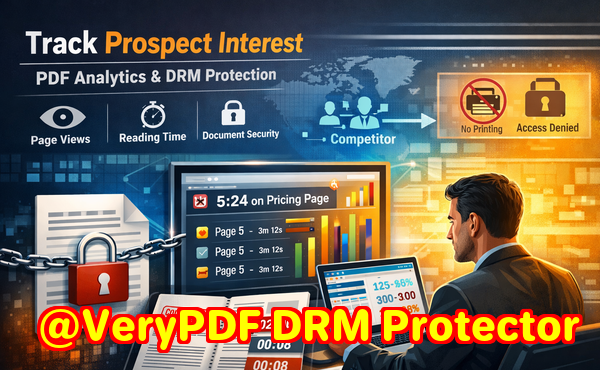
Protect your homework PDFs and lecture slides from being shared illegally while keeping distribution easy for authorized users

Protect your homework PDFs and lecture slides from being shared illegally while keeping distribution easy for authorized users

As a professor, I often feel a mix of pride and frustration when I see the materials I’ve carefully prepared being used in class. I pour hours into creating lecture slides, homework assignments, and supplementary PDFs, only to discover that some students are sharing them online, converting them to Word, or even printing unlimited copies. Last semester, I noticed my homework PDFs circulating outside the classroom, and I realized that while I wanted to make learning accessible, I also needed to protect my work. This is a challenge many educators face: how to share content efficiently with students while keeping it secure from unauthorized distribution.

Protect your homework PDFs and lecture slides from being shared illegally while keeping distribution easy for authorized users

One common frustration in teaching is students sharing PDFs or assignments with peers who aren’t enrolled in the course. I remember assigning a set of exercises and discovering that, within a day, PDFs had made their way to social media groups and file-sharing platforms. Not only does this undermine my intellectual property, but it can also compromise the fairness of assignments and assessments. Another challenge is unauthorized printing, copying, or converting PDFs into editable formats like Word or Excel. Some students may think it’s harmless, but this erodes the control you have over your course content, especially when you’ve invested time in creating high-quality, original materials. Finally, distributing paid or restricted content poses its own headaches. For courses with supplementary materials or online modules, the potential for content leakage increases significantly if you can’t restrict access effectively.

That’s where VeryPDF DRM Protector becomes a game-changer. I started using this software last year, and it completely transformed how I manage and distribute my PDFs. The first thing I love is how simple it is to restrict access. I can lock a PDF to a specific group of students or even to individual devices. That means only enrolled students can open their homework PDFs or lecture slidesno accidental or intentional sharing outside the class. Even if a file is forwarded, it simply won’t open on unauthorized devices.

VeryPDF DRM Protector also prevents students from printing, copying, or converting PDFs into other formats. One semester, a student tried to convert lecture slides into Word documents to distribute them to friends. Thanks to DRM Protector, the conversion failed immediately, and I was able to maintain control over my content. I also appreciate the dynamic watermarks. Each PDF can display user-specific information like the student’s name, email, or access time. This deters sharing because students know any unauthorized copy can be traced back to them.

Another feature that saved me time and stress is the ability to expire PDFs after a certain number of views, prints, or days. For example, I can set homework assignments to expire right after the submission deadline. This means that once students submit, they can’t continue sharing or revisiting the files indefinitely. I’ve also used the revoke function when neededif a student leaves the course or if I notice suspicious activity, I can terminate access instantly, even after files have been distributed.

Using VeryPDF DRM Protector has practical classroom benefits too. Instead of worrying about every student sharing content, I can focus on teaching and creating new materials. Distributing lecture slides has become effortless: I send a link via email or a course management system, and students can open their PDFs safely without installing complicated software or remembering extra passwords. It integrates seamlessly into my workflow, whether I’m teaching online or in person.

Here are some tips I’ve found useful when implementing PDF protection in the classroom:

  • Restrict access by device or user: Lock PDFs to enrolled students’ laptops or tablets. Unauthorized users won’t be able to open them.

  • Use dynamic watermarks: Include each student’s name or email on all distributed PDFs to discourage sharing.

  • Control printing: Disable printing completely for sensitive homework, or limit the number of prints allowed.

  • Prevent conversions: Stop students from copying or converting PDFs into Word, Excel, or image formats.

  • Set expiration rules: Assign deadlines for PDF access to automatically expire after a certain date or number of views.

  • Revoke access when necessary: Instantly remove a student’s access if needed without retrieving files.

I recall a situation where I was preparing a paid workshop for educators. I wanted to share exclusive lecture slides and materials without worrying that participants would distribute them freely online. By using VeryPDF DRM Protector, I could confidently send PDFs via email and ensure that only paying participants could access them. The ability to control who sees my content, prevent screen captures, and enforce print limits made the entire process smooth and stress-free.

Another classroom scenario involved collaborative projects. I wanted students to access group guidelines and reference PDFs but didn’t want them sharing these files with other groups or outside the course. DRM Protector allowed me to assign different PDFs to different groups, lock them to their devices, and track access. I no longer had to chase after files that had “gone missing” or prevent cheating manually.

Overall, using VeryPDF DRM Protector has not only protected my PDFs from piracy but has also enhanced my teaching efficiency. I highly recommend this to anyone distributing PDFs to students, especially when you need to protect lecture slides, homework, or any paid course materials. The software is straightforward to use, and the features like anti-conversion, dynamic watermarks, and controlled printing give educators peace of mind.

Try it now and protect your course materials: https://drm.verypdf.com. Start your free trial today and regain control over your PDFs.

Frequently Asked Questions

How can I limit student access to PDFs?

VeryPDF DRM Protector lets you lock PDFs to specific students or devices, ensuring only authorized users can open the files.

Can students still read PDFs without copying, printing, or converting?

Yes. Students can view the content normally while all copy, print, or conversion functions are disabled.

How can I track who accessed my PDFs?

The software can display dynamic watermarks with user information and record access activity, helping you identify any unauthorized use.

Does it prevent PDF piracy and unauthorized sharing?

Absolutely. DRM controls prevent students from forwarding, converting, or printing PDFs outside authorized use.

Is it easy to distribute protected lecture slides and homework?

Yes. You can share PDFs via email, course management systems, USB, or web links without requiring students to enter credentials.

Can I expire PDFs after a deadline?

Yes. You can set expiration rules based on dates, number of views, or prints.

Can I revoke access to a PDF if needed?

Yes. Even after distribution, you can instantly revoke access to a student or group.

Tags/Keywords: protect course PDFs, prevent PDF piracy, stop students sharing homework, secure lecture materials, prevent DRM removal, anti-conversion PDF DRM, restrict PDF access, dynamic watermarks, revoke PDF access, control PDF printing

Stop hackers from converting protected PDFs to editable formats and protect paid or sensitive educational content

Stop hackers from converting protected PDFs to editable formats and protect paid or sensitive educational content

As a professor, nothing frustrates me more than spending hours creating lecture slides or homework PDFs, only to discover that some students are sharing them onlineor worse, converting them into editable Word or Excel files without permission. Last semester, I noticed my carefully prepared course materials popping up on a student forum. It was disheartening. I wanted a way to protect my content without making access a hassle for my enrolled students. That’s when I discovered VeryPDF DRM Protector, and it has completely changed how I manage and secure my teaching materials.

Stop hackers from converting protected PDFs to editable formats and protect paid or sensitive educational content

In the classroom, there are a few recurring headaches that many educators face. First, students often share PDFs or assignments online, sometimes innocently, sometimes with the intent to help others circumvent coursework. While collaboration is good, uncontrolled sharing can dilute the value of your paid courses and compromise the integrity of homework or exam materials.

Second, unauthorized printing or copying is a huge problem. I’ve seen students take screenshots or use conversion tools to turn PDFs into editable Word documents. This isn’t just about academic honestyit’s also about protecting the intellectual effort you’ve invested in creating high-quality content.

Third, there’s the simple loss of control. Once a PDF is distributed via email or uploaded to a shared drive, it’s impossible to track who accessed it, whether it was forwarded, or if someone removed DRM protections. Without proper safeguards, even paid or restricted course content can end up in the wrong hands.

VeryPDF DRM Protector solves all these issues in ways that actually make life easier for both educators and students. Instead of relying on passwords or complicated software, it allows me to restrict PDF access to enrolled students only. That means I can share lecture slides, homework, or even full course modules with confidence, knowing only the right users can open them.

One of the features I love most is the ability to prevent printing, copying, forwarding, and even DRM removal. For instance, I once distributed a set of high-value study materials for a paid course. With VeryPDF, I could lock the PDFs so students could read them on their devices but couldn’t convert them to Word, Excel, or images, and they couldn’t print more than the limit I set. It was reassuring to know my content was secure without placing extra burdens on my students.

Dynamic watermarks are another lifesaver. Every time a PDF is opened or printed, it can display the user’s name, email, and date. This makes it almost impossible for someone to share a screenshot or photocopy without being identified. I remember a student who attempted to take a photo of a slide deck for redistributionseeing their own name stamped across the pages immediately deterred them.

Here’s how I practically use VeryPDF DRM Protector in my day-to-day teaching workflow:

  • Restrict access to specific users or enrolled students: I upload the PDFs and assign them only to the registered participants of the course. No login credentials are required for the students, so they can’t share access with others.

  • Control printing and copying: I disable printing for sensitive content, or limit the number of prints. Copying text or exporting to other formats is blocked automatically.

  • Expire or self-destruct PDFs: Some materials, like exam answer keys, are set to expire after a set number of views or days, ensuring they aren’t misused after their intended period.

  • Revoke access instantly: If I ever need to prevent a student or user from opening a document, I can revoke access immediately, even after it has been distributed.

  • Prevent screen sharing and screenshots: In online classes or Zoom meetings, my PDFs are protected against screen grabs or recording, maintaining control over sensitive content.

Implementing these steps has saved me countless hours and a lot of stress. I no longer worry about PDFs appearing on forums or being converted into editable formats. One particular semester, I had a paid workshop where participants accessed high-value training materials. Within weeks, I noticed unusual activity from one participant’s device. Thanks to VeryPDF’s audit logs, I could see the access history and revoke the document immediately, stopping a potential leak.

The anti-piracy benefits are significant. PDFs protected with VeryPDF DRM cannot be converted to Word, Excel, or images, and the encryption is robustfar stronger than traditional password protection or browser-based viewers, which can be bypassed with simple scripts. I’ve also found that the software is incredibly easy to use. I can protect multiple documents in minutes, distribute them via web, email, or USB, and still control access dynamically after distribution.

For educators, this level of control is transformative. You can focus on creating quality content instead of constantly worrying about unauthorized sharing. You also maintain the value of paid courses, protect intellectual property, and ensure that students engage with your materials as intended.

Here are some tips for maximising PDF security in an educational setting:

  • Use device locking: Restrict PDFs to specific computers, tablets, or USB sticks to prevent unauthorized access.

  • Apply dynamic watermarks: Always display the viewer’s information to deter photocopying or screenshots.

  • Set expiry dates: Automatically expire materials that are only relevant for a limited time, such as exam content or seasonal modules.

  • Audit usage: Regularly check who accessed your PDFs to spot suspicious activity.

  • Revoke access when needed: Don’t hesitate to revoke a user’s access if misuse is detected.

In short, VeryPDF DRM Protector gives me peace of mind. I can share lecture slides, homework, and paid course materials with students confidently, knowing they’re protected against piracy and misuse. It’s easy to use, effective, and specifically designed to solve the challenges that educators face when distributing digital content. I highly recommend this to anyone distributing PDFs to students.

Try it now and protect your course materials: https://drm.verypdf.com

Start your free trial today and regain control over your PDFs.

FAQs

How can I limit student access to my PDFs?

You can assign PDFs to specific students or enrolled users only. Access is device-locked, preventing sharing with others.

Can students read PDFs without copying, printing, or converting them?

Yes, VeryPDF DRM Protector allows students to view materials securely while blocking printing, copying, and format conversion.

How do I track who accessed the files?

The software provides audit logs and dynamic watermarks, so you can see who opened, printed, or attempted to share the PDFs.

Does it prevent PDF piracy and unauthorized sharing?

Absolutely. It stops copying, printing, screen captures, conversion to Word/Excel/images, and even online screen sharing.

Is it easy to distribute protected lecture slides and homework?

Yes. You can send PDFs via email, USB, or web links, and still control access dynamically after distribution.

Can I revoke access after distributing PDFs?

Yes. You can instantly terminate access to any PDF for any user at any time.

Are PDFs protected if students try to screenshot or screen record?

Yes. The software blocks screen captures and recordings on platforms like Zoom or WebEx, ensuring content remains secure.

Keywords/Tags:

protect course PDFs, prevent PDF piracy, stop students sharing homework, secure lecture materials, prevent DRM removal, anti-conversion PDF DRM, PDF content security, dynamic watermarks, revoke PDF access, control PDF printing

How to restrict PDF access to authorized users and prevent students or employees from bypassing DRM protections

How to restrict PDF access to authorized users and prevent students or employees from bypassing DRM protections


As I prepared my lecture slides one morning, I had that sinking feeling again: what if the PDFs I spent hours creating end up circulating online? Last semester, I caught a few students sharing homework PDFs with peers who weren’t even enrolled in the class. It wasn’t just frustratingit undermined the entire learning process. For educators like me, protecting digital course materials is no longer optional; it’s essential. The challenge is clear: how do you ensure only authorized students can access your PDFs while preventing copying, printing, or unauthorized sharing?

How to restrict PDF access to authorized users and prevent students or employees from bypassing DRM protections

This is where VeryPDF DRM Protector comes in. In my experience, it’s not just another security toolit’s a practical solution that gives professors control over their digital content, without burdening students or disrupting classroom workflows.


One of the biggest headaches for educators is students sharing PDFs online. I remember uploading my homework PDFs to our learning platform, only to find them appearing on a file-sharing site within hours. Suddenly, the effort I put into designing assignments was accessible to anyone. The problem isn’t limited to homework; lecture slides, study guides, and paid course materials are equally at risk.

Another pain point is unauthorized printing or copying. Students sometimes convert PDFs into Word documents or images to redistribute. While it might seem harmless, this can quickly spiral into widespread distribution. Once a PDF is out of control, it’s impossible to track who has access, and the risk of piracy skyrockets.

Loss of control over paid or restricted course content is equally frustrating. If you’ve ever tried to sell or license educational materials online, you know the stress of potential leaks. One misplaced PDF can mean lost revenue and intellectual property rights.

These problems can be daunting, but VeryPDF DRM Protector provides clear, actionable solutions.


Here’s how it works in everyday classroom scenarios:

  • Restrict access to enrolled students: Each PDF can be locked so only specific users or enrolled students can open it. Even if someone tries to forward the file, it won’t open on another device. I once shared lecture slides with my class, and thanks to DRM protection, I could instantly prevent non-students from accessing them.

  • Control printing and copying: You can stop students from printing, copying, or converting PDFs to other formats. This was a game-changer for me when I wanted to distribute exam prep material without fear of it being shared outside class.

  • Dynamic watermarks: Every view or print can include a watermark showing the user’s name, email, and timestamp. It’s subtle but effectivestudents know their copies are traceable, so they think twice before sharing.

  • Expire and revoke access: Need to remove access after a course ends? Or perhaps a student drops out mid-semester? DRM Protector lets you revoke documents instantly, even after they’ve been distributed. I’ve done this multiple times, and it’s reassuring to know that content is fully under control.

  • Stop screen sharing and screenshots: Zoom classes are great, but they also make it easy for students to capture slides or documents. DRM Protector blocks screen-sharing apps and screenshot tools, so your PDFs remain secure even during online sessions.

In practice, the setup is straightforward:

  1. Select the PDF you want to protect.

  2. Assign authorized users or devices.

  3. Set restrictions: disable printing, copying, or screen capture.

  4. Add dynamic watermarks if needed.

  5. Distribute the PDF securely via email, USB, or web access.

Once implemented, you can relax knowing your course materials are safeguarded.


The anti-piracy benefits are significant. PDFs can no longer be converted to Word, Excel, or images without your permission. Unauthorized users can’t bypass DRM restrictions, and even if someone tries, the document remains locked to the original user or device. For educators selling online courses, this level of security protects revenue and intellectual property.

I’ve experienced this firsthand. Last semester, one student accidentally shared a PDF outside class. Normally, this would have spread quickly. But with VeryPDF DRM Protector, the file wouldn’t open for anyone else, and I could revoke access in seconds. It saved me from potential embarrassment and prevented the material from ending up on public forums.


Some practical tips I’ve learned for using DRM in teaching:

  • Start with your most sensitive content: exams, homework solutions, or paid course packs.

  • Educate students: explain that DRM protection is there to safeguard content, not restrict learning. Transparency prevents confusion.

  • Use dynamic watermarks for high-value documents: they’re a deterrent for students tempted to share content.

  • Set expiry dates for temporary materials: lecture slides can automatically become inaccessible after the semester ends.

  • Audit access regularly: DRM Protector logs usage, so you can see who accessed the content and when.

The best part? It doesn’t slow down your workflow. Unlike clunky data rooms or password-protected PDFs, DRM Protector integrates smoothly into my existing teaching processes. PDFs stay on my computer until I choose to distribute them, eliminating accidental leaks.


In conclusion, if you’re an educator, lecturer, or content creator, maintaining control over your PDFs is critical. VeryPDF DRM Protector addresses the core pain points we face: unauthorized sharing, piracy, and loss of content control. It restricts access to authorized users, prevents printing and copying, stops screen captures, and allows you to revoke documents at any time.

I highly recommend this to anyone distributing PDFs to students. It’s simple, effective, and gives peace of mind knowing your course materials are secure.

Try it now and protect your course materials: https://drm.verypdf.com

Start your free trial today and regain control over your PDFs.


FAQs

How can I limit student access to PDFs?

You can assign PDFs to specific students or devices. Only authorized users can open the file.

Can students read the PDF without copying, printing, or converting it?

Yes. DRM Protector allows reading while disabling printing, copying, and format conversion.

How do I track who accessed the files?

The software logs usage, including views, prints, and user information, so you can monitor access.

Does it prevent PDF piracy and unauthorized sharing?

Absolutely. Files are locked to users or devices, with dynamic watermarks and anti-copy measures in place.

How easy is it to distribute protected lecture slides and homework?

Very easy. PDFs can be sent via email, USB, or web access without worrying about unauthorized access.

Can I revoke access after distribution?

Yes. You can terminate access instantly, even if the PDF has already been shared.

Does it prevent screenshots or screen sharing during online classes?

Yes. DRM Protector blocks screen sharing apps and third-party screenshot tools.


Keywords

protect course PDFs, prevent PDF piracy, stop students sharing homework, secure lecture materials, prevent DRM removal, anti-conversion PDF DRM, lecture PDF protection, digital course security, PDF access control, prevent unauthorized PDF sharing

How to maintain control over PDFs and prevent unauthorized printing, copying, forwarding, or conversion of your content

How to maintain control over PDFs and prevent unauthorized printing, copying, forwarding, or conversion of your content

As a professor, nothing is more frustrating than discovering that the lecture slides you meticulously prepared have ended up circulating in places you never intended. I remember spending hours curating a set of case studies for my graduate students, only to find a week later that the PDFs were floating around online, unprotected and shared without permission. It’s not just an inconvenienceit undermines the value of the course, the integrity of assignments, and, frankly, my trust in digital content distribution. Many educators face the same problem: how do you share essential PDFs with your students while preventing them from being copied, printed, forwarded, or converted into other formats? That’s where tools like VeryPDF DRM Protector come in, providing practical solutions for maintaining control over your course materials.

How to maintain control over PDFs and prevent unauthorized printing, copying, forwarding, or conversion of your content

One of the biggest headaches in digital teaching is students sharing PDFs outside the classroom. Whether it’s a homework assignment, lecture slides, or a paid module, once a file leaves your hands, traditional protections like passwords often fail. Students can forward documents, take screenshots, or convert them into Word or Excel files, making it impossible to track who has access or how the content is used. I’ve seen this firsthand with a particularly popular course on digital marketingstudents were circulating assignments on chat groups before the deadline, making collaboration difficult and grading nearly impossible.

Another common issue is unauthorized printing and copying. Some students, intentionally or not, might print PDFs and distribute them physically, or copy and paste sections into other documents. Even minor leaks can snowball quickly, especially when materials contain proprietary or paid content. In one instance, a colleague spent months designing an interactive e-book for her students, only to find that printed versions had appeared in a local library without her consent. The frustration of losing control over educational content is something every educator who uses PDFs has felt.

Finally, there’s the risk of losing control over course content entirely. Paid courses, research papers, and exclusive lecture materials represent not just intellectual property but often a revenue stream. If students can easily bypass protections, the time and money invested in creating these resources lose value. That’s why a robust, reliable solution to protect PDFs is essential.

VeryPDF DRM Protector addresses these pain points head-on. It’s designed with educators in mind, allowing you to securely distribute lecture slides, homework, and paid course materials while preventing piracy or unauthorized sharing. Using the software, I can restrict access to enrolled students or specific users only. Each PDF is locked to their device or a USB stick, so even if someone attempts to forward the file, it simply won’t open on another device.

Printing, copying, and conversion are also controlled. For example, I recently shared a module on financial modelling with my advanced accounting class. Normally, I’d worry about students converting PDFs to Excel and sharing the formulas online. With VeryPDF DRM Protector, I set restrictions so the file could be viewed but not printed, copied, or converted. The students could study the content as intended, but the integrity of the material was fully preserved.

One of the features I value most is the dynamic watermarking system. Each student’s name, email, and access time can appear on the PDF, making it obvious if someone attempts to photocopy or take screenshots. I once had a scenario where a student tried to share a lecture PDF outside the course, only to have the watermark reveal the source immediately. It’s a subtle but powerful deterrent that maintains accountability without creating a hostile learning environment.

Using VeryPDF DRM Protector is straightforward. Here’s how I typically implement it for my courses:

  • Restrict Access: Assign PDFs only to specific students or user groups, locking the file to their device or USB.

  • Control Printing and Copying: Decide if printing is allowed, limit the number of prints, or disable it entirely.

  • Prevent Conversion: Block PDFs from being converted into Word, Excel, or image files.

  • Set Expiry Dates: Automatically expire access after a certain number of views, prints, or days.

  • Revoke Access Instantly: If a student withdraws or leaves the course, I can terminate their access immediately.

  • Apply Dynamic Watermarks: Embed user-specific information to deter unauthorized sharing or screenshots.

These features have made a tangible difference in my workflow. Instead of spending time chasing down leaks or worrying about content misuse, I can focus on teaching. One memorable instance was when a student attempted to share a paid case study with another class. Thanks to device locks and watermarks, I identified the leak instantly and revoked access, preventing further distribution. It saved both time and potential revenue and reinforced the value of the course material.

The anti-piracy benefits are clear. VeryPDF DRM Protector prevents students or hackers from bypassing PDF security by eliminating common vulnerabilities found in browser-based viewers or password-protected files. It stops screen recording, print-to-PDF actions, and third-party screen grabbers, ensuring that the content remains secure even in online lectures or Zoom meetings. For educators who distribute materials online, this peace of mind is invaluable.

I also appreciate how flexible the software is. PDFs can be distributed via email, web links, or USB sticks, and you can control whether files are viewed online or offline. For courses with international students, this feature is particularly useful. No matter where the student is, access restrictions remain enforceable, and unauthorized sharing is effectively prevented.

From my experience, these steps are key to securing educational PDFs:

  • Always lock PDFs to specific devices or USBs.

  • Enable dynamic watermarks for all distributed files.

  • Use access expiry and revoke features to maintain control.

  • Prevent printing, copying, and conversion for sensitive or paid materials.

  • Audit usage regularly to identify potential leaks.

In conclusion, VeryPDF DRM Protector has been a game-changer for maintaining control over my PDFs. It allows me to share course materials confidently, knowing that students can view content without compromising security. The combination of access restrictions, anti-piracy measures, and dynamic watermarks provides comprehensive protection that simple passwords or insecure data rooms cannot match. I highly recommend this to anyone distributing PDFs to students. Try it now and protect your course materials: https://drm.verypdf.com. Start your free trial today and regain control over your PDFs.

Frequently Asked Questions

How can I limit student access to PDFs?

You can assign PDFs to specific students or groups and lock files to their devices or USB sticks. Access can also be revoked at any time.

Can students still read PDFs without copying, printing, or converting?

Yes. VeryPDF DRM Protector allows viewing while disabling printing, copying, and conversion, ensuring content can be studied safely.

How do I track who accessed my files?

Dynamic watermarks and usage logs record user information and access times, helping you identify leaks and monitor usage.

Does it prevent PDF piracy and unauthorized sharing?

Absolutely. The software blocks printing, copying, screen recording, and file conversion, maintaining strict control over content distribution.

How easy is it to distribute protected lecture slides and homework?

Very easy. PDFs can be shared via web links, email, or USBs, and access restrictions are enforced regardless of location or device.

Can I revoke access after distribution?

Yes. You can instantly revoke a student’s access even after files have been shared, ensuring control over your content at all times.

Are dynamic watermarks removable by students?

No. Watermarks are permanent, identify the user, and cannot be easily removed, preventing photocopying or screen captures without accountability.

Tags/Keywords

protect course PDFs, prevent PDF piracy, stop students sharing homework, secure lecture materials, prevent DRM removal, anti-conversion PDF DRM, stop PDF sharing, lock PDFs to devices, dynamic PDF watermarks, revoke PDF access

Stop students or employees from bypassing PDF security and ensure secure distribution of sensitive or paid materials

Stop students or employees from bypassing PDF security and ensure secure distribution of sensitive or paid materials

As I handed out my latest lecture slides to my class, I felt that familiar pang of worry. Would my students respect the work I put into these materials, or would they share them online for free? Over the years, I’ve learned the hard way that even the most diligent students sometimes forward PDFs to peers or upload them to file-sharing sites, completely bypassing any intent of controlled distribution. This isn’t just a problem for professorsit affects anyone distributing sensitive or paid content digitally. Fortunately, there’s a solution that keeps your materials safe while making your teaching workflow smoother: VeryPDF DRM Protector.

Stop students or employees from bypassing PDF security and ensure secure distribution of sensitive or paid materials

One of the biggest headaches I’ve faced is students sharing PDFs outside the classroom. You might have worked hours on preparing homework assignments or lecture notes, only to find them circulating on forums or group chats. When PDFs are freely copied or forwarded, it can undermine the value of your course, especially if it’s paid content. Worse, once a file is out there, it’s nearly impossible to track who originally leaked it.

Another common frustration is unauthorized printing or conversion. Even if a PDF isn’t shared online, students can still print it excessively, copy the content, or convert it to Word or Excel files. I’ve seen assignments duplicated and edited, and slides repurposed without permission. It’s a loss of control that makes it difficult to protect the integrity of your teaching materials.

Then there’s the issue of secure distribution itself. Traditional methods, like sending PDFs via email or relying on learning platforms, often feel insufficient. Data rooms or password-protected files seem secure at first glance, but anyone with the credentials can share access. This is where VeryPDF DRM Protector comes in.

With VeryPDF DRM Protector, I can restrict PDF access to specific students or employees. Each file is tied to a particular user or device, meaning no one outside the intended audience can open it. Even better, it blocks printing, copying, forwarding, and prevents DRM removal attempts. For my lecture slides, homework, and paid course materials, this has been a game-changer.

One time, I assigned a set of research PDFs to my graduate class. Normally, I’d have to worry about students emailing them to friends in other universities. But with VeryPDF DRM Protector, I set device restrictions and dynamic watermarks. Each PDF displayed the student’s name and email whenever viewed or printed, and attempts to share the file outside the class were automatically blocked. Not only did this protect my content, but it also reminded students of accountabilitythey knew their activity was traceable, which reduced careless sharing.

Here’s how I’ve implemented it in everyday teaching:

  • Restrict access by user or device: Only enrolled students can open the PDFs. Unauthorized attempts are blocked instantly.

  • Control printing and copying: I can disable printing entirely, limit the number of prints, or enforce print quality. Copying and conversion to Word or Excel are completely prevented.

  • Apply dynamic watermarks: Every document shows identifying information, so any attempt at redistribution is deterred.

  • Set expiry dates: PDFs can automatically expire after a certain number of views, prints, or on a fixed date. I never have to chase students to delete old materials.

  • Revoke access instantly: Even after distribution, I can terminate access if necessary. This has saved me from potential leaks several times.

I also appreciate that it prevents screen grabs and sharing during online meetings. In today’s hybrid classrooms, students might try to capture slides through Zoom or WebEx. VeryPDF DRM Protector blocks screen recording, screen sharing, and print-screen attempts, ensuring my content stays secure even when delivered remotely.

Beyond the anti-piracy benefits, the software simplifies teaching workflow. I no longer worry about constantly monitoring who has which file or enforcing manual restrictions. Everything is automated and controlled in one platform, freeing up time to focus on teaching rather than chasing leaks.

For educators distributing paid materials, like course packs or online modules, this is especially valuable. Once a student purchases a PDF bundle, I can ensure they access only what they’ve paid for, on their authorized devices, and cannot redistribute it. This preserves the value of digital content and protects revenue streams without complicated licensing procedures.

Even in everyday classroom scenarios, the software proves its worth. For instance, when I upload homework PDFs, I no longer see students sending answers around. The files are locked to their devices and can’t be copied, printed, or converted. When a student tries to forward a PDF, it simply won’t open. The transparency and control make enforcing academic integrity much easier.

If you’re considering integrating VeryPDF DRM Protector into your workflow, here are a few practical tips:

  • Plan access carefully: Decide whether students can view documents online only or offline, and whether any printing is necessary.

  • Use dynamic watermarks for sensitive content: Include names, emails, or date/time stamps to deter leaks.

  • Set document expiry: For time-sensitive materials like exams or seasonal content, ensure files automatically expire.

  • Lock files to devices or USB sticks: This allows offline access without risking unauthorized sharing.

  • Monitor usage reports: Audit views and prints to identify potential misuse or leaks quickly.

I highly recommend this to anyone distributing PDFs to students or employees. VeryPDF DRM Protector doesn’t just protect filesit protects your time, your intellectual property, and your teaching credibility.

Try it now and protect your course materials: https://drm.verypdf.com. Start your free trial today and regain control over your PDFs.

Frequently Asked Questions

How can I limit student access to PDFs?

You can restrict files to specific users or devices. Even if a PDF is forwarded, unauthorized recipients won’t be able to open it.

Can students read PDFs without copying, printing, or converting them?

Yes. Students can view the content normally while restrictions prevent printing, copying, or conversion to other formats.

How do I track who accessed my files?

VeryPDF DRM Protector provides audit logs showing when and where documents were accessed, making it easy to monitor usage.

Does it prevent PDF piracy and unauthorized sharing?

Absolutely. The software blocks printing, copying, forwarding, screen grabs, and DRM removal, stopping piracy effectively.

Is it easy to distribute protected lecture slides and homework?

Yes. You can distribute securely via email, USB, or web links without worrying about unprotected files leaving your computer.

Can I revoke access after distribution?

Yes. You can instantly terminate access to any document or user, even after the PDFs have been distributed.

Are there dynamic watermarks to deter sharing?

Yes. You can apply watermarks showing user and system information for both viewing and printing, making redistribution traceable.

Tags / Keywords:

protect course PDFs, prevent PDF piracy, stop students sharing homework, secure lecture materials, prevent DRM removal, anti-conversion PDF DRM, PDF content security, secure online course materials, academic PDF protection, prevent unauthorized PDF distribution